
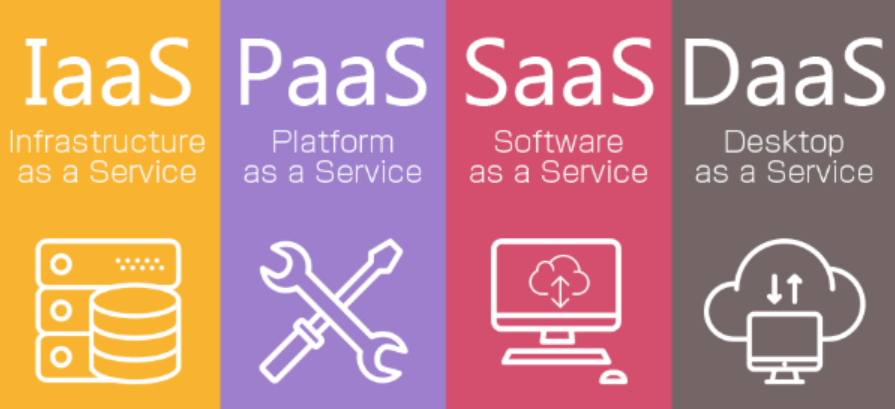
IaaS (Infrastructure as a Service):
IaaS provides virtualized computing resources over the internet, allowing users to rent virtual machines, storage, and networking components. Users have control over the operating systems, applications, and configurations on the provided infrastructure. Key features of IaaS include:
- Flexibility: Users have full control over the virtualized infrastructure and can customize it according to their needs.
- Scalability: IaaS platforms offer the ability to scale resources up or down based on demand.
- Maintenance: Users are responsible for managing the operating systems, applications, and security of their virtual machines.
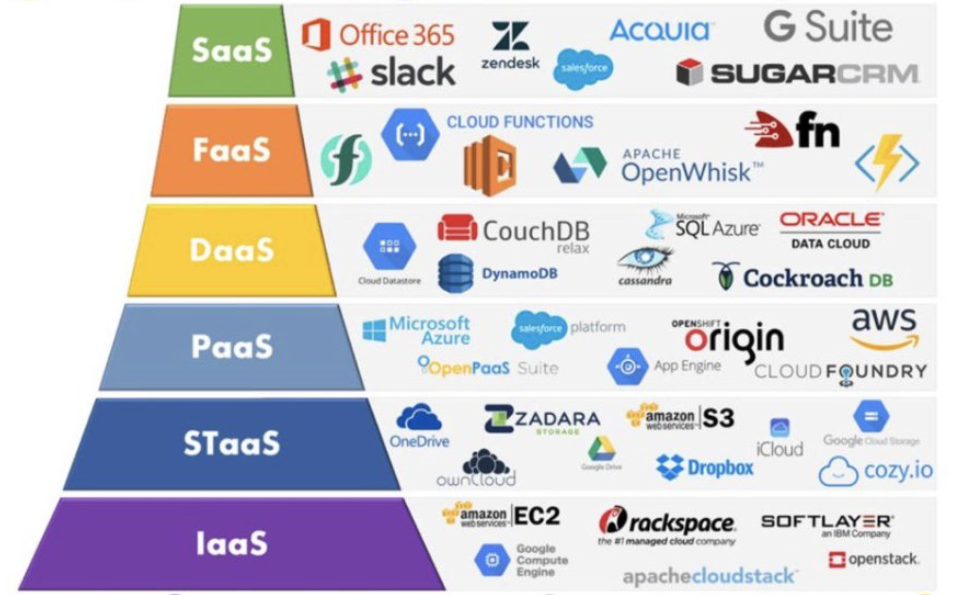
- Examples: Amazon Web Services (AWS) EC2, Microsoft Azure Virtual Machines, Google Cloud Compute Engine.
PaaS (Platform as a Service):
PaaS provides a platform and environment for developers to build, deploy, and manage applications without worrying about the underlying infrastructure. It offers tools, libraries, and services to streamline the development process. Key features of PaaS include:
- Abstraction: Developers can focus on writing code and building applications without dealing with infrastructure details.
- Scalability: PaaS platforms handle scaling automatically based on application demands.
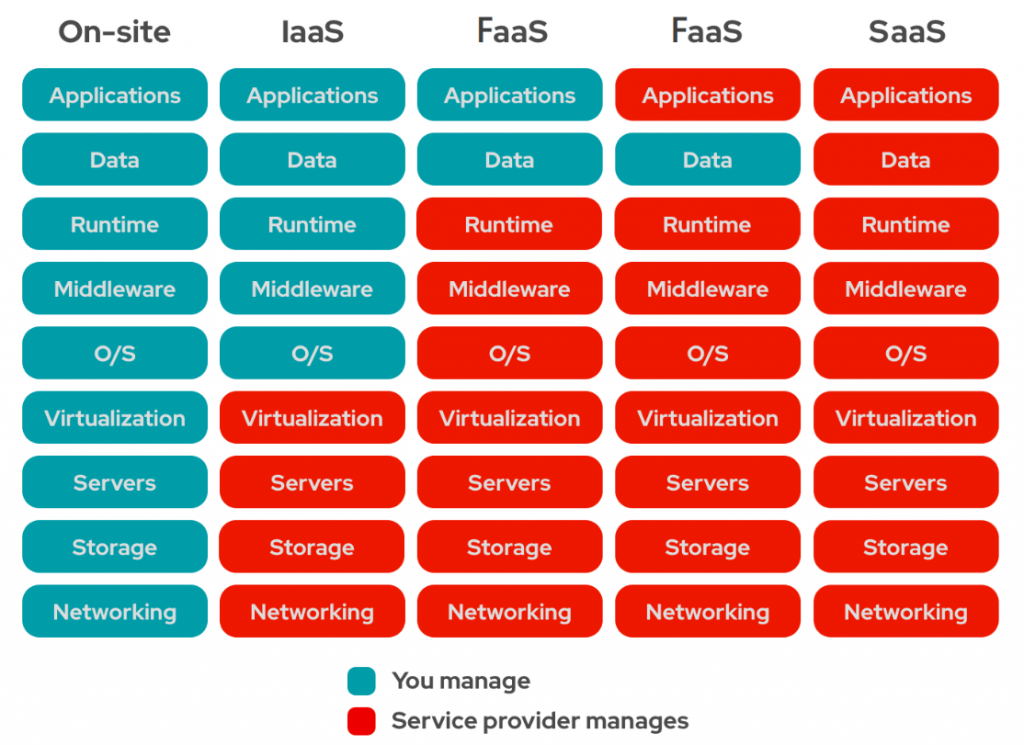
- Reduced Management: The underlying infrastructure, runtime, and middleware are managed by the PaaS provider.
- Examples: Heroku, Google App Engine, Microsoft Azure App Service.
SaaS (Software as a Service):
SaaS delivers software applications over the internet on a subscription basis. Users can access and use the software through a web browser without needing to install or maintain it locally. Key features of SaaS include:
- Accessibility: Software is accessible from anywhere with an internet connection and a compatible device.
- Maintenance: The SaaS provider handles maintenance, updates, and security of the software.
- Scalability: SaaS applications are designed to scale to accommodate multiple users.
- Examples: Salesforce, Microsoft 365, Google Workspace.
FaaS (Function as a Service):
FaaS, also known as serverless computing, enables developers to deploy individual functions or pieces of code that are executed in response to events. Developers don’t manage the underlying infrastructure; they only focus on writing code. Key features of FaaS include:
- Event-Driven: Functions are triggered by events, such as HTTP requests, database changes, or scheduled tasks.
- Scalability: Functions automatically scale based on the number of incoming events.
- Billing: Users are billed based on the actual execution time of their functions.
- Examples: AWS Lambda, Azure Functions, Google Cloud Functions.
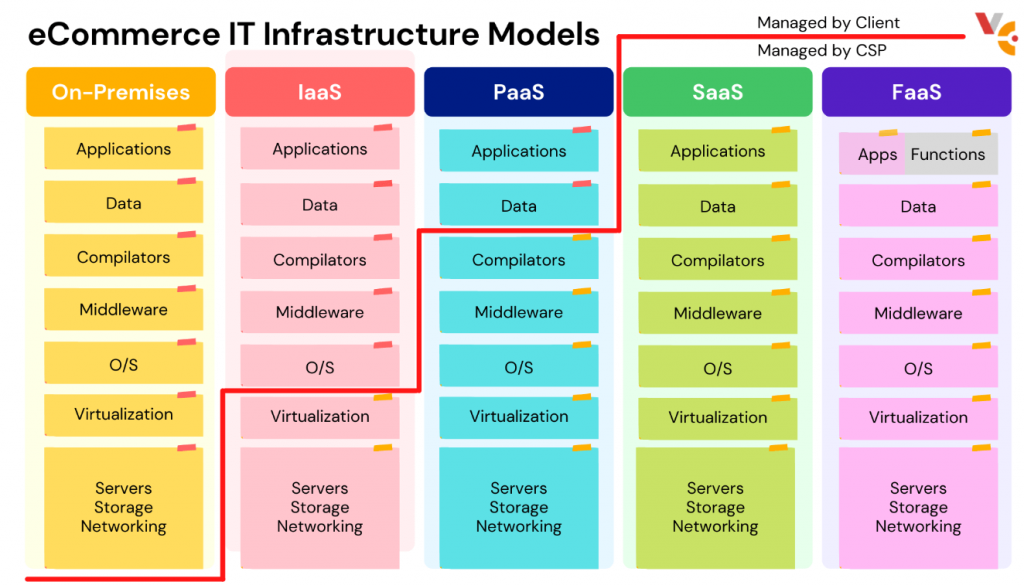
Here is a table that summarizes the key differences between IaaS, PaaS, SaaS, and FaaS:
| Service | Description | Level of Abstraction | Control | Management |
|---|---|---|---|---|
| IaaS | Provides the basic building blocks for cloud computing, such as virtual machines, storage, and networking. | Low | High | High |
| PaaS | Provides a development environment that includes everything you need to build and deploy applications. | Medium | Medium | Medium |
| SaaS | Provides applications that are hosted and managed by a third-party vendor. | High | Low | Low |
| FaaS | Allows you to run individual functions without having to worry about the underlying infrastructure. | Lowest | Lowest | Lowest |

I’m Rajesh Kumar, a DevOps, SRE, DevSecOps, Cloud, and Platform Engineering expert passionate about sharing practical knowledge, real-world experiences, and industry best practices. I have worked at Cotocus and regularly write about technology, travel, investing, health, product reviews, and digital marketing through my various platforms.
I publish technical articles at DevOps School, travel stories at Holiday Landmark, stock market insights at Stocks Mantra, health and fitness guidance at My Medic Plus, product reviews at TrueReviewNow, and SEO and digital marketing strategies at Wizbrand.
Find Trusted Cardiac Hospitals
Compare heart hospitals by city and services — all in one place.
Explore Hospitals