
An algorithm is a defined sequence of steps for solving a problem, such as sorting a list, searching for a value or finding a path through a graph. How well a program performs depends heavily on which algorithms and data structures it uses, which is why the topic sits at the core of software engineering and coding interviews.
The posts here cover the foundations first: introductions to algorithms and data structures, a categorized list of common ones, tutorials on writing pseudocode, and a full guide to big O notation and algorithm complexity. Short Python exercises, such as checking for palindromes in nine different ways or finding the adjacent pair with the largest product, give you hands-on practice. Other posts deal with machine learning algorithms: a reference to the essential ones, scikit-learn cheatsheets for picking a model, a reinforcement learning guide, and a comparison of AI ride-hailing matching tools.
These posts are useful for students and self-taught developers building computer science fundamentals, engineers preparing for technical interviews, and anyone moving into machine learning who wants a clear overview of the main algorithm families.
Start here
- Algorithms and Data Structures – Beginner introduction to both concepts, with common examples of each.
- Complete Tutorials of Introduction to Data Structures – Explains what data structures are, why they matter and their main types.
- List of Algorithms and Data Structures – Categorized map of sorting, searching, trees, graphs and dynamic programming topics to study.
- Complete Tutorial for Pseudocode – Shows how to plan algorithms in pseudocode before writing real code.
- Complete Tutorial on big O (big oh) notation – Teaches how to describe and compare algorithm complexity using big O.
- Python Example Code: Find out string is palindrome or not – One problem solved nine ways in Python, useful for comparing approaches.
- Essential Machine Learning Algorithms Every AI Professional Should Master – Quick reference to core ML algorithms grouped by learning approach.
Latest Algorithms articles
Top 10 AI Ride-Hailing Matching Algorithms Tools: Features, Pros, Cons & Comparison
Introduction AI Ride-Hailing Matching Algorithms use artificial intelligence, machine learning, predictive analytics, and optimization techniques to connect passengers with suitable drivers efficiently. These systems analyze multiple real-time…
Principal Quantum Algorithm Scientist: Role Blueprint, Responsibilities, Skills, KPIs, and Career Path
The **Principal Quantum Algorithm Scientist** is a senior individual-contributor (IC) scientist who invents, adapts, and validates quantum algorithms that can be delivered through a software product or IT platform (typically a cloud-based quantum computing service, SDK, or enterprise solution). The role bridges foundational research and production-grade enablement by turning algorithmic ideas into reproducible code, benchmarks, and developer-ready artifacts that product and engineering teams can ship and support.
Lead Quantum Research Scientist: Role Blueprint, Responsibilities, Skills, KPIs, and Career Path
The **Lead Quantum Research Scientist** is a senior, research-heavy individual contributor (IC) who sets the technical direction for quantum algorithms and applied quantum research that can be translated into software products, developer tools, or client-facing solutions. This role bridges **foundational research** (quantum information science, algorithm design, error models) with **engineering execution** (prototype code, benchmarks, integration into quantum software stacks).
Lead Quantum Algorithm Scientist: Role Blueprint, Responsibilities, Skills, KPIs, and Career Path
The **Lead Quantum Algorithm Scientist** is a senior individual-contributor scientist who designs, proves, prototypes, and operationalizes quantum algorithms and resource-estimation methods that can be delivered through a software or IT organization’s quantum computing platform, developer tools, or applied solutions portfolio. This role bridges rigorous research (algorithm design, complexity, error models) with production-minded engineering (reproducible code, benchmarking, integration into SDKs, and customer-facing enablement).
Associate Quantum Research Scientist: Role Blueprint, Responsibilities, Skills, KPIs, and Career Path
The **Associate Quantum Research Scientist** is an early-career research individual contributor who designs, prototypes, and validates quantum computing methods that can be translated into usable software capabilities—typically quantum algorithms, error mitigation techniques, benchmarking workflows, and simulation approaches. The role blends rigorous scientific thinking with practical engineering execution, contributing research artifacts that can be integrated into a quantum software stack or offered as part of a quantum cloud service.
Associate Quantum Algorithm Scientist: Role Blueprint, Responsibilities, Skills, KPIs, and Career Path
The **Associate Quantum Algorithm Scientist** designs, prototypes, and validates quantum algorithms and quantum-inspired methods that can be productized within a software or IT organization. The role sits at the intersection of applied research and engineering: converting mathematical ideas into working code, benchmarking against classical baselines, and collaborating with platform and product teams to deliver usable capabilities.
List of Algorithms and Data Structures
Here’s a comprehensive list of Algorithms and Data Structures categorized for easy understanding: 🔹 Data Structures Data structures help in organizing and storing data efficiently. 1. Linear…
How to Optimize Code Performance for High-Load Applications?
If you have ever encountered a certain application within a company, you would understand the frustration in terms of latency spikes, database bottlenecks, unpredictable slowdowns. These factors…
How Math AI Simplifies Complex Programming Tasks
Programming, once the domain of meticulously handcrafted logic and painstaking manual debugging, has transformed dramatically in recent years. At the heart of this evolution lies a rising…
Essential Machine Learning Algorithms Every AI Professional Should Master
As an AI/ML practitioner, having a solid grasp of fundamental algorithms is crucial. Here’s your go-to reference guide for the most important ML algorithms, organized by learning…
Machine Learning – scikit-learn Algorithm Cheatsheets
Rajesh KumarI’m Rajesh Kumar, a DevOps, SRE, DevSecOps, Cloud, and Platform Engineering expert passionate about sharing practical knowledge, real-world experiences, and industry best practices. I have worked…
A Comprehensive Guide to Machine Learning: Algorithms
A machine learning algorithm is a set of rules or procedures that a computer follows to learn from data. It’s the underlying mechanism that builds the model….
Machine Learning: Data, Algorithms and Models
Machine Learning: Data, Algorithms, and Models Machine Learning (ML) is a dynamic field of artificial intelligence that focuses on enabling machines to learn from data, identify patterns,…
A Comprehensive Guide to Machine Learning: Reinforcement Learning
Machine Learning (ML) is a broad domain within Artificial Intelligence (AI) that focuses on building systems that learn from data and improve over time. One of the…
A Comprehensive Guide to Machine Learning: Unsupervised Learning
Machine Learning (ML) is an expansive field within Artificial Intelligence (AI) that empowers computers to learn from data and make decisions with minimal human intervention. Among its…
A Comprehensive Guide to Machine Learning: Supervised Learning
Machine Learning (ML) is a rapidly evolving field within Artificial Intelligence (AI) that enables computers to learn from data and make decisions with minimal human intervention. At…
Why math is important if you want to become a programmer
In the realm of programming, mathematics serves as both a cornerstone and a catalyst for innovation. At its core, programming is a discipline rooted in logical problem-solving,…
Algorithms and Data Structures
Algorithms and data structures are two of the most important concepts in computer science. Algorithms are step-by-step procedures for solving problems, while data structures are ways of…
Python Example Code: Find all the pairs of numbers which sum upto `k`
Rajesh KumarI’m Rajesh Kumar, a DevOps, SRE, DevSecOps, Cloud, and Platform Engineering expert passionate about sharing practical knowledge, real-world experiences, and industry best practices. I have worked…
Python Example Code: Find the pair of adjacent elements that has the largest product
Rajesh KumarI’m Rajesh Kumar, a DevOps, SRE, DevSecOps, Cloud, and Platform Engineering expert passionate about sharing practical knowledge, real-world experiences, and industry best practices. I have worked…
Python Example Code: Program to display the Fibonacci sequence up to n-th termPython Example Code:
What is the Fibonacci sequence? The Fibonacci sequence is a set of integers (the Fibonacci numbers) that starts with a zero, followed by a one, then by another…
Python Example Code: Program for printing k largest elements in an array
Rajesh KumarI’m Rajesh Kumar, a DevOps, SRE, DevSecOps, Cloud, and Platform Engineering expert passionate about sharing practical knowledge, real-world experiences, and industry best practices. I have worked…
Python Example Code: Find out string is palindrome or not
Find out string is palindrome or not Check Whether or Not the Number is a Palindrome in Python Rajesh KumarI’m Rajesh Kumar, a DevOps, SRE, DevSecOps, Cloud,…
Main Aspects of Mathematic in Coding
Introduction Nowadays, advanced applications allow users to create simple pieces of software without any coding skills. One could build and maintain an entire website without typing a…
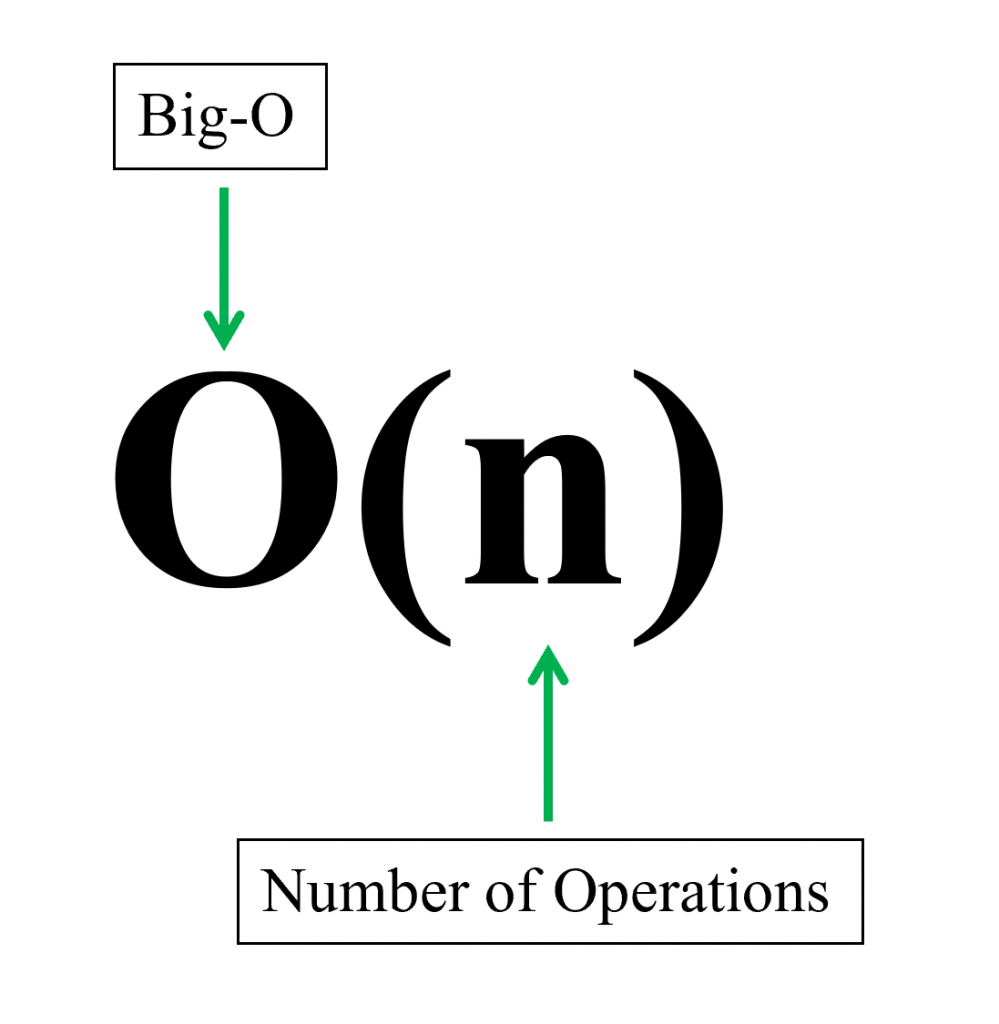
Complete Tutorial on big O (big oh) notation
In this Tutorial I am going to cover Complete Tutorial on big O (big oh) notation. If you know something about Asymptotic Notations The big-O Notation is…

How to Write Pseudocode with steps?
In my previous tutorial I have introduced what is Pseudocode and its Advantage and Disadvantages and few more things. If you don’t know about Pseudocode then please…

Complete Tutorial for Pseudocode
First of all I have to share a quick knowledge about the Data structure and Algorithms. If you want to know about the Data Structure then click…

Complete Tutorials of Introduction to Algorithm
We all know that In Today’s world there is lots of software running in the market, But do you ever think how they work. there are many…

Complete Tutorials of Introduction to Data Structures
We are living in a world where development is most important thing. Everyone want to develop their skills and improve their knowledge. In IT sectors we have…
DevOps Interview Questions and Answer – Part 5
DevOps Interview Questions: Programming What is your favorite scripting/programming language(s)? Why ? General CS, algorithms Q&A: 5 minutes Data structures – discuss possible implementations and applications: Binary…
Algorithms: frequently asked questions
What is the difference between an algorithm and a data structure?
A data structure is a way of organizing data, such as an array, linked list or tree. An algorithm is a set of steps that works on that data, such as searching or sorting it.
What does big O notation measure?
Big O describes how an algorithm's running time or memory use grows as the input size grows, usually in the worst case. For example, O(n) grows linearly with input size, while O(n²) grows with its square.
Why write pseudocode before coding?
Pseudocode lets you work out an algorithm's logic in plain, language-independent steps before dealing with syntax. That makes design mistakes easier to spot and the final code easier to write.
Which algorithms should I learn first for coding interviews?
Most interview preparation starts with searching and sorting algorithms, recursion, and operations on arrays, linked lists, stacks, queues, trees and graphs. After that, people usually move on to dynamic programming and complexity analysis.