
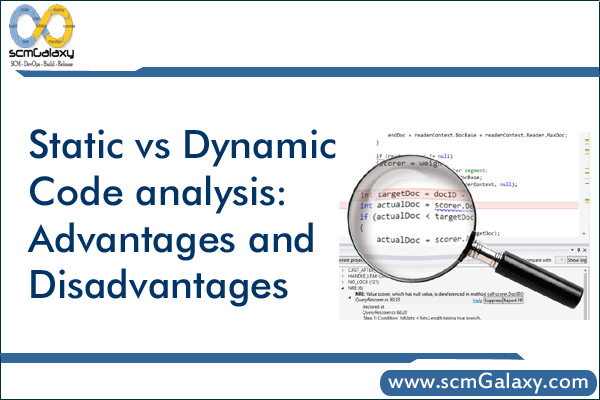
Static vs Dynamic Code Analysis in DevSecOps: Strengths, Limits, and How to Use Both
Static and dynamic code analysis solve different security problems. This guide compares both approaches, explains their trade-offs, and shows how to combine them in a practical CI/CD workflow.
Static vs Dynamic Code Analysis: Differences, CI/CD Workflow, and Practical Use
Static analysis inspects code without executing it, while dynamic analysis evaluates behavior at runtime. This guide explains the trade-offs, shows how both fit into CI/CD, and provides practical pipeline examples.
Static vs Dynamic Code Analysis: Differences, Trade-offs, and CI/CD Integration
Static and dynamic code analysis solve different quality and security problems, and neither replaces the other. Learn how they differ, where each fits in DevOps, and how to use both in one CI/CD quality gate.
Static vs Dynamic Code Analysis: Key Differences and How to Use Both in DevSecOps
Static and dynamic code analysis solve different quality and security problems. This guide explains the differences, trade-offs, and how to combine both in a practical CI/CD workflow.
Top 10 Reverse Engineering Tools in 2026: Features, Pros, Cons & Comparison
Introduction Reverse engineering tools are powerful utilities that allow users to deconstruct software, hardware, or systems to understand their inner workings, extract secrets, or identify potential vulnerabilities….
Compare SAST, DAST and RASP & its Tools for DevSecOps
Static Application Security Testing (SAST) Dynamic Application Security Testing (DAST) Runtime application self-protection (RASP) Comparison of SAST, DAST, and RASP in DevSecOps Feature SAST (Static Application Security…
What is Continuous Inspection?
Continuous Inspection is a process to detect the possible bugs in the source code which may occur due to bad code quality and lack of effective peer…