
Most enterprise IT teams have a precise budget for cloud infrastructure, monitoring stacks, and CI/CD pipelines — but a murky picture of what they actually pay for telecom and network connectivity. That gap is expensive. Gartner research estimates that up to 85% of telecom invoices contain errors, leading to 12–20% monthly overspending. For a company with $500,000 in annual telecom spend, that means $60,000–$100,000 lost every year to billing mistakes alone.
The market has taken notice. According to Grand View Research, the global Telecom Expense Management (TEM) sector was valued at $4.95 billion in 2025 and is projected to reach $9.64 billion by 2030 — a CAGR of 14.26%. Enterprise organizations are investing heavily in tools and services to reclaim that spend.
For DevOps and infrastructure teams, this is not just a finance problem. Unmanaged telecom contracts consume budget that could fund network upgrades, redundant circuits, or improved cloud connectivity. Research into network infrastructure bottlenecks shows that poor visibility into connectivity costs directly limits what teams can invest in performance improvements. The tools and services below represent the leading options for bringing real discipline to enterprise telecom spending.
- Tailwind Voice & Data
Source: Tailwind Voice & Data website
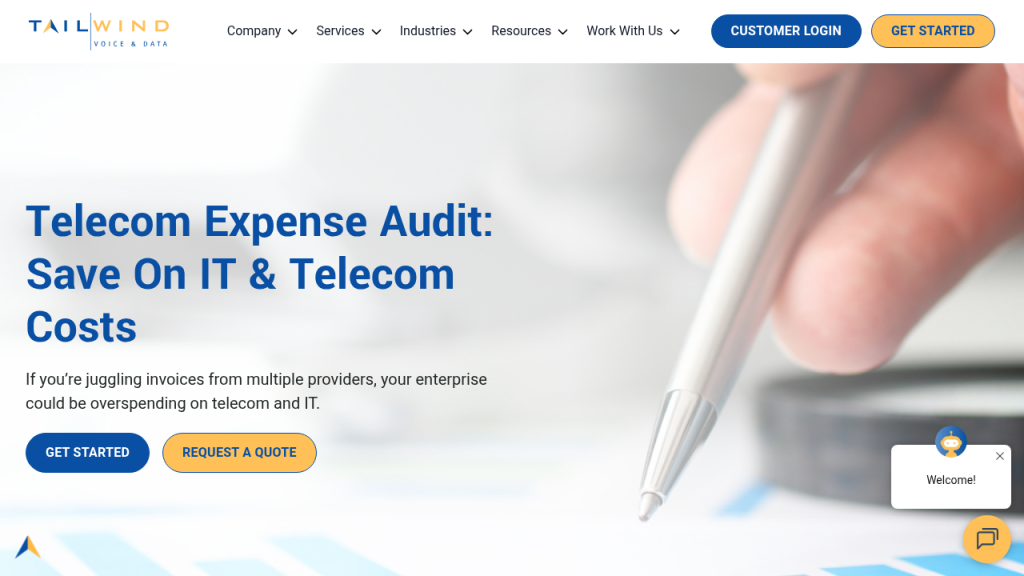
For enterprises that prefer a fully managed approach, Tailwind Voice & Data delivers the best telecom audit services that convert chaotic multi-carrier billing into an organized, actionable inventory.
Unlike self-service platforms, Tailwind handles the entire audit process: contacting carriers directly, reconciling invoices across all business locations, identifying billing errors, and producing a structured deliverable with findings and recommendations. This makes it especially valuable after acquisitions, during periods of rapid expansion, or when branch-level telecom visibility breaks down. The service covers 40,000+ enterprise locations across healthcare, retail, financial services, and manufacturing.
For teams that lack internal bandwidth to run a detailed audit — or that want an independent second opinion on what they are actually paying for — Tailwind provides a professional-grade review without requiring any internal software deployment.
- Tangoe One
Source: Tangoe website
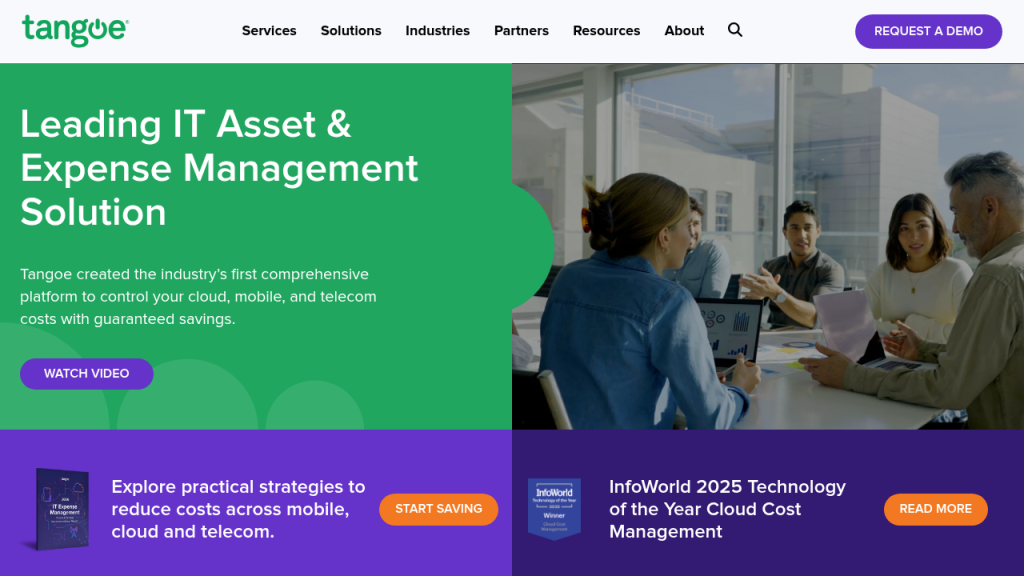
Tangoe One is an end-to-end lifecycle management platform for telecom, mobile, and cloud spend. Designed for large global enterprises, it uses AI-powered invoice auditing to validate bills across dozens of carriers and automatically flags anomalies before payments are processed.
The platform covers contract lifecycle management, device management, and offers a unified dashboard that gives IT and finance teams a consolidated view across cloud and telecom spend. Tangoe is well-suited for multinational organizations dealing with high invoice volume, carrier diversity, and the operational overhead of manual reconciliation. Its automation layer significantly reduces the time finance and IT teams spend processing invoices each billing cycle.
- Calero-MDSL
Source: Calero-MDSL website
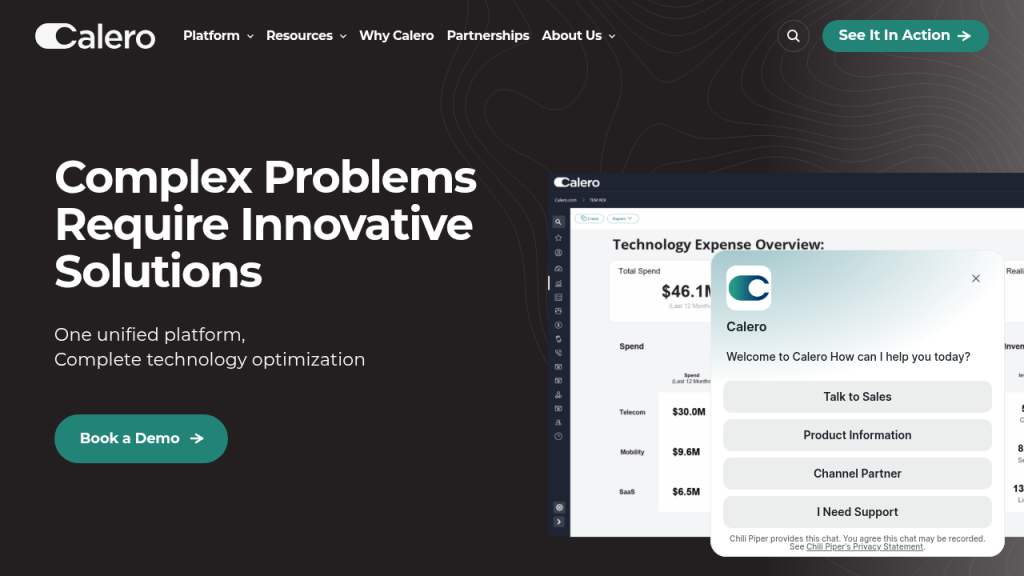
Calero-MDSL is a SaaS-based platform that consolidates telecom and cloud expense management into a single system of record. Core capabilities include invoice processing automation, granular usage tracking, cost allocation by department or cost center, and analytics dashboards for trend analysis. For IT organizations managing hybrid environments — where traditional telecom services and cloud-based connectivity coexist — Calero provides a shared view of spending that bridges the gap between finance and infrastructure teams.
The platform is particularly strong on reporting, making it easier to chargeback telecom costs to individual business units and identify services that are underutilized or no longer needed.
- Brex

Brex approaches telecom and IT cost management from the payment side rather than the carrier side. While traditional TEM platforms audit invoices and renegotiate contracts, those optimized charges still flow through corporate cards where visibility often fades. Brex solves this by tracking every vendor payment and recurring software charge in real time, keeping connectivity spend transparent for both finance and IT teams.
The platform pairs corporate cards with built-in spend controls, allowing departments to cap spend by specific vendor and catch duplicate charges before they auto-renew. This makes Brex a powerful governance layer that complements dedicated TEM tools by ensuring that negotiated savings don’t erode over time due to shadow IT or unmanaged recurring payments.
- Brightfin
Brightfin is a TEM platform built natively inside ServiceNow, making it the strongest option for enterprises that have standardized on ServiceNow for IT service management. Rather than running telecom expense data in a separate system, Brightfin embeds cost tracking, usage monitoring, invoice auditing, and mobile device management directly into existing ServiceNow workflows. This eliminates the data silos that typically exist between IT operations and telecom finance functions.
Support tickets, asset management records, and telecom billing data share the same platform, making it easier to correlate network service changes with cost impacts. For organizations already invested in the ServiceNow ecosystem, Brightfin avoids the integration overhead of deploying a standalone TEM tool.
- Sakon
Source: Sakon website
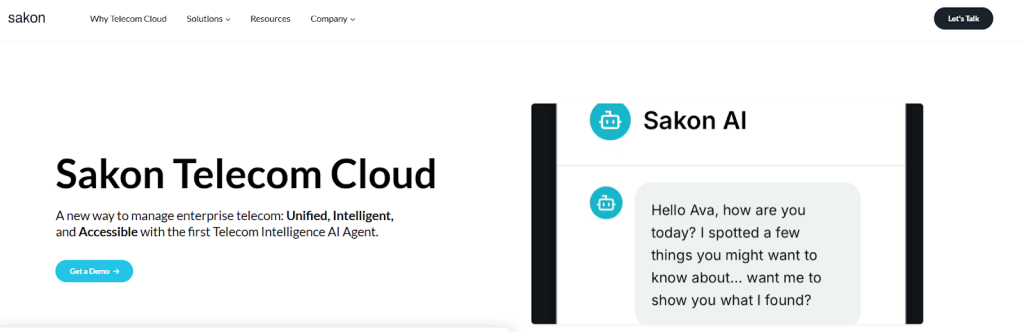
Sakon is an enterprise-grade TEM platform built for large multinational organizations with complex connectivity environments. It offers customizable dashboards, workflow automation for invoice approval routing, service provisioning capabilities, and deep integration with ERP and ITSM systems, including SAP, Oracle, and ServiceNow. For IT teams operating at a global scale — managing hundreds of locations, multiple carriers per region, and varying contractual structures by country — Sakon provides the flexibility to model cost governance around existing enterprise systems rather than requiring process changes to fit a rigid tool.
Its provisioning features also help ensure new services are captured and tracked from day one, reducing the risk of unmanaged spend accumulating over time.
- P3 Cost Analysts
P3 Cost Analysts website
Source: P3 Cost Analysts
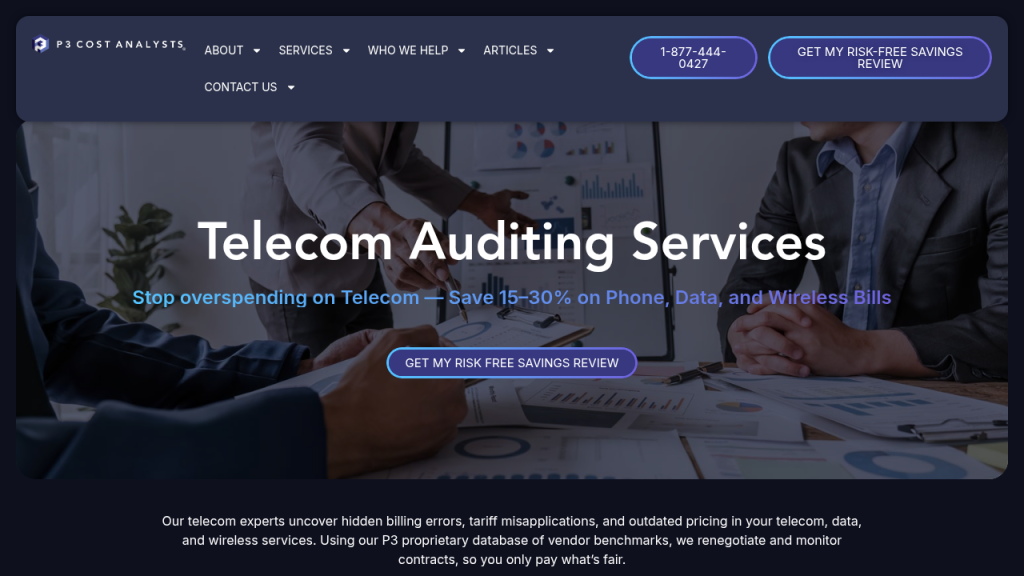
P3 Cost Analysts is a professional telecom audit firm that operates on a contingency fee model — clients pay only from confirmed savings, eliminating upfront cost and financial risk. The firm’s process involves forensic-level invoice review, benchmarking against a proprietary carrier rate database, validation of contract tariff compliance, and direct carrier negotiation to recover overbillings. Clients typically recover 15–30% of total telecom spend.
This performance-based structure makes P3 a strong option for organizations that want a professional deep-dive audit but need to demonstrate guaranteed ROI before committing. It pairs well with proactive network monitoring solutions that give IT teams ongoing visibility after the audit is complete.
How to Choose Between a TEM Platform and a Professional Audit Service
The tools above fall into two categories, and the right choice depends on your organization’s situation.
- TEM software platforms (items 1–5) are designed for ongoing, automated cost governance. They work best when you need continuous invoice processing, real-time usage tracking, and workflow integration with finance or ITSM systems. The investment pays off over time through reduced manual effort and consistent visibility.
- Professional audit services (items 6–7) are best for point-in-time or periodic reviews — particularly post-acquisition cleanup, inherited legacy environments, or situations where no TEM system has ever been in place. They require no internal software deployment and deliver findings faster than it takes to stand up a new platform.
Many mature IT organizations use both: a TEM platform for day-to-day tracking and an audit firm to periodically validate carrier billing and renegotiate contracts. According to AOTMP Research, 80% of organizations have overspent on telecom due to poorly managed contracts — a problem that neither software nor auditing alone fully solves, but that the two together address comprehensively. Gartner’s TEM peer reviews reflect this pattern, with top-rated deployments consistently combining automated platforms with periodic manual audit cycles.
Final Thoughts
Enterprise telecom and IT connectivity costs rarely get the same scrutiny as cloud infrastructure — but the savings available are comparable. Organizations that adopt a structured approach to TEM, whether through software, professional auditing, or both, typically recover 20–35% of telecom spend within the first year.
For DevOps and IT infrastructure teams operating under budget pressure, that recovered spend can be redirected toward the network upgrades and performance investments that actually move the needle. Treating telecom cost governance with the same rigor applied to cloud cost optimization is no longer optional — it is a baseline expectation for IT organizations that want to operate efficiently at scale.

I’m Rajesh Kumar, a DevOps, SRE, DevSecOps, Cloud, and Platform Engineering expert passionate about sharing practical knowledge, real-world experiences, and industry best practices. I have worked at Cotocus and regularly write about technology, travel, investing, health, product reviews, and digital marketing through my various platforms.
I publish technical articles at DevOps School, travel stories at Holiday Landmark, stock market insights at Stocks Mantra, health and fitness guidance at My Medic Plus, product reviews at TrueReviewNow, and SEO and digital marketing strategies at Wizbrand.
Find Trusted Cardiac Hospitals
Compare heart hospitals by city and services — all in one place.
Explore Hospitals
A useful addition would be highlighting the need for continuous cost monitoring instead of relying solely on one-time optimization initiatives. Enterprise telecom and IT environments change frequently with new services, cloud adoption, and infrastructure upgrades, making it easy for unnecessary expenses to accumulate over time. Organizations should evaluate whether these solutions provide ongoing usage analytics, automated anomaly detection, and lifecycle management of network assets. These capabilities help maintain long-term cost efficiency while ensuring the network continues to support evolving business requirements.