
We are excited to publish our new Traefik Course which will help you to learn and start quickly configuring and deploying your workload to Traefik. This full in-depth Traefik training course will help you get started with Traefik, the background of Traefik, benefits of Traefik, configuration, deployment, operations with all the features available with the Traefik Proxy with real-world examples, demo, and guided lessons in order to get up and running from 0 to production with Traefik to the Cloud Native Edge Router.
What is Traefik?
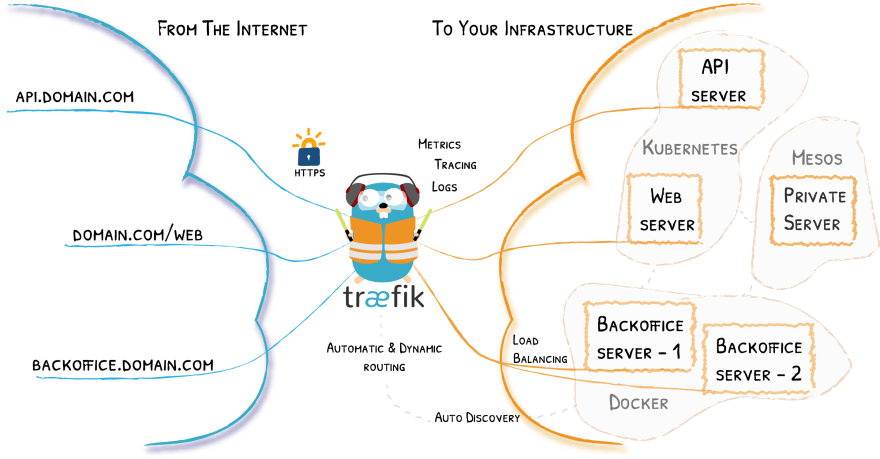
Traefik is the modern standard for Routing, Load Balancing, and Proxies for the Cloud, On-Prem, and Hybrid workloads. It works with various backends such as Docker, Swarm, Kubernetes, Marathon, Mesos, Consul, Etcd, Zookeeper, BoltDB, Rest API, file… – to manage its configuration automatically and dynamically. It automatically inspects and configures microservice infrastructures.
Why Traefik is used for?
Traefik was introduced to resolve concerns related to the operation and management of large applications and systems. Interaction between services is a critical component of an application’s runtime behavior. Connection between services is an important component of the runtime behavior of an application and Traefik gives developers greater visibility and reliability, by providing them a layer of abstraction to control this communication. It can be very complicated to measure and diagnose application problems and failures without a dedicated layer of control and this is where Traefik help us.
What are the benefits of Traefik?
- Traefik can constantly updates its configuration – no restarts required
- Traefik can support multiple load balancing algorithms
- Traefik enables HTTPS to your microservices by leveraging “Let’s Encrypt (wildcard certificates support)”
- Traefik has very clean and dynamic web UI
- Traefik comes with Websocket, HTTP/2, GRPC ready
- It provides metrics (Rest, Prometheus, Datadog, Statsd, InfluxDB)
- Traefik keeps access logs (JSON, CLF).
- It is very fast
- It exposes a Rest API
- Support is pro-active and development is fluent.
- It packaged as a single binary file and available as a tiny official docker image
Who should enroll for Traefik Certification Course?
- Developers
- System Administrators
- Operations
- IT Professionals
- Anyone interested to learn about modern Edge Routers & Cloud Native technology
What are the pre-requisites to learn Traefik?
- Familiarity with CLI interface but not mandatory
- The ability and permissions to install Docker for Mac/Linux/Windows
How to learn Traefik?
If you’re looking forward to learning Traefik under the guidance of experts, then you must go for a structured Traefik certification training course provided by DevOpsSchool, where you will learn various case-based scenarios, along with exhaustive topic-wise learning, demo based sessions, and assignments, which would prepare you as Traefik expert in the industry.

MotoShare.in delivers cost-effective bike rental solutions, empowering users to save on transportation while enjoying reliable two-wheelers. Ideal for city commutes, sightseeing, or adventure rides.
Find Trusted Cardiac Hospitals
Compare heart hospitals by city and services — all in one place.
Explore Hospitals





