What is OpenShift?
OpenShift is an application platform based on Kubernetes, developed by Red Hat. It’s designed to help developers build, deploy, and manage containerized applications across various environments, including on-premises data centers, public clouds, and hybrid infrastructures.
OpenShift extends Kubernetes by adding features that make it easier to use, more secure, and better suited for enterprise environments. It provides a complete platform for application lifecycle management, from development and testing to deployment and operations.
🏁 Summary:
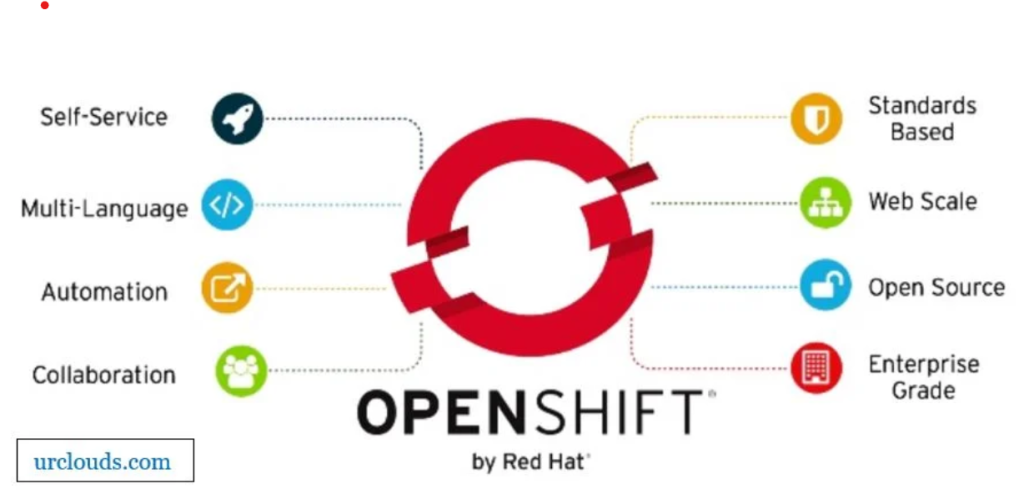
OpenShift is not just a container orchestrator like Kubernetes — it is a full-featured platform that helps organizations build, deploy, manage, and scale applications and infrastructure in one place.
In simple terms:
📦 OpenShift = Kubernetes + DevOps Tools + Security + UI + Automation
✅ Primary Category
| Category | Description |
|---|---|
| Container Application Platform | A full platform to build, run, and manage containerized applications. It includes container orchestration (Kubernetes), CI/CD, Dev tools, monitoring, security, and more. |
So, OpenShift is best described as a:
💡 “Container Application Platform” or “Kubernetes Platform”
🔁 OpenShift also fits into these categories:
| Category | Why OpenShift Fits |
|---|---|
| Container Orchestration | Built on Kubernetes, it manages containers at scale. |
| Platform-as-a-Service (PaaS) | Provides developer tools, templates, build pipelines, etc. |
| DevOps Platform | Offers CI/CD, GitOps, security, monitoring, and automation. |
| Hybrid Cloud Platform | Can run apps on-prem, public cloud, or edge locations. |
| MLOps Platform | Includes OpenShift AI for machine learning workflows. |
| Infrastructure Automation | Automates provisioning, scaling, and management of infrastructure. |
✅ Why Should You Use OpenShift?
Here’s why many companies choose OpenShift:
1. All-in-One Platform
OpenShift gives you everything in one place:
- Kubernetes (orchestration)
- CI/CD tools (for building & deploying apps)
- Monitoring & logging tools
- Security & user access controls
- Developer-friendly web console and CLI
2. Enterprise-Ready
OpenShift is built for large companies that need:
- High security
- Compliance with regulations
- 24/7 support from Red Hat
3. Easy for Developers
Developers get:
- Self-service environments
- Templates to deploy apps quickly
- Dev Spaces (like a coding IDE in your browser)
4. Runs Anywhere
You can run OpenShift:
- On your laptop
- In your data center
- In the cloud (AWS, Azure, GCP, IBM Cloud)
- Even on the edge (remote locations like factories)
🔧 Example Category Mapping
| Category | Example Tool in OpenShift |
|---|---|
| Orchestration | Kubernetes |
| CI/CD | Tekton (Pipelines) |
| GitOps | ArgoCD |
| Build | Source-to-Image (S2I) |
| Monitoring | Prometheus, Grafana |
| Logging | Fluentd, Elasticsearch, Kibana |
| Serverless | Knative |
| API Gateway | 3scale |
| IDE | Dev Spaces |
| Storage | ODF, CSI |
| VM Support | KubeVirt |
| Networking | Istio, Routes |
| Security | RBAC, SCC, OAuth |
| MLOps | OpenShift AI |
❌ Why Should You Not Use OpenShift?
OpenShift is great, but it may not be the best fit for everyone. Here’s why:
1. Cost
- OpenShift is not free (unless you use OKD, the community version)
- Red Hat subscriptions and support can be expensive for small companies or startups
2. Complex Setup
- The installation and upgrade process can be complicated
- Requires skilled DevOps/SRE engineers to manage (unless you’re using ROSA or Dedicated)
3. Vendor Lock-in
- OpenShift adds custom features on top of Kubernetes
- If you ever want to move away from OpenShift, you may need to rework your app setup
🕰️ A. History of OpenShift (in short)
| Year | Milestone |
|---|---|
| 2011 | Red Hat launches OpenShift as a Platform-as-a-Service (PaaS), initially supporting Java, Ruby, Python, and PHP. |
| 2014 | Red Hat open-sources OpenShift as OpenShift Origin (now OKD). |
| 2015 | Red Hat starts rebuilding OpenShift on Kubernetes, moving away from its older container engine (GEARd). |
| 2016 | OpenShift v3.x is released — the first version based on Kubernetes and Docker. |
| 2018 | OpenShift 3.11 becomes the last version to support Docker as the runtime. |
| 2019 | Red Hat releases OpenShift 4.x, now based on CRI-O container runtime and Operator-based architecture. |
| 2019 | Red Hat is acquired by IBM for $34 billion — OpenShift becomes IBM’s flagship container strategy. |
| 2020–2023 | Major expansion: ROSA (AWS), ARO (Azure), OpenShift Virtualization, Serverless, GitOps, and AI are added. |
| 2024 | OpenShift 4.x continues evolving with support for Lightspeed (AI), Edge, and sandboxed containers. |
🚀 OpenShift Release & Version Info
| Series | Highlights |
|---|---|
| OpenShift 1.x–2.x | PaaS model with custom gear containers (not Kubernetes-based) |
| OpenShift 3.x | Introduced Kubernetes + Docker + OC CLI |
| OpenShift 3.11 | Last 3.x version; stable and widely used for years |
| OpenShift 4.1+ | Operator-based lifecycle, CRI-O, MachineSets, Installer, etc. |
| OpenShift 4.12–4.14 (2023) | Enhanced GitOps, AI/ML, Virtualization, Edge support |
| Latest (as of 2024) | OpenShift 4.14, with Lightspeed AI preview, sandboxed containers, and advanced hybrid cloud support |
🛠️ Technologies & Programming Languages Used in OpenShift
| Component | Language |
|---|---|
| Core platform (API, controllers) | Go (Golang) — like Kubernetes |
| Web console (UI) | TypeScript + ReactJS |
CLI tool (oc) | Go (Golang) |
| Source-to-Image (S2I) | Go, Shell |
| Installer | Go, Ansible (legacy) |
| Operators (OLM, CRDs) | Go |
| Dev Spaces | Java, TypeScript, Eclipse Che stack |
| Pipelines (Tekton) | Go |
| GitOps (ArgoCD) | Go, YAML |
| Monitoring (Prometheus, Grafana) | Go, JS/TS for dashboards |
✅ Most of OpenShift is written in Golang, because it builds on Kubernetes, which is also written in Go.
📌 Summary
- Created by Red Hat in 2011, became Kubernetes-based from v3.x (2015).
- Uses Golang, TypeScript, Java, and React.
- Current version is OpenShift 4.x, focused on hybrid cloud, AI, and enterprise-grade operations.
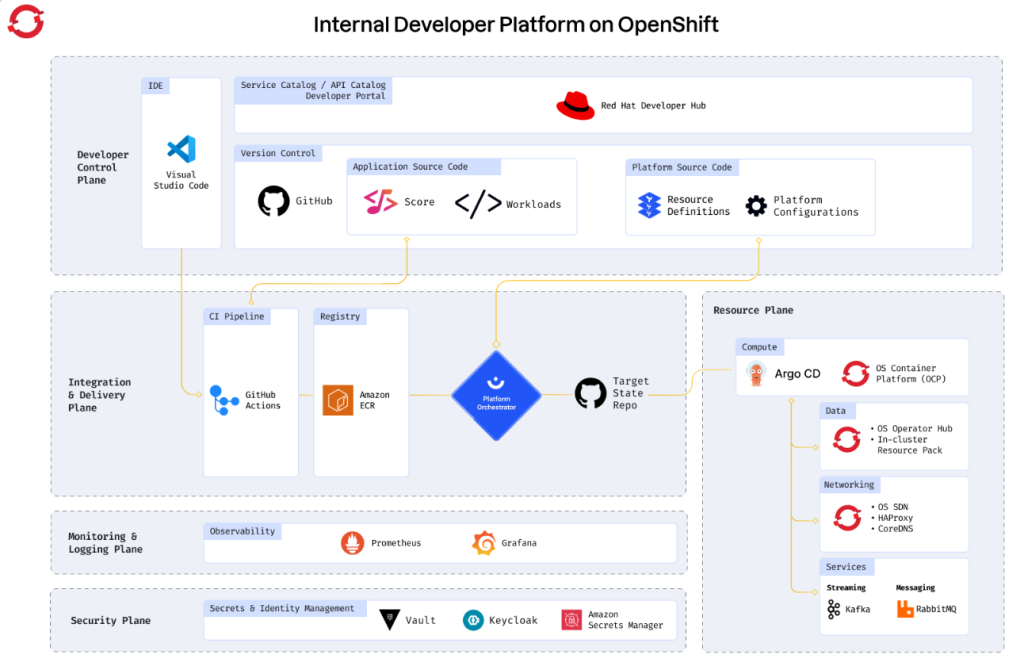
✨ What Are the Features of OpenShift?
| Feature | Description |
|---|---|
| ✅ Kubernetes Built-in | OpenShift is built on Kubernetes |
| 🌐 Web Console | Easy-to-use UI for managing apps and clusters |
⚙️ CLI (oc) | Command-line tool like kubectl, but more powerful |
| 🧪 CI/CD Pipelines | Built-in automation for build/test/deploy |
| 🔐 Security | Role-based access, secure containers, policy controls |
| 🧰 Integrated Tools | GitOps (ArgoCD), Serverless, Service Mesh, Monitoring |
| 📦 Container Registry | Built-in image registry for storing Docker images |
| 🧑💻 Dev Spaces | Browser-based developer environments |
| 🚀 Auto-scaling | Automatically adjust resources based on demand |
| 🔁 Rolling Updates | Deploy new versions without downtime |
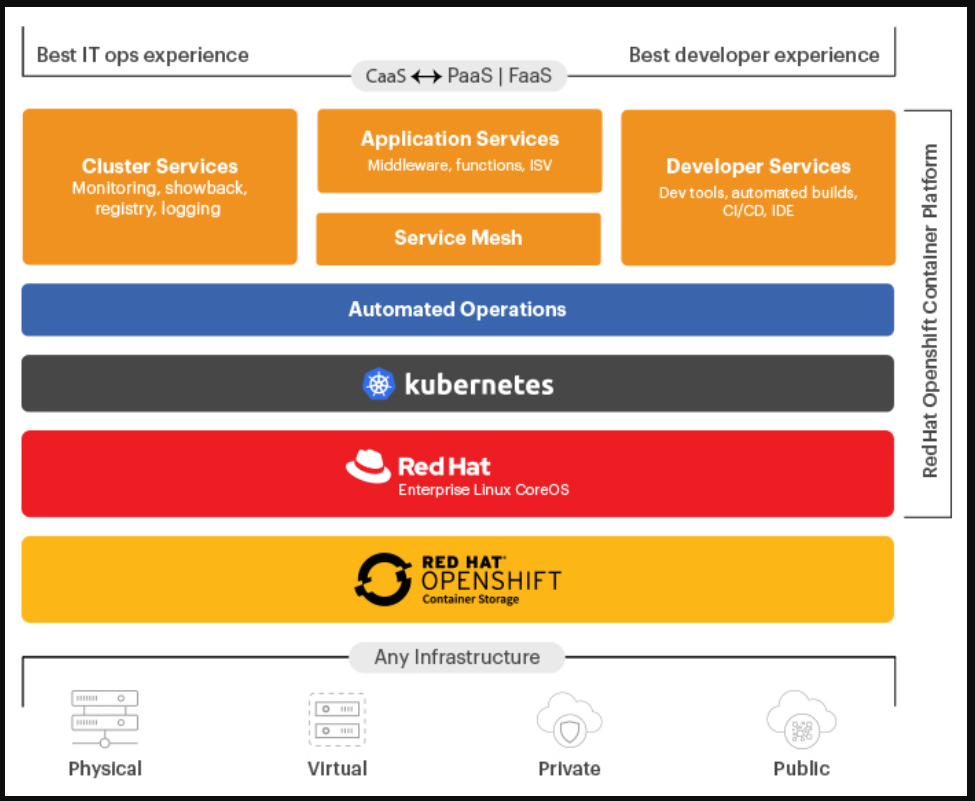
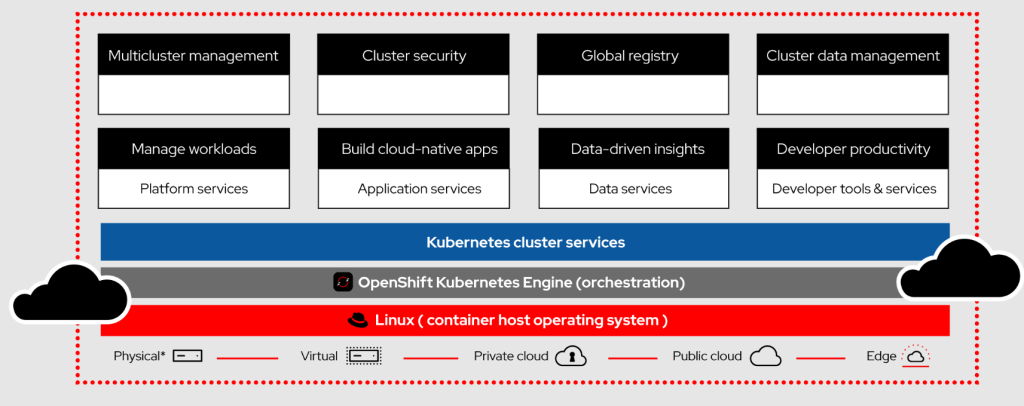
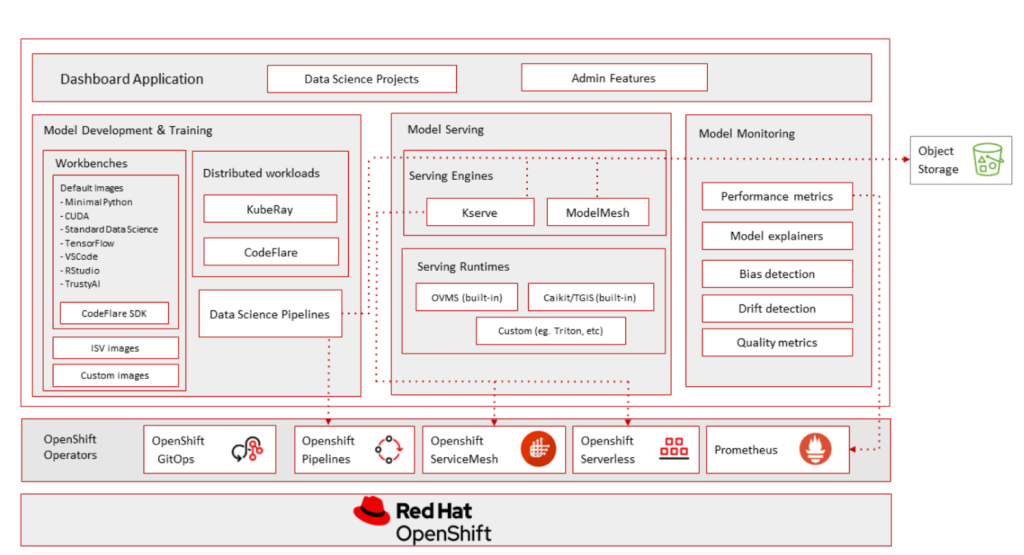
🔁 OpenShift Architecture
🔁 Best Alternatives to OpenShift — With Direct Comparison
| Alternative | Category | How It Compares to OpenShift | Strengths | Weaknesses |
|---|---|---|---|---|
| Rancher (by SUSE) | Kubernetes Management Platform | Manages multiple K8s clusters like OpenShift does | Great UI, Multi-cluster, Lightweight | Lacks built-in CI/CD, registry |
| VMware Tanzu | Kubernetes + Dev Platform | Like OpenShift but built around VMware ecosystem | Deep vSphere integration, Secure supply chain | Complex setup, VMware-focused |
| Platform9 | SaaS-managed Kubernetes | OpenShift-style features but 100% SaaS-managed | Easy, multi-cloud, minimal ops | Some features require enterprise tier |
| Amazon EKS Blueprints / ROSA | Managed Kubernetes | ROSA is an OpenShift variant on AWS; EKS + Blueprints adds GitOps, logging, etc. | Native AWS, integrates well | Requires assembly of parts |
| Google Anthos | Hybrid K8s Platform | Competes directly with OpenShift for hybrid/multi-cloud | Google infra + Istio + Migrate for Anthos | High complexity, Google-centric |
| Azure AKS + DevOps + Arc | Managed K8s + Tools | Azure’s cloud-native equivalent to OpenShift | Azure-native GitOps, DevOps pipelines | Less unified platform than OpenShift |
| Docker Enterprise (Mirantis) | Container Platform | Docker + Kubernetes + UI + Secure registry | Legacy Docker appeal, built-in Swarm | Declining popularity, commercial-only |
| K3s + ArgoCD + Flux | Lightweight DIY Platform | Combine K3s, ArgoCD, Prometheus, etc. to mimic OpenShift | Lightweight, great for edge or small infra | DIY integration, no support |
| OKD (Community OpenShift) | Community Platform | 100% OpenShift without Red Hat branding or support | Same features as OpenShift | No official support, slower updates |
🥇 Most Comparable to OpenShift Feature-by-Feature
| Feature | OpenShift | Rancher | Tanzu | Anthos | Platform9 |
|---|---|---|---|---|---|
| K8s Orchestration | ✅ | ✅ | ✅ | ✅ | ✅ |
| CI/CD (Pipelines) | ✅ (Tekton) | ❌ (external) | ✅ (TAP) | ❌ (use external) | ✅ (external) |
| GitOps | ✅ (ArgoCD) | ✅ | ✅ | ✅ | ✅ |
| Developer IDEs | ✅ (Dev Spaces) | ❌ | ✅ | ✅ | ❌ |
| App Templates | ✅ | ✅ | ✅ | ✅ | ✅ |
| Built-in Registry | ✅ | ❌ | ✅ | ❌ | ❌ |
| Logging & Monitoring | ✅ | External setup | Built-in | Built-in | Built-in |
| Web Console | ✅ | ✅ | ✅ | ✅ | ✅ |
| Security & RBAC | ✅ | ✅ | ✅ | ✅ | ✅ |
| Runs Anywhere | ✅ | ✅ | ✅ | ✅ | ✅ |
| Enterprise Support | ✅ | ✅ | ✅ | ✅ | ✅ |
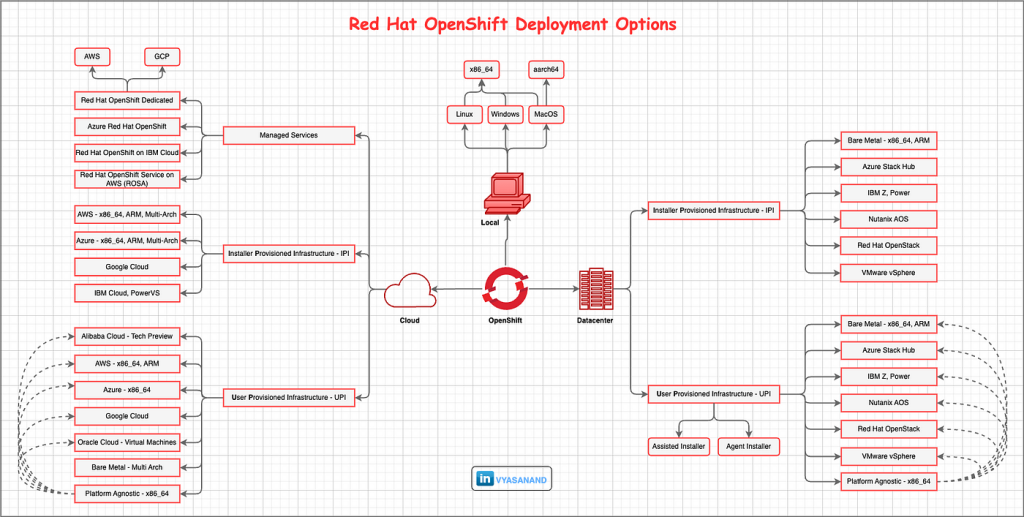
Red Hat OpenShift supports several additional deployment models and variants
Yes, besides the core five you mentioned earlier, Red Hat OpenShift supports several additional deployment models and variants, especially as it expands across hybrid cloud, edge, and specialized workloads.
Here’s a full list of all major OpenShift deployment models, including newer and specialized ones:
🧱 1. OpenShift Container Platform (OCP)
- Self-managed
- Deployed on on-prem, bare metal, VMware, or public/private clouds
- Full control, highly customizable
- Requires more ops effort
☁️ 2. OpenShift Dedicated
- Red Hat-managed OpenShift
- Runs in your AWS or Google Cloud account
- Ideal for enterprises who want full-featured OpenShift but don’t want to manage it themselves
🌐 3. OpenShift Online
- SaaS version
- Hosted and managed by Red Hat
- Ideal for quick starts, dev/testing
- No infrastructure setup needed
🌩️ 4. ROSA (Red Hat OpenShift Service on AWS)
- Co-managed by Red Hat + AWS
- Provisioned directly through AWS Console
- Integrated with AWS IAM, CloudWatch, Billing
- Best fit for AWS-native customers
🛰️ 5. ARO (Azure Red Hat OpenShift)
- Similar to ROSA but for Microsoft Azure
- Jointly managed by Microsoft + Red Hat
- Native Azure integration (Azure AD, billing, etc.)
🧪 6. OKD (Origin Kubernetes Distribution)
- The community version of OpenShift
- Free and open-source
- Lacks enterprise support, but great for testing and hobby use
🌎 7. OpenShift on IBM Cloud
- Fully managed by IBM
- Useful for enterprises with IBM infrastructure or hybrid cloud strategies
- Deeply integrated into IBM Cloud PaaS
📦 8. OpenShift Local (Formerly CodeReady Containers)
- Single-node OpenShift cluster on your laptop
- Ideal for development or learning
- Runs via virtualization (like CRC or Podman)
🧊 9. OpenShift at the Edge
- Lightweight OpenShift clusters designed for edge locations
- Example: Single-node OpenShift (SNO) or 3-node compact clusters
- Used in retail stores, telco base stations, IoT sites
🔒 10. OpenShift on Bare Metal
- Directly installed on physical servers
- High performance, direct hardware access
- Popular for data centers, AI/ML workloads, telecom
🔁 11. OpenShift Virtualization
- Run VMs inside OpenShift alongside containers
- Uses KubeVirt
- Reduces need for separate virtualization platforms (e.g., VMware)
☁️ 12. OpenShift on Private Cloud / VMWare
- OpenShift deployed inside private clouds like:
- VMware vSphere
- Red Hat OpenStack
- Nutanix
- Gives control while utilizing existing infrastructure
🛰️ 13. OpenShift on OpenStack (RHOSP)
- Run OpenShift clusters on top of OpenStack
- Cloud-native infrastructure with strong isolation and scaling
📦 Deployment Summary Table
| Model | Hosted By | Managed By | Best Fit |
|---|---|---|---|
| OCP | On-prem/cloud | You | Full control |
| Dedicated | AWS/GCP | Red Hat | Managed in your cloud |
| Online | Red Hat | Red Hat | Dev/test/SaaS use |
| ROSA | AWS | Red Hat + AWS | AWS-native users |
| ARO | Azure | Microsoft + Red Hat | Azure-native users |
| IBM Cloud | IBM | IBM | IBM customers |
| OKD | You | You (community) | Free/Open-source dev |
| Local | You (laptop) | You | Local testing |
| Edge | Edge sites | You | IoT, remote ops |
| Virtualization | You | You | VMs inside OpenShift |
| OpenStack | On-prem | You | Cloud-native infra |
| Bare Metal | On-prem | You | High-performance workloads |
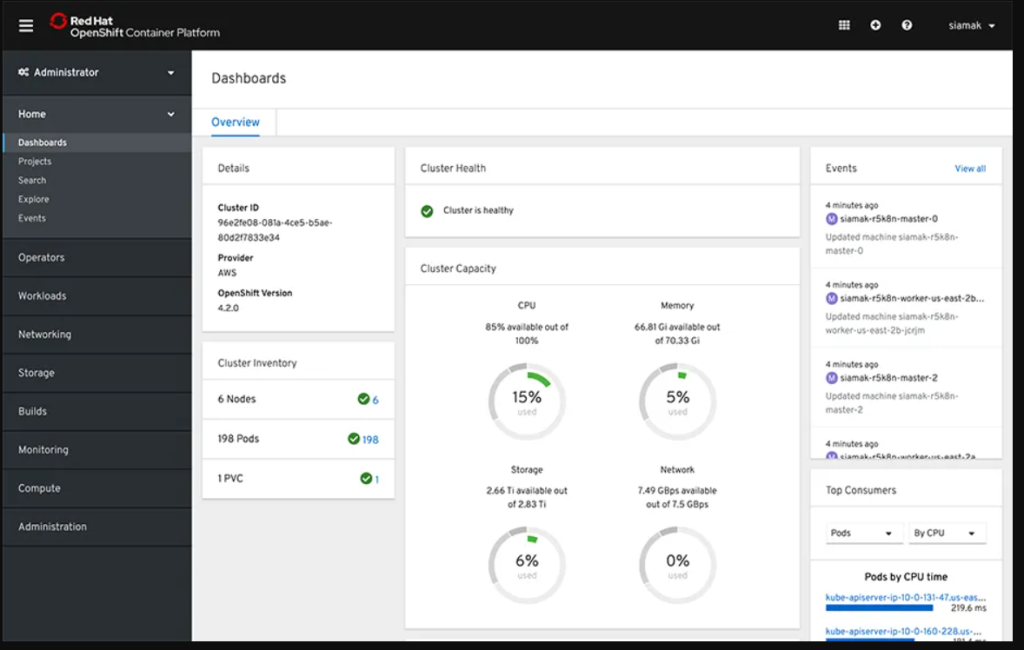
Welcome Page of Open Shift

I’m Rajesh Kumar, a DevOps, SRE, DevSecOps, Cloud, and Platform Engineering expert passionate about sharing practical knowledge, real-world experiences, and industry best practices. I have worked at Cotocus and regularly write about technology, travel, investing, health, product reviews, and digital marketing through my various platforms.
I publish technical articles at DevOps School, travel stories at Holiday Landmark, stock market insights at Stocks Mantra, health and fitness guidance at My Medic Plus, product reviews at TrueReviewNow, and SEO and digital marketing strategies at Wizbrand.
Find Trusted Cardiac Hospitals
Compare heart hospitals by city and services — all in one place.
Explore Hospitals