
Hybrid cloud combines on-premises infrastructure or private cloud with one or more public clouds, run as a single environment with shared tooling, security and operations. Workloads can stay close to data and regulated systems while still using public cloud capacity and managed services.
The posts here cover the platforms that make hybrid setups work in practice: Red Hat OpenShift as a Kubernetes-based container platform, IBM Cloud Pak for running containerized enterprise software on any cloud, and Azure Stack HCI for running virtualized workloads on-premises with Azure integration. Comparison guides review multi-cloud management tools such as Azure Arc and CloudBolt, along with infrastructure as code tools like Pulumi, Crossplane and Spacelift for governance, drift and cost control across environments. Strategy articles look at integration hurdles, team adoption and why CIOs are reassessing hybrid plans, including where Nutanix fits.
Role blueprints for lead cloud architects, cloud migration specialists and network architects describe the responsibilities, skills and KPIs behind hybrid designs. The material suits platform engineers, architects and IT leaders planning or running workloads that span data centers and public clouds.
Start here
- What is OpenShift and How it works? An Overview and Its Use Cases – Explains how OpenShift extends Kubernetes for enterprise containers across hybrid and multi-cloud environments.
- What is Azure Stack HCI? – Shows how Microsoft's hyperconverged option runs on-premises workloads with Azure integration, including setup steps.
- What is IBM Cloud Pak? – Covers IBM Cloud Pak's containerized software and common operating model across clouds.
- The Shift to Hybrid Cloud: Overcoming Integration Hurdles in Enterprise Environments – Practical guidance on planning, migration, governance and automation when moving to hybrid cloud.
- Top 10 Multi-Cloud Management Tools in 2026: Features, Pros, Cons & Comparison – Compares tools like Azure Arc, CloudBolt and IBM Cloud Pak for managing several clouds.
- 7 Best IaC Tools for Hybrid Cloud Deployments in 2026 – Reviews IaC tools for hybrid deployments with attention to governance, drift and cost.
- Lead Cloud Architect: Role Blueprint, Responsibilities, Skills, KPIs, and Career Path – Outlines the landing zones, reference architectures, skills and KPIs a lead cloud architect owns.
Latest Hybrid Cloud articles
OpenStack vs CloudStack: Practical Guide to Open-Source IaaS Cloud Platforms
OpenStack and CloudStack are two established open-source options for building infrastructure clouds. This guide compares their models, shows a typical provisioning workflow, and provides practical command examples.
Cloud Adoption in Organizations: Service Models, Hybrid Tradeoffs, and Practical First Steps
Cloud computing evolved from a 2010 buzzword into a core operating model for modern IT. This guide explains service models, cloud-only vs hybrid decisions, workload placement, and practical migration starting points.
7 Best IaC Tools for Hybrid Cloud Deployments in 2026
Key Takeaways • Hybrid cloud IaC needs architecture decisions, not only deployment automation. • InfrOS leads by connecting design, validation, cost, and governance. • The strongest tools…
Why CIOs Are Rethinking Hybrid Cloud in and beyond 2026?
As cloud costs, security expectations, and business demands keep rising, many CIOs are taking a closer look at Nutanix solutions to build a hybrid cloud strategy that…
The Shift to Hybrid Cloud: Overcoming Integration Hurdles in Enterprise Environments
Most enterprise teams already utilize various cloud services, yet digital transformation often stalls when data, security protocols, and application dependencies remain trapped in silos. This friction usually…
Lead Cloud Migration Specialist: Role Blueprint, Responsibilities, Skills, KPIs, and Career Path
The **Lead Cloud Migration Specialist** is a senior individual contributor who plans and drives complex application, data, and infrastructure migrations from on-premises or hosted environments into public cloud and hybrid cloud platforms. The role combines deep technical migration expertise with program-level orchestration—ensuring migrations are secure, reliable, cost-aware, and aligned to platform standards and business outcomes.
Senior Network Architect: Role Blueprint, Responsibilities, Skills, KPIs, and Career Path
The Senior Network Architect designs, evolves, and governs the end-to-end network architecture that underpins a software company’s products, internal platforms, and enterprise IT services. This role translates business requirements (availability, performance, security, cost, and speed of delivery) into scalable network designs spanning data centers, cloud networks, and connectivity to users, partners, and third-party services.
Principal Network Architect: Role Blueprint, Responsibilities, Skills, KPIs, and Career Path
The **Principal Network Architect** is the enterprise-level technical authority responsible for designing, governing, and evolving the company’s network architecture across data centers, cloud environments, and edge connectivity to enable secure, reliable, and scalable product delivery. This role translates business strategy and platform requirements into cohesive network designs, standards, and roadmaps, and ensures that network capabilities keep pace with software delivery velocity, resilience expectations, and security posture.
Lead Infrastructure Architect: Role Blueprint, Responsibilities, Skills, KPIs, and Career Path
The **Lead Infrastructure Architect** designs, evolves, and governs the target-state infrastructure architecture that powers reliable, secure, cost-effective delivery of software products and internal platforms. This role leads architecture decisions across cloud, on-prem (where applicable), networking, identity, compute, storage, and operational tooling—translating business and engineering needs into practical reference architectures and roadmaps that teams can implement.
Lead Cloud Architect: Role Blueprint, Responsibilities, Skills, KPIs, and Career Path
The **Lead Cloud Architect** is accountable for designing, evolving, and governing the organization’s cloud architecture to enable secure, reliable, cost-effective delivery of software products and internal platforms. This role translates business and product strategy into cloud-native reference architectures, landing zones, patterns, and guardrails that engineering teams can adopt at scale.
Top 10 Cloud Migration Tools: Features, Pros, Cons & Comparison
Introduction Cloud Migration Tools are specialized software platforms designed to help organizations move applications, data, workloads, and infrastructure from on-premises environments—or between clouds—into modern cloud platforms. As…
Top 10 Multi-Cloud Management Tools in 2026: Features, Pros, Cons & Comparison
Introduction: The Importance of Multi-Cloud Management Tools in 2026 As businesses increasingly rely on cloud services to store data, run applications, and enable innovation, the multi-cloud strategy…
Top 10 Cloud Storage Gateways in 2026: Features, Pros, Cons & Comparison
Introduction In 2026, cloud storage gateways are more crucial than ever for businesses and organizations that want to optimize their storage infrastructure, especially when managing large volumes…
What is OpenShift and How it works? An Overview and Its Use Cases
What is OpenShift? OpenShift is an application platform based on Kubernetes, developed by Red Hat. It’s designed to help developers build, deploy, and manage containerized applications across…
What is IBM Cloud Pak?
Cloud Pak is a term often associated with IBM’s cloud computing offerings. IBM Cloud Paks are enterprise-ready, containerized software solutions that provide a common operating model and…
What is OpenShift and use cases of OpenShift?
What is OpenShift? OpenShift is a family of containerization software products made by Red Hat. The most popular offering is OpenShift Container Platform, a hybrid cloud platform…
Cloud Orchestration tools in 2024
The cloud orchestration landscape continues to evolve rapidly in 2024, driven by increasing needs for hybrid and multi-cloud management, enhanced security, and automation powered by AI/ML. Here’s…
Cloud Management tools in 2024
The cloud management landscape in 2024 is a vibrant playground of innovation, with tools constantly adapting to the growing complexity of multi-cloud and hybrid environments. Here’s a…
How to Use GitOps for Hybrid Cloud?
Are you struggling with managing your hybrid cloud infrastructure? Do you find it difficult to keep track of changes made in different environments? If yes, then you…
What is Azure Stack HCI?
Azure Stack HCI is a hyper-converged infrastructure (HCI) solution offered by Microsoft that allows businesses to run virtualized workloads on-premises using their own hardware while also seamlessly…
Top open source multi cloud management platform
Apache CloudStack Apache CloudStack is an open-source Infrastructure as a Service (IaaS) platform for managing and deploying cloud computing environments. It provides a set of tools for…
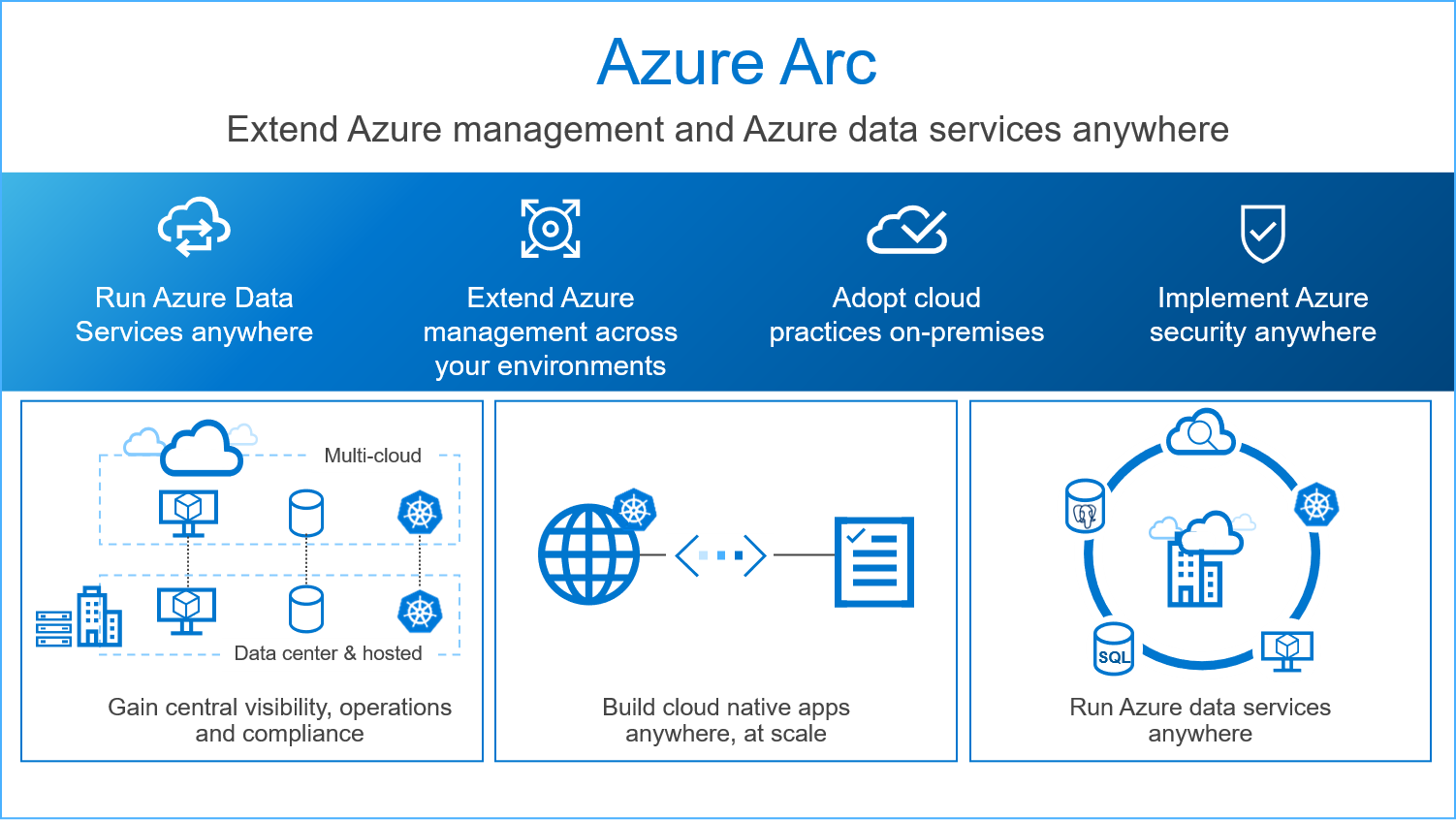
What is Azure Arc?
Hi guys, today we will discuss what Azure Arc is? What are the roles and responsibilities of an Azure Arc? But before moving to the topic, we…

AWS Certified Advanced Networking – Specialty Explained
AWS Certified Advanced Networking – Specialty Certification is an industry-supported credential designed for network practitioners looking forward to starting a career in the field of networking and…
Hybrid Cloud: frequently asked questions
What is the difference between hybrid cloud and multi-cloud?
Hybrid cloud connects private or on-premises infrastructure with public cloud and manages them together. Multi-cloud means using more than one public cloud provider; an environment can be both at once.
Why do organizations choose hybrid cloud?
Common reasons include keeping regulated or latency-sensitive data on-premises, reusing existing data center investments, and adding public cloud capacity when needed. The trade-off is extra integration, networking and governance work.
Is OpenShift the same as Kubernetes?
No. OpenShift is Red Hat's platform built on Kubernetes, adding developer tooling, security defaults, a built-in registry and enterprise support, and it can run on-premises and on major public clouds.
Which tools help manage hybrid cloud infrastructure?
Teams typically combine a consistent runtime such as OpenShift or Azure Stack HCI, a management layer such as Azure Arc, and infrastructure as code tools like Pulumi or Crossplane to provision resources the same way everywhere.