
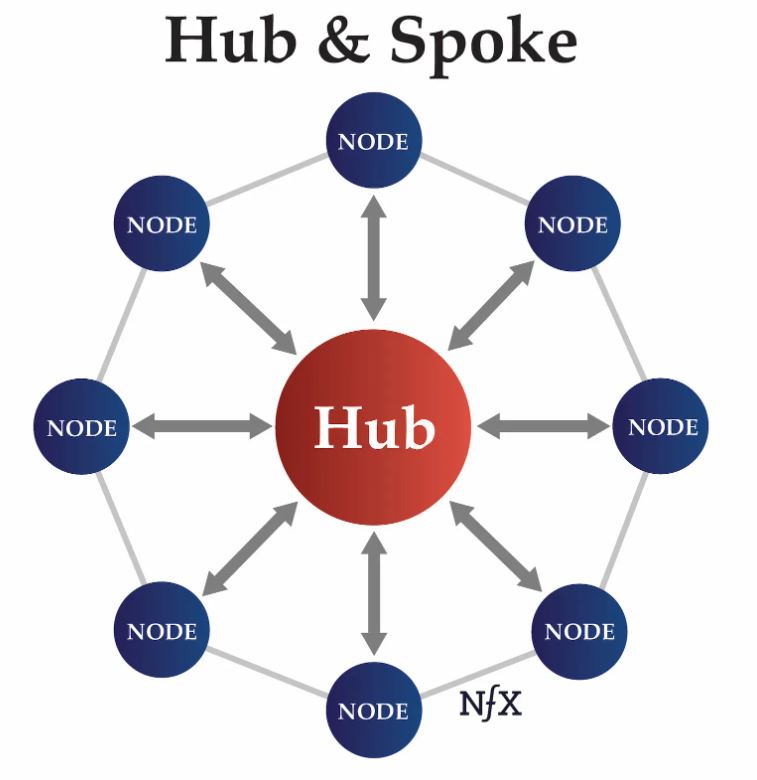
The hub and spoke model is a design pattern that is commonly used in transportation and logistics systems. In this model, a central hub (or “hub”) serves as a central point of connection for a number of outlying “spokes”.
In transportation systems, the hub is typically a major airport or train station, while the spokes are smaller regional airports or train stations. In this context, the hub serves as a central point of connection for passengers and cargo, with flights or trains departing from the hub to various destinations, and also with flights or trains arriving at the hub from various origins.
In logistics systems, the hub is typically a warehouse or distribution center, while the spokes are retail stores or other locations where goods are received, stored, or distributed. In this context, the hub serves as a central point for receiving, storing, and distributing goods to various locations, and also for collecting and consolidating goods from various locations for shipment to other destinations.
In general, the hub and spoke model is designed to allow for more efficient and cost-effective use of resources, such as aircraft, trains, and trucks, by consolidating traffic through a central point and then distributing it to various locations. It also allows for more efficient use of facilities, such as airports, train stations, and warehouses, by allowing them to serve a larger area.
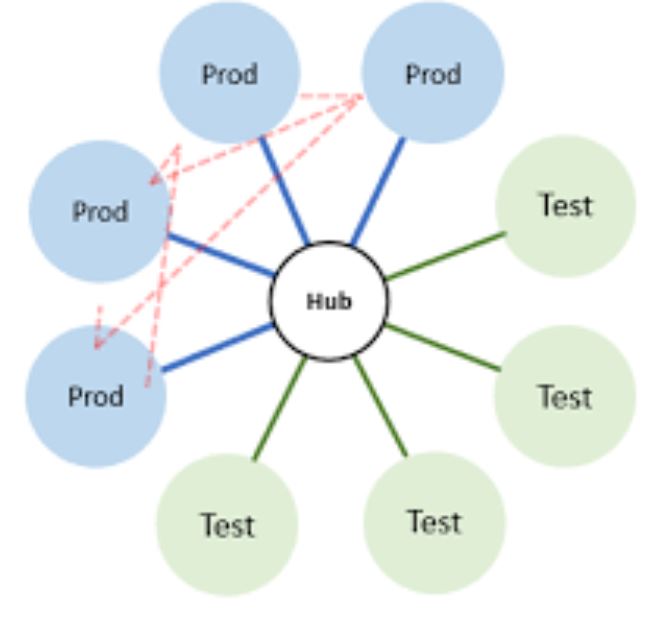
How to use hub and spoke model in software?
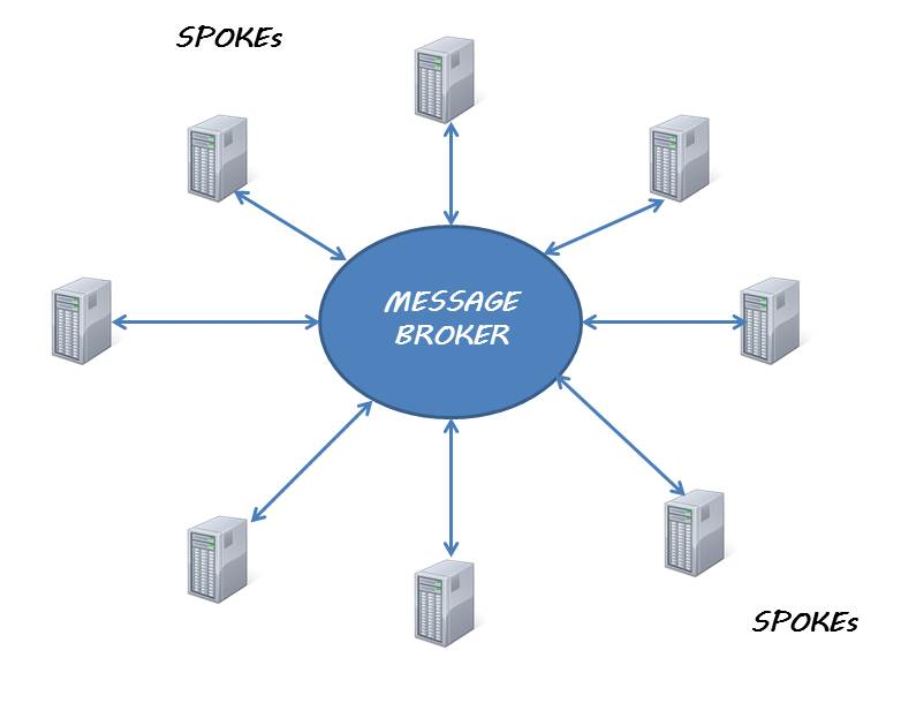
In software development, the hub and spoke model is a design pattern that is used to organize and structure large and complex systems. In this context, the “hub” is typically a central service or component that acts as a central point of connection for a number of “spokes”, which are other services or components that provide specific functionality.
The main goal of the hub and spoke model in software development is to promote loose coupling and high cohesion between the different parts of the system. Loose coupling means that the different components or services are not tightly dependent on one another, which makes it easier to change or replace one component without affecting the others. High cohesion means that each component or service has a single, well-defined responsibility, which makes it easier to understand and maintain.
The hub and spoke model can be implemented in various ways, depending on the technology and architecture of the system. A few examples of how this model can be implemented:
- In a microservices architecture, the hub can be a service registry or an API gateway, which acts as a central point of connection for all the microservices.
- In a service-oriented architecture, the hub can be a message broker or an enterprise service bus, which acts as a central point of connection for all the services.
- In a monolithic architecture, the hub can be a central component or module, which acts as a central point of connection for all the other components or modules.
The hub and spoke model can be beneficial for many types of software systems, particularly for systems that are large, complex, and need to be highly available and scalable. However, it’s important to note that this model can also add complexity to the system and make it harder to understand, debug and maintain if not designed and implemented carefully.

I’m Rajesh Kumar, a DevOps, SRE, DevSecOps, Cloud, and Platform Engineering expert passionate about sharing practical knowledge, real-world experiences, and industry best practices. I have worked at Cotocus and regularly write about technology, travel, investing, health, product reviews, and digital marketing through my various platforms.
I publish technical articles at DevOps School, travel stories at Holiday Landmark, stock market insights at Stocks Mantra, health and fitness guidance at My Medic Plus, product reviews at TrueReviewNow, and SEO and digital marketing strategies at Wizbrand.
Find Trusted Cardiac Hospitals
Compare heart hospitals by city and services — all in one place.
Explore Hospitals





