
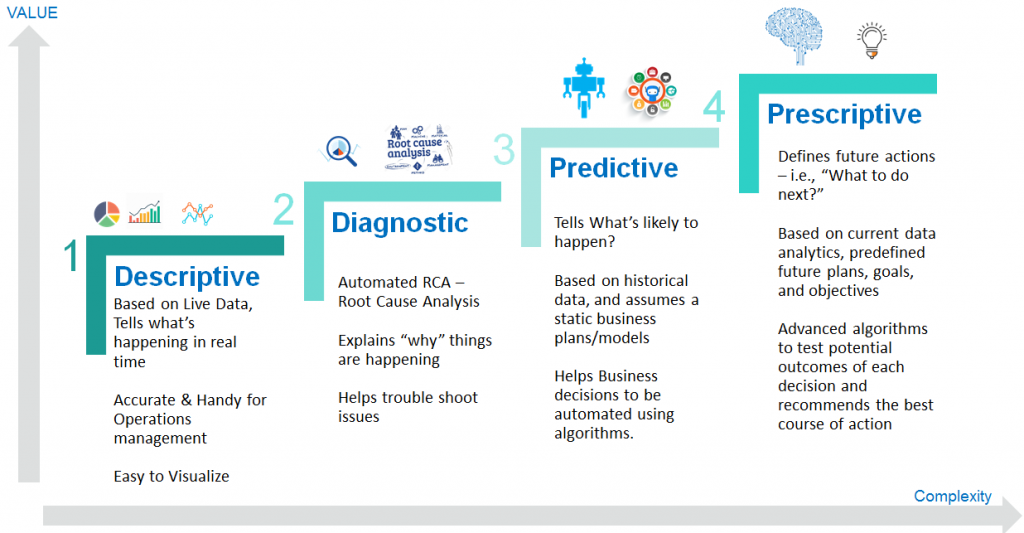
What the Heck Are Descriptive, Predictive, and Prescriptive Analytics?
If you’re like most people, you’re probably confused about the difference between descriptive, predictive, and prescriptive analytics. Heck, you might not even know what those terms mean! But fear not, my friend, because I’m here to clear things up for you.
In this article, we’ll dive into the world of analytics and explore what each of these types of analytics means, how they differ from each other, and how they can be used to gain insights and make decisions.
Descriptive Analytics: The Art of Looking Backwards
Descriptive analytics is all about looking at past data and trying to make sense of it. It’s like looking in the rearview mirror of your car – you can see where you’ve been, but you can’t see where you’re going.
Descriptive analytics involves analyzing historical data to identify patterns, trends, and relationships. This type of analytics is useful for answering questions like:
- What happened?
- How many customers did we have last quarter?
- What were our sales figures for the past year?
Descriptive analytics is a great starting point for any data analysis project. It provides a baseline understanding of what has happened in the past and can help inform future decisions.
Predictive Analytics: The Art of Looking Forward
Predictive analytics takes things a step further by using historical data to make predictions about the future. It’s like looking through the windshield of your car – you can see where you’re going, but you can’t see what’s behind you.
Predictive analytics involves using statistical algorithms and machine learning techniques to analyze historical data and make predictions about future events. This type of analytics is useful for answering questions like:
- What will happen?
- How many customers can we expect to have next quarter?
- What will our sales figures look like next year?
Predictive analytics is valuable because it allows us to make informed decisions based on what we think will happen in the future. By using predictive analytics, we can identify potential opportunities and risks and take action to capitalize on or mitigate them.
Prescriptive Analytics: The Art of Making Decisions
Prescriptive analytics takes things a step further by not only predicting what will happen, but also recommending what to do about it. It’s like having a GPS in your car – you not only know where you’re going, but you also get turn-by-turn directions on how to get there.
Prescriptive analytics involves using historical data, statistical algorithms, and machine learning techniques to not only predict what will happen, but also recommend a course of action. This type of analytics is useful for answering questions like:
- What should we do?
- How can we increase customer satisfaction?
- What marketing strategies should we use to increase sales?
Prescriptive analytics is the most advanced form of analytics, and it requires a deep understanding of the underlying data and the business context in which it is being used. By using prescriptive analytics, we can make data-driven decisions that are likely to have a positive impact on the business.
Wrapping Up
So there you have it – the difference between descriptive, predictive, and prescriptive analytics. Descriptive analytics helps us understand what has happened in the past, predictive analytics helps us make informed decisions about the future, and prescriptive analytics helps us make decisions that are likely to have a positive impact on the business.
By using these different types of analytics in combination with each other, we can gain a deeper understanding of our data and make more informed decisions. So next time someone asks you about the difference between descriptive, predictive, and prescriptive analytics, you’ll be able to answer with confidence!

👤 About the Author
Ashwani is passionate about DevOps, DevSecOps, SRE, MLOps, and AiOps, with a strong drive to simplify and scale modern IT operations. Through continuous learning and sharing, Ashwani helps organizations and engineers adopt best practices for automation, security, reliability, and AI-driven operations.
🌐 Connect & Follow:
Website: WizBrand.com
Facebook: facebook.com/DevOpsSchool
X (Twitter): x.com/DevOpsSchools
LinkedIn: linkedin.com/company/devopsschool
YouTube: youtube.com/@TheDevOpsSchool
Instagram: instagram.com/devopsschool
Quora: devopsschool.quora.com
Email– contact@devopsschool.com
Find Trusted Cardiac Hospitals
Compare heart hospitals by city and services — all in one place.
Explore Hospitals




