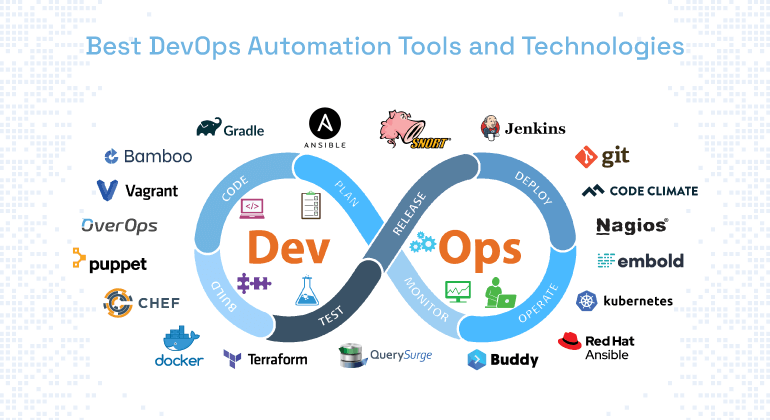
The build automation landscape is constantly evolving, offering an array of tools to cater to diverse needs and preferences. Here’s a breakdown of some key players in 2024:
Open-Source Options:
- Jenkins: A popular self-hosted server with vast community support and extensive plugin ecosystem, offering flexibility and customization.
- Maven: A mature build tool specific to Java projects, known for its convention-over-configuration approach and wide industry adoption.
- Gradle: Another Java-focused build tool gaining popularity with its flexibility and Groovy scripting capabilities.
- GoCD: Designed for large-scale deployments, it excels in scalability and customization with a focus on pipeline-based workflows.
- Buildbot: Simple and lightweight, ideal for continuous integration with basic build automation needs.
Cloud-Based Solutions:
- CircleCI: User-friendly platform offering easy setup, integration with popular tools, and free plans for small teams.
- Travis CI: Geared towards open-source projects, offering free plans and paid options for commercial use.
- GitHub Actions: Integrated directly within GitHub, offering seamless workflow management and built-in security features.
- Azure Pipelines: Comprehensive platform from Microsoft, tightly integrated with Azure services and DevOps ecosystem.
- AWS CodeBuild: Cloud-based solution from Amazon, offering scalability and integration with AWS services.
Enterprise-Grade Solutions:
- TeamCity: Commercial server from JetBrains, known for its reliability, security, and advanced features.
- Bamboo: Atlassian’s offering, tightly integrated with Jira and other Atlassian tools, suitable for enterprise-level deployments.
- Jenkins X: A Kubernetes-based extension of Jenkins, offering scalability and cloud-native deployment options.
Choosing the Right Tool:
- Team size and skillset: Open-source options might be suitable for smaller teams, while cloud-based or enterprise solutions cater to larger teams or complex projects.
- Project requirements: Consider specific needs like language support, integration with other tools, and desired automation level.
- Budget: Open-source tools are free, while cloud-based and enterprise solutions typically have paid plans.
- Deployment environment: On-premise, cloud, or hybrid setups might influence your choice.
The best tool is the one that aligns with your specific needs and helps you streamline your build process effectively. Consider evaluating different options and exploring free trials before making a decision.

Find Trusted Cardiac Hospitals
Compare heart hospitals by city and services — all in one place.
Explore Hospitals