

SCM Process Benefits in Practice: Control, Management, Cost Savings, and Quality
Software configuration management (SCM) creates disciplined control over change, versions, and releases. This updated guide explains the four core organizational benefits and how to operationalize them with practical workflows.
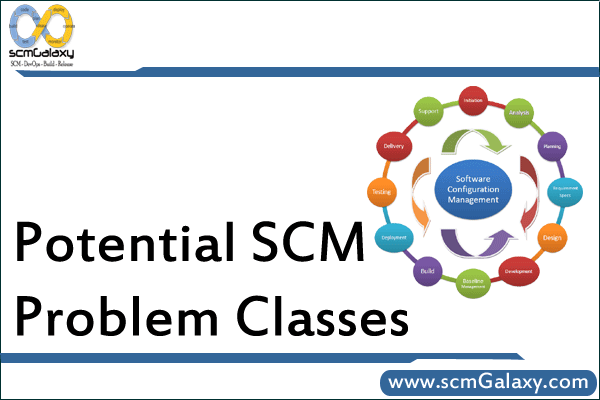
8 Software Configuration Management Problem Classes and How to Control Them
SCM problems usually appear as coordination, release, and traceability failures long before they are named. This guide maps eight common SCM problem classes to practical controls, including CCB flow, staffing responsibilities, and Git-based examples.
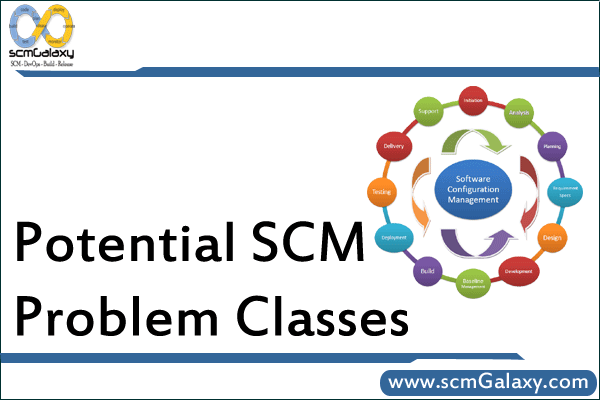
8 SCM Problem Classes and How to Control Them in Real Delivery Pipelines
Software configuration management problems are usually predictable: concurrent edits, release drift, requirement churn, and weak governance. This guide maps the classic SCM problem classes to practical controls, staffing roles, and a clear CCB-driven workflow.
5 Pillars of Automated Configuration Management for Application Infrastructure
Application infrastructure breaks when configuration changes are manual, disconnected, and hard to audit. This revised guide explains five practical pillars for automating discovery, change control, release, reporting, and integration.
How to Choose the Right Configuration Management Approach for Your Infrastructure
The right configuration management approach is the one that keeps infrastructure consistent without creating unnecessary operational overhead. Teams should choose based on environment complexity, security requirements, and…
The Complete Guide to Infrastructure as Code Basics for Beginners
Introduction The landscape of IT infrastructure has undergone a massive transformation over the last two decades. In the early days of enterprise computing, setting up an environment…
Infrastructure as Code: A Practical Guide for DevOps Professionals
Introduction Managing infrastructure has undergone a massive transformation over the past decade. If you started your career in the era of physical data centers, you likely remember…
Senior Systems Engineer: Role Blueprint, Responsibilities, Skills, KPIs, and Career Path
A **Senior Systems Engineer** designs, builds, and operates the core systems and platforms that software teams rely on to deliver products safely, reliably, and efficiently. The role combines deep hands-on engineering with strong operational judgment—owning the “how it runs” layer across infrastructure, OS/platform services, automation, observability, and operational resilience.
Staff Network Automation Engineer: Role Blueprint, Responsibilities, Skills, KPIs, and Career Path
The Staff Network Automation Engineer is a senior individual contributor in the Cloud & Infrastructure organization responsible for designing, building, and scaling automation systems that make network provisioning, configuration, validation, and operations reliable, fast, and repeatable. The role blends deep networking fundamentals with software engineering practices (version control, CI/CD, testing, observability) to deliver “network as code” capabilities across data center, cloud, and edge environments.
Staff Linux Systems Engineer: Role Blueprint, Responsibilities, Skills, KPIs, and Career Path
The **Staff Linux Systems Engineer** is a senior individual contributor (IC) responsible for the reliability, security, and performance of Linux-based compute platforms that underpin production services, internal developer platforms, and core business systems. This role designs and evolves standards, automation, and operating practices for fleets of Linux hosts across on-prem, cloud, and hybrid environments, with a strong focus on resilience, observability, and operational excellence.
Senior Network Automation Engineer: Role Blueprint, Responsibilities, Skills, KPIs, and Career Path
The **Senior Network Automation Engineer** is a senior individual contributor in the **Cloud & Infrastructure** organization responsible for designing, building, and operating automation systems that provision, configure, validate, and continuously manage network infrastructure at scale. The role bridges traditional network engineering and modern software engineering practices (NetDevOps), enabling safe, repeatable, and observable network change through code, pipelines, and policy-driven controls.
Principal Network Automation Engineer: Role Blueprint, Responsibilities, Skills, KPIs, and Career Path
The **Principal Network Automation Engineer** is a senior individual contributor responsible for designing, delivering, and operationalizing network automation capabilities that improve reliability, security, speed, and consistency across cloud and infrastructure networks. This role builds the automation “platform” and engineering practices that enable network changes to be delivered safely through code, testing, and CI/CD—at enterprise scale.
Network Automation Engineer: Role Blueprint, Responsibilities, Skills, KPIs, and Career Path
The Network Automation Engineer designs, builds, and operates automation that makes enterprise network changes repeatable, testable, and safe at scale. This role exists to reduce manual configuration work, shorten change lead times, improve network reliability, and create auditable, version-controlled network operations aligned to modern engineering practices. The business value is improved uptime, faster delivery of infrastructure capabilities, reduced operational risk, and higher efficiency for NetOps and Cloud & Infrastructure teams. This is a **Current** role with accelerating importance as networks become more software-defined and integrated with CI/CD, IaC, and platform operating models.
Linux Systems Engineer: Role Blueprint, Responsibilities, Skills, KPIs, and Career Path
A **Linux Systems Engineer** designs, builds, operates, and continuously improves Linux-based infrastructure that supports product engineering and internal business systems. The role focuses on **reliability, security hardening, performance, automation, and lifecycle management** of Linux servers and services across on-prem, cloud, and hybrid environments.
Lead Network Automation Engineer: Role Blueprint, Responsibilities, Skills, KPIs, and Career Path
The Lead Network Automation Engineer designs, builds, and operationalizes automation for network and cloud connectivity across enterprise environments—turning traditionally manual, ticket-driven networking tasks into reliable, version-controlled, testable software delivery. The role exists to increase network delivery speed and safety (changes, provisioning, upgrades), reduce outages caused by configuration drift and human error, and create scalable network operations that keep pace with product and platform growth.
Lead Linux Systems Engineer: Role Blueprint, Responsibilities, Skills, KPIs, and Career Path
The **Lead Linux Systems Engineer** is the technical lead accountable for designing, operating, and continuously improving Linux-based infrastructure services that underpin production workloads across cloud and/or data center environments. This role ensures Linux platforms are secure, resilient, performant, and automatable—enabling product engineering teams to ship reliably while meeting availability, compliance, and cost objectives.
Junior Network Automation Engineer: Role Blueprint, Responsibilities, Skills, KPIs, and Career Path
The Junior Network Automation Engineer builds, tests, and maintains automation that configures, validates, and monitors network infrastructure across cloud and on‑prem environments. The role focuses on reducing manual network changes, improving reliability, and increasing deployment speed by using infrastructure-as-code patterns, scripting, and standardized workflows under the guidance of senior network and platform engineers.
Associate Network Automation Engineer: Role Blueprint, Responsibilities, Skills, KPIs, and Career Path
The **Associate Network Automation Engineer** is an early-career individual contributor in the Cloud & Infrastructure organization responsible for building, operating, and continuously improving **automation that configures, validates, and monitors network infrastructure**. The role focuses on reducing manual effort and configuration drift, improving network reliability, and enabling faster, safer change delivery through automation, testing, and standardization.
Associate DevOps Engineer: Role Blueprint, Responsibilities, Skills, KPIs, and Career Path
The **Associate DevOps Engineer** supports the reliability, scalability, and delivery speed of software systems by helping automate infrastructure, improving CI/CD pipelines, and assisting with production operations. This role exists to reduce friction between development and operations by enabling repeatable deployments, standardized environments, and measurable operational health.
Senior Linux Administrator: Role Blueprint, Responsibilities, Skills, KPIs, and Career Path
The **Senior Linux Administrator** is a senior individual contributor within **Enterprise IT** responsible for the reliability, security, and performance of Linux-based infrastructure that underpins internal services and business-critical production platforms. The role designs and operates standardized Linux environments, automates repeatable operations, and leads complex incident resolution while ensuring adherence to enterprise security and compliance controls.
Principal Systems Administrator: Role Blueprint, Responsibilities, Skills, KPIs, and Career Path
The **Principal Systems Administrator** is the senior-most individual contributor responsible for the reliability, security, and operational excellence of enterprise systems that underpin employee productivity and internal service delivery (identity, endpoints, core infrastructure, virtualization, server OS platforms, foundational cloud services, and adjacent operational tooling). This role acts as a technical authority for systems administration practices, sets standards for build/patch/configuration, and drives automation to reduce operational toil while improving uptime and audit readiness.
Principal Linux Administrator: Role Blueprint, Responsibilities, Skills, KPIs, and Career Path
The Principal Linux Administrator is the enterprise technical authority for Linux platforms within Enterprise IT, accountable for the reliability, security, standardization, and automation of Linux-based infrastructure that underpins business-critical applications and services. This is a senior individual contributor (IC) role with broad decision influence, responsible for setting Linux engineering standards, guiding platform roadmaps, and solving high-severity or high-complexity problems that span teams and domains.
Lead Linux Administrator: Role Blueprint, Responsibilities, Skills, KPIs, and Career Path
The **Lead Linux Administrator** owns the reliability, security, and operational excellence of an organization’s Linux server estate across on-premises and cloud environments. This role provides senior technical stewardship for core Linux platforms (compute, storage, identity integration, patching, monitoring, backups, and automation) while coordinating day-to-day operations, escalations, and continuous improvement across the Linux administration function.
NetDevOps: A Modern Approach to Handling Networking Deployments
Networks physically appear to be simple interconnections between servers and computers, but the abstract logical part of it that handles the communication and data transfer is incredibly…
What Is Infrastructure as Code (IaC)? Why Is It Important to DevOps?
Infrastructure as Code is a common term in DevOps, and it is critical because it enables automated, consistent, and rapid infrastructure provisioning as compared to manual processes….
Top 10 Network Configuration Management: Features, Pros, Cons & Comparison
Introduction Network Configuration Management (NCM) refers to the processes and tools used to centrally manage, monitor, back up, track, and control changes to network device configurations such…
Top 10 Linux Fleet Management Tools: Features, Pros, Cons & Comparison
Introduction Linux Fleet Management Tools are specialized platforms designed to manage, monitor, secure, and automate large numbers of Linux systems from a centralized interface. A “fleet” may…
Top 10 Configuration Management Tools: Features, Pros, Cons & Comparison
Introduction Configuration Management Tools are a core pillar of modern IT operations and DevOps practices. At their foundation, these tools help organizations define, enforce, and maintain consistent…
Master DevOps Automation with Puppet Training in Bangalore
Introduction In today’s fast-moving tech world, companies need to manage their computer systems quickly and without mistakes. Puppet is a powerful tool that helps do just this….
Top 10 Server Management Tools: Features, Pros, Cons & Comparison
Introduction Server Management Tools are software platforms designed to monitor, configure, automate, secure, and maintain servers across on-premise, cloud, and hybrid environments. As modern IT infrastructure becomes…