
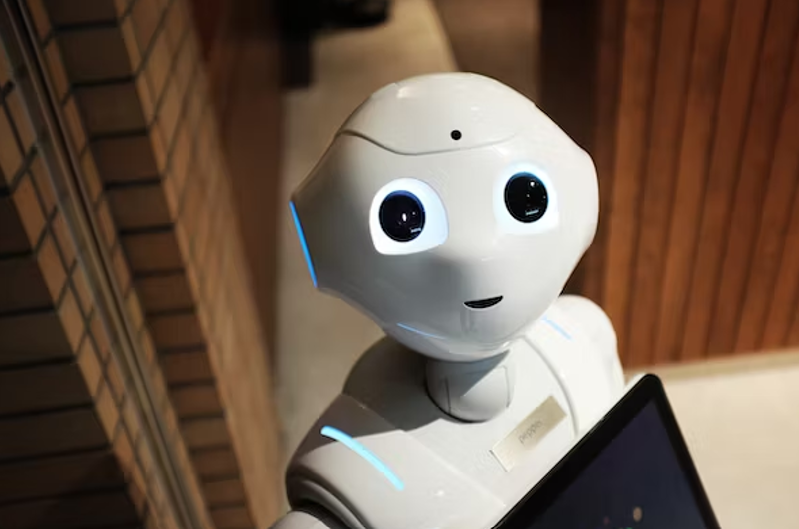
The impact of AI is impressive in every walk of human life. It has revolutionized human lives, business, healthcare, industry banking and trading. The economy has been amazing by the induction of AI. It will add approximately 15 trillion dollars to the world economy by 2031.
In spite of all its advantages, AI has several challenges which need to be addressed.
Here are the top challenges faced by AI in 2023!
Power Hungry Algorithms
Deep learning and Machine learning are the paving stones of AI. These AIs work on powered-hunger algorithms. AI needs a number of cored and GPUs to work efficiently. There are a number of domains to implement deep learning frameworks such as asteroid tracking, healthcare deployment cosmic bodies, etc.
They need a supercomputer as you know these machines are too much expensive. Although there are availability of cloud computing and processing systems developers work on AI systems more effectively.
AI Cannot be Substituted for Human Intelligence
AI cannot replace human efforts. As you know, human is creative. AI cannot compete with human creative abilities lacks creativity and cannot replace the human mind. Creativity is a complex human trait because the human has a unique ability to think genuine and new idea with emotions. Human intelligence can think outer the universe, explore new ideas, and take risks.
For example, you can’t use unique strategies while playingonline bingo for real money. Only human can use its mind to handle the awkward situations. As you know, AI works on various algorithms, It identifies trends and patterns.
Deficiency of Trust
The deficiency of trust is a major threat to AI as you know trust is a major concern of humans. You cannot rely on someone especially when you are not sure about. Sometimes, AI can give you the wrong information. So, you should cross-check when you work on a sensitive project.
For instance, self-driving work on complex deep-learning systems. There is a trust issue for passengers that they can rely on its navigation system or not because it can be hacked or keep an error in its programming.
Deep Fake Technology
It is one of the impending threats of AI. Deep learning techniques use highly realistic but false content. You cannot differentiate between realistic and falsified content. Advanced AI algorithms and languages are experts in generating human-like content. You are browsing on a social media platform and you watch a video and get information. It is hard to tell whether it is real or fake.
Data Privacy and Breach of Security
Generative AI models learn various patterns that they possess. As you know, it can add your personal information to its data. For instance, any generative AI system is designed to launch a marketing campaign. It can access user’s profiles, browsing history, and purchasing records. So it puts your personal privacy at risk.
Quality of Data
There is also consideration of data quality when it comes to AI. Because AI depends on the data that they are fed. As you know, you can get faulty results if you put incomplete, faulty, and biased data. You need to adopt high standards to collect transparent data. You need to ensure to put high-quality data. Otherwise, it will be harmful to your business and organization.
Lack of Emotions, Culture, and Experiences
Human is always influenced by emotion, culture, and experiences. There are no alternatives for these traits. While AI lacks the emotional intelligence. It is an established psychological fact that your overall performance is not only based on your Intelligence Quotient(IQ) but also you need Emotional Quotient. (EQ).
You need to maintain a balance between them to make efficient your efforts. Emotional intelligence is the ability to manage your emotions. AI is able to understand and respond only to basic human emotions such as happiness, sadness, and, anger. AI cannot recognize complex human emotions such as love, hate, pride, and, envy.
Conclusion
To sum up, all these challenges faced by AI are depressing and destructive but we need to address these challenges. According to experts next generation of professional workers must upgrade their skills which are compatible with AI and machine learning. You need to upskill with new technologies to meet the standards of your organization

👤 About the Author
Ashwani is passionate about DevOps, DevSecOps, SRE, MLOps, and AiOps, with a strong drive to simplify and scale modern IT operations. Through continuous learning and sharing, Ashwani helps organizations and engineers adopt best practices for automation, security, reliability, and AI-driven operations.
🌐 Connect & Follow:
Website: WizBrand.com
Facebook: facebook.com/DevOpsSchool
X (Twitter): x.com/DevOpsSchools
LinkedIn: linkedin.com/company/devopsschool
YouTube: youtube.com/@TheDevOpsSchool
Instagram: instagram.com/devopsschool
Quora: devopsschool.quora.com
Email– contact@devopsschool.com
Find Trusted Cardiac Hospitals
Compare heart hospitals by city and services — all in one place.
Explore Hospitals