Originally published on 2010-03-09; fully revised and updated.
Inbound call centers that generate revenue per answered call can use workforce management (WFM) software to forecast demand, staff accurately, and reduce abandoned calls. This guide explains where the financial impact usually comes from and how to evaluate SaaS, hosted, and on-premises WFM options with fewer surprises.
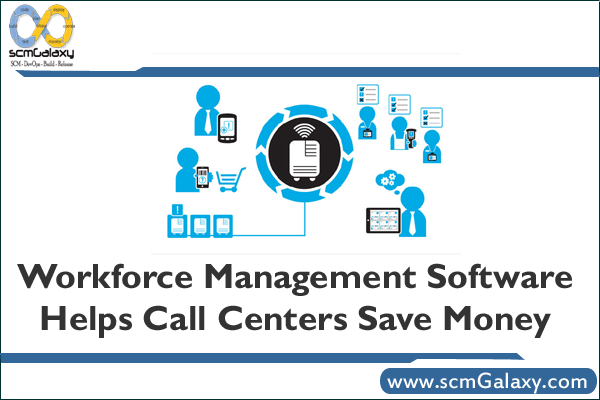
Why WFM matters in revenue-focused inbound call centers
When a center earns money from completed calls (for example, reservations, catalog orders, or service conversions), staffing precision directly affects both cost and revenue. If schedules are too light, queue times rise and callers abandon. If schedules are too heavy, labor costs increase without matching demand.
- Better demand forecasting can reduce chronic overstaffing.
- Intraday re-forecasting can limit queue spikes and abandonment.
- Schedule adherence tracking can improve service consistency.
- Centralized planning can reduce manual planning effort.
The original article also claimed centers can gain significant annual revenue and cost savings, but did not provide a calculation method. Treat outcome estimates as scenario-dependent, and validate with your own KPI baselines.
The WFM operating loop
Most WFM platforms support a repeating loop: forecast demand, generate schedules, monitor adherence, then re-plan intraday when actual call patterns diverge from forecasts.
flowchart TD
    A[Historical call volume and patterns] --> B[Forecast demand by interval]
    B --> C[Create agent schedules]
    C --> D[Publish shifts and break plans]
    D --> E[Monitor real time adherence and queues]
    E --> F{Queue or volume deviation}
    F -- yes --> G[Intraday reforecast and replan]
    G --> E
    F -- no --> H[Service levels met with lower idle cost]
SaaS vs hosted vs on-premises WFM
The original post warned that some vendors labeled offerings as SaaS when they were actually hosted versions of older client-server products. It attributed this caution to officials from Monet Software. The practical takeaway is to validate architecture details before purchase.
| Deployment model | Architecture signals | Typical cost profile | Operational implications |
|---|---|---|---|
| True SaaS (multi-tenant) | Shared platform, tenant isolation, centralized upgrades | Subscription-based, lower upfront spend | Faster rollout, vendor-managed platform operations |
| Hosted single-tenant (ASP-style) | Separate instance per customer, legacy app hosted by vendor | Can look like SaaS pricing but higher long-term ops overhead | More release fragmentation, scaling and support complexity |
| On-premises | Customer-managed infrastructure and application stack | Higher upfront software and hardware investment | Maximum control, but requires internal IT ownership for upgrades and reliability |
Vendor due diligence checklist for “real SaaS”
- Is the product natively multi-tenant, or a hosted single-tenant deployment?
- How are upgrades delivered, and are all tenants kept on a common release cadence?
- What are the documented tenant isolation and data protection controls?
- How does the platform scale during seasonal or intraday demand spikes?
- Which costs are included in subscription fees (support, maintenance, upgrades, integrations)?
- What implementation timeline is realistic for your routing, ACD, and reporting stack?
Example KPI query to measure before-and-after impact
Before rollout, baseline weekly KPIs; then compare the same KPIs after stabilization. A simple warehouse query can track abandonment and service-level trends.
SELECT
  date_trunc('week', interval_start) AS week,
  SUM(calls_offered) AS offered,
  SUM(calls_answered) AS answered,
  ROUND(100.0 * SUM(calls_abandoned) / NULLIF(SUM(calls_offered), 0), 2) AS abandon_rate_pct,
  ROUND(100.0 * SUM(calls_answered_within_20s) / NULLIF(SUM(calls_answered), 0), 2) AS service_level_20s_pct,
  ROUND(SUM(agent_paid_minutes) / NULLIF(SUM(workload_minutes), 0), 2) AS staffing_ratio
FROM contact_center_kpi
GROUP BY 1
ORDER BY 1;Code language: PHP (php)
Best practices
- Start with measurable outcomes: abandonment rate, service level, occupancy, and labor cost per handled call.
- Run a short pilot period and verify forecast accuracy against real intervals.
- Treat architecture claims as auditable requirements, not marketing language.
- Include integration and change-management effort in total cost calculations.
- Review results at 30/60/90 days before expanding scope.

I’m Rajesh Kumar, a DevOps, SRE, DevSecOps, Cloud, and Platform Engineering expert passionate about sharing practical knowledge, real-world experiences, and industry best practices. I have worked at Cotocus and regularly write about technology, travel, investing, health, product reviews, and digital marketing through my various platforms.
I publish technical articles at DevOps School, travel stories at Holiday Landmark, stock market insights at Stocks Mantra, health and fitness guidance at My Medic Plus, product reviews at TrueReviewNow, and SEO and digital marketing strategies at Wizbrand.
Find Trusted Cardiac Hospitals
Compare heart hospitals by city and services — all in one place.
Explore Hospitals