
Top 10 AI Runtime Platforms for WASM/WASI: Features, Pros, Cons & Comparison
Introduction AI Runtime Platforms for WASM/WASI provide lightweight, secure, and portable environments for running artificial intelligence workloads using WebAssembly (WASM) and WebAssembly System Interface (WASI). These platforms…
Top 10 OTA Model Update Platforms for Edge AI: Features, Pros, Cons & Comparison
Introduction OTA (Over-The-Air) Model Update Platforms for Edge AI enable organizations to remotely deliver, manage, validate, and maintain machine learning models running on edge devices. These platforms…
Top 10 Embedded AI Model Compression Toolkits: Features, Pros, Cons & Comparison
Introduction Embedded AI Model Compression Toolkits are software frameworks and optimization solutions that help developers reduce the size, memory usage, and computational requirements of artificial intelligence models…
Top 10 Computer Vision Edge Deployment Tooling: Features, Pros, Cons & Comparison
Introduction Computer Vision Edge Deployment Tooling refers to platforms, frameworks, and software solutions that help organizations build, optimize, deploy, and manage AI vision models directly on edge…
Top 10 AI Edge AI Inference Platforms: Features, Pros, Cons & Comparison
Introduction AI Edge AI Inference Platforms are software and hardware-enabled environments that allow organizations to run artificial intelligence models directly on edge devices instead of depending completely…
Top 10 AI Driver Monitoring Systems: Features, Pros, Cons & Comparison
Introduction AI Driver Monitoring Systems are intelligent safety technologies that use artificial intelligence, computer vision, sensors, and real-time analytics to understand driver behavior and improve road safety….
AI Environmental Sensor Analytics: Top 10 Platforms, Use Cases, Architecture
Introduction AI Environmental Sensor Analytics refers to the use of artificial intelligence to process and interpret real-time data from environmental sensors such as air quality monitors, water…
Top 10 AI Public Safety Video Analytics Tools: Features, Pros, Cons & Comparison
Introduction Cities, transportation networks, public venues, and critical infrastructure environments are generating massive volumes of video data every second through CCTV cameras, body-worn cameras, drones, traffic monitoring…
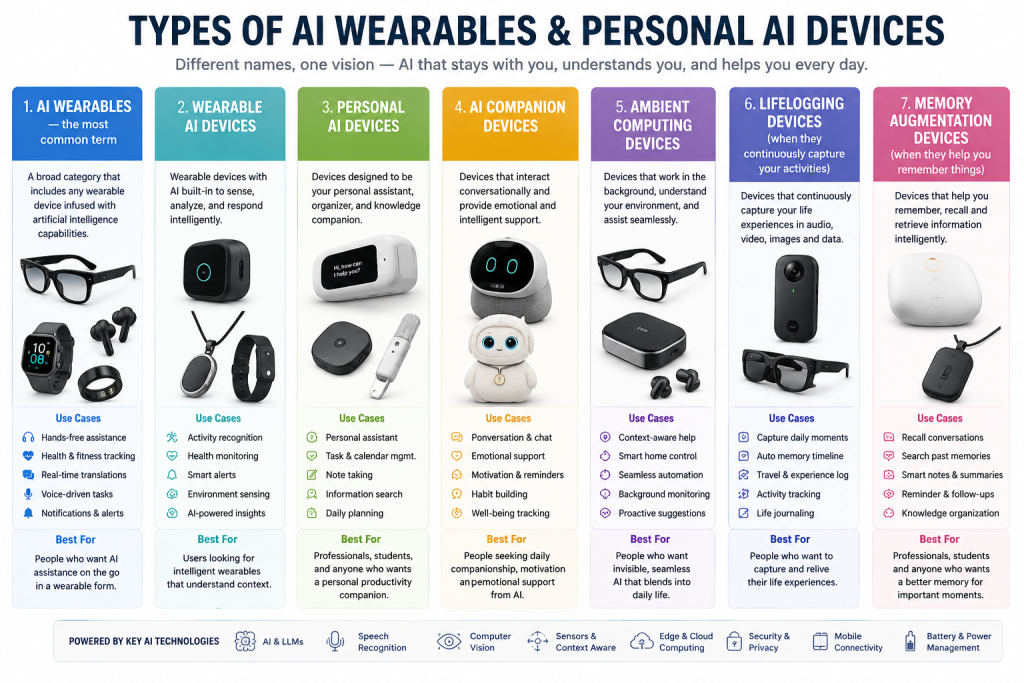
What Technologies Empower AI Wearables, Wearable AI Devices, Personal AI Devices, AI Companion Devices?
What Technologies Empower AI Wearables, Wearable AI Devices, Personal AI Devices, AI Companion Devices, Ambient Computing Devices, Lifelogging Devices, and Memory Augmentation Devices? Introduction AI-powered devices are…
Top 10 Model Compression Toolkits: Features, Pros, Cons & Comparison
Introduction Model compression toolkits help AI teams reduce the size, memory usage, latency, and serving cost of machine learning models while keeping useful performance as high as…
Top 10 Edge LLM Deployment Toolkits: Features, Pros, Cons & Comparison Guide
Introduction Edge LLM Deployment Toolkits are platforms and frameworks that help developers deploy, manage, and optimize large language models (LLMs) directly on edge devices—such as IoT hardware,…
Top 10 On-Device LLM Runtimes: Features, Pros, Cons & Comparison Guide
Introduction On-device LLM runtimes are software systems that allow large language models (LLMs) to run locally on a user’s device—such as laptops, smartphones, edge servers, or embedded…
Staff Edge AI Engineer: Role Blueprint, Responsibilities, Skills, KPIs, and Career Path
The **Staff Edge AI Engineer** is a senior individual contributor who designs, builds, and operationalizes machine learning inference systems that run reliably on **resource-constrained, privacy-sensitive, and latency-critical edge environments** (e.g., mobile, IoT gateways, cameras, industrial devices, and on-prem appliances). The role bridges applied ML, systems engineering, and platform thinking to ensure models are **deployable, observable, secure, and maintainable** outside the data center.
Senior Robotics Software Engineer: Role Blueprint, Responsibilities, Skills, KPIs, and Career Path
The **Senior Robotics Software Engineer** designs, builds, and operates production-grade robotics software systems that run reliably on real robots and in high-fidelity simulation. This role sits at the intersection of software engineering excellence, AI/ML-driven autonomy, real-time systems, and rigorous validation, delivering robotics capabilities as scalable software components and platforms.
Senior Edge AI Engineer: Role Blueprint, Responsibilities, Skills, KPIs, and Career Path
The Senior Edge AI Engineer designs, optimizes, and operationalizes machine learning (ML) systems that run directly on edge devices (e.g., gateways, cameras, industrial controllers, mobile/embedded compute modules) where low latency, intermittent connectivity, privacy constraints, and hardware limitations shape the solution. This role translates model research and product requirements into production-grade on-device inference pipelines, including model compression, hardware acceleration, deployment automation, and fleet observability.
Robotics Software Engineer: Role Blueprint, Responsibilities, Skills, KPIs, and Career Path
A **Robotics Software Engineer** designs, builds, tests, and deploys software that enables robots to perceive their environment, make decisions, and act reliably in the physical world. In a software or IT organization—especially within an **AI & ML** department—this role bridges machine learning, real-time systems, and production-grade software engineering to deliver robotic capabilities as a product, platform, or internal capability.
Robotics ML Engineer: Role Blueprint, Responsibilities, Skills, KPIs, and Career Path
The **Robotics ML Engineer** designs, trains, evaluates, and deploys machine learning models that enable robots to perceive, predict, and act reliably in real-world environments. The role bridges applied ML engineering with robotics constraints such as real-time performance, safety, edge compute limits, and hardware variability.
Principal Edge AI Engineer: Role Blueprint, Responsibilities, Skills, KPIs, and Career Path
The **Principal Edge AI Engineer** is a senior individual contributor (IC) responsible for architecting, delivering, and operationalizing **machine learning inference and intelligent decisioning on edge devices** (e.g., gateways, industrial PCs, retail devices, mobile/embedded endpoints) where constraints such as latency, connectivity, privacy, power, and cost materially shape the solution. This role designs the end-to-end edge AI “production system”: model packaging and optimization, device runtime architecture, secure deployment and updates, observability, and continuous improvement loops.
Lead Federated Learning Engineer: Role Blueprint, Responsibilities, Skills, KPIs, and Career Path
The **Lead Federated Learning Engineer** designs, builds, and operationalizes federated learning (FL) capabilities that enable machine learning models to be trained across distributed data sources (devices, edge nodes, partner environments, or business units) **without centralizing raw data**. This role blends advanced applied ML with distributed systems engineering, privacy-preserving computation, and production MLOps to deliver scalable, secure, and measurable FL deployments.
Lead Edge AI Engineer: Role Blueprint, Responsibilities, Skills, KPIs, and Career Path
The **Lead Edge AI Engineer** designs, builds, and operates machine learning (ML) inference capabilities that run **on-device or near-device** (edge gateways, embedded systems, edge clusters) with strict constraints on latency, compute, power, privacy, and reliability. This role turns ML models into **production-grade edge AI services** by optimizing models, selecting runtime stacks, building secure deployment pipelines, and ensuring observability and lifecycle management across heterogeneous hardware fleets.
Junior Federated Learning Engineer: Role Blueprint, Responsibilities, Skills, KPIs, and Career Path
The **Junior Federated Learning Engineer** builds, tests, and operates early-stage federated learning (FL) capabilities that enable machine learning models to be trained across distributed devices or data silos **without centralizing raw data**. This role focuses on implementing training workflows, data and model interfaces, privacy-preserving techniques, and evaluation methods under guidance from senior engineers and applied scientists.
Junior Edge AI Engineer: Role Blueprint, Responsibilities, Skills, KPIs, and Career Path
The Junior Edge AI Engineer builds, optimizes, and deploys machine learning models that run on edge devices (e.g., IoT gateways, embedded Linux devices, industrial PCs, mobile, cameras) where latency, connectivity, power, and privacy constraints require on-device intelligence. This role exists in a software or IT organization to operationalize AI in real-world environments—delivering reliable inference close to where data is generated instead of relying solely on cloud processing. Business value comes from lower latency, reduced cloud cost, improved resilience during network outages, and enhanced privacy/security by minimizing data egress.
Federated Learning Engineer: Role Blueprint, Responsibilities, Skills, KPIs, and Career Path
The Federated Learning Engineer designs, builds, and operates privacy-preserving machine learning systems that train models across distributed data sources without centralizing sensitive data. This role exists in software and IT organizations that need to learn from data located on user devices, customer environments, partner organizations, or regulated data stores where direct pooling is constrained by privacy, security, contractual, or residency requirements. The business value is enabling higher-quality models, broader data coverage, and faster model iteration while reducing privacy risk and improving compliance posture.
Edge AI Engineer: Role Blueprint, Responsibilities, Skills, KPIs, and Career Path
The **Edge AI Engineer** designs, optimizes, and deploys machine learning inference capabilities to run reliably on **resource-constrained edge environments** such as mobile devices, embedded systems, IoT gateways, industrial PCs, retail kiosks, and on-prem appliances. The role bridges applied ML engineering and systems engineering: it turns trained models into **production-grade, measurable, secure, and maintainable** edge inference solutions.
Associate Robotics Software Engineer: Role Blueprint, Responsibilities, Skills, KPIs, and Career Path
The **Associate Robotics Software Engineer** designs, implements, tests, and supports software components that enable robots and robotic systems to perceive, plan, and act reliably in real-world environments. This role sits at the intersection of **robotics engineering** and **AI/ML-enabled autonomy**, typically contributing to production-grade codebases (often ROS/ROS 2-based), simulation workflows, and on-robot integration under the guidance of senior engineers.
Associate Federated Learning Engineer: Role Blueprint, Responsibilities, Skills, KPIs, and Career Path
The **Associate Federated Learning Engineer** builds and supports privacy-preserving machine learning systems where model training happens across distributed data sources (e.g., mobile devices, edge nodes, or customer-owned environments) without centralizing raw data. This role contributes to the design, implementation, and evaluation of federated learning (FL) pipelines, focusing on reliable training workflows, secure aggregation patterns, reproducible experiments, and practical integration into product and platform environments.
Associate Edge AI Engineer: Role Blueprint, Responsibilities, Skills, KPIs, and Career Path
The Associate Edge AI Engineer designs, optimizes, and deploys machine learning inference workloads on resource-constrained edge devices (e.g., gateways, cameras, industrial PCs, mobile/embedded systems), ensuring models run reliably with low latency, acceptable accuracy, and safe operational behavior. This role bridges applied ML engineering with systems engineering realities—compute limits, memory budgets, thermal constraints, intermittent connectivity, and device lifecycle management.
Top 10 Federated Learning Platforms: Features, Pros, Cons & Comparison
Introduction Federated Learning Platforms are advanced machine learning systems that enable organizations to train models collaboratively without moving or centralizing sensitive data. Instead of sending raw data…
Top 10 Edge AI Inference Platforms: Features, Pros, Cons & Comparison
Introduction Edge AI Inference Platforms are specialized software and hardware ecosystems designed to run trained AI/ML models directly on edge devices—such as cameras, gateways, sensors, vehicles, industrial…
Top 10 Edge AI Platforms Tools in 2026: Features, Pros, Cons & Comparison
Introduction Edge AI platforms are revolutionizing how businesses process data by enabling artificial intelligence to operate directly on devices at the edge of networks, such as IoT…