
Principal Software Engineer: Role Blueprint, Responsibilities, Skills, KPIs, and Career Path
The Principal Software Engineer is a senior individual contributor (IC) engineering leader responsible for shaping and evolving the technical direction of critical product and platform areas, while materially improving engineering execution, quality, reliability, and long-term maintainability. The role operates across multiple teams and services, solving ambiguous, high-impact technical problems and setting standards that scale with organizational growth.
Principal Backend Engineer: Role Blueprint, Responsibilities, Skills, KPIs, and Career Path
The **Principal Backend Engineer** is a senior individual contributor (IC) responsible for shaping backend architecture, engineering standards, and reliability outcomes across multiple teams or a major platform area. This role designs and evolves critical backend systems, addresses complex scalability and data-consistency problems, and creates leverage by enabling other engineers to deliver safely and quickly.
Software Architect: Role Blueprint, Responsibilities, Skills, KPIs, and Career Path
The **Software Architect** is a senior individual contributor responsible for designing and governing the technical architecture of software systems to ensure they are scalable, secure, maintainable, and aligned to business strategy. This role translates product and business objectives into architectural decisions, guides engineering teams on implementation patterns, and reduces long-term delivery risk by creating clear technical direction and standards.
Senior Software Architect: Role Blueprint, Responsibilities, Skills, KPIs, and Career Path
The **Senior Software Architect** defines, evolves, and governs the technical architecture that enables products and platforms to scale reliably, securely, and cost-effectively. This role translates business strategy and product requirements into implementable architecture decisions, reference designs, and engineering standards that improve delivery speed and system quality.
Principal Software Architect: Role Blueprint, Responsibilities, Skills, KPIs, and Career Path
The **Principal Software Architect** is a senior individual-contributor (IC) architecture leader accountable for shaping, governing, and evolving the software architecture that enables the company’s products and platforms to scale safely, reliably, and cost-effectively. This role translates business strategy into technical strategy, sets architectural direction across multiple teams, and ensures solution designs align with enterprise standards while enabling high delivery velocity.
Lead Software Architect: Role Blueprint, Responsibilities, Skills, KPIs, and Career Path
The Lead Software Architect is the senior technical design authority responsible for shaping, governing, and evolving the software architecture across one or more products, platforms, or major domains. This role translates business strategy and product needs into a coherent architectural direction, ensuring systems are scalable, secure, maintainable, and cost-effective while enabling delivery teams to execute quickly and safely.
Master Microservices: A Practical Guide to Modern Architecture
The world of software development is undergoing a seismic shift. The monolithic applications of yesterday, while familiar, often struggle with the demands of today’s fast-paced, cloud-native, and…
List of Popular API design Pattern
API design patterns are established solutions to common API design challenges. They provide a set of best practices and reusable approaches for building clean, consistent, and user-friendly…
API Gateway Architecture
API gateway architecture is a design pattern that uses an API gateway as a single point of entry for all API requests. The API gateway sits in…
List of Popular Design Pattern
A design pattern is a general reusable solution to a commonly occurring problem in software design. It is not a finished design that can be transformed directly…
What is the hub and spoke model?
The hub and spoke model is a design pattern that is commonly used in transportation and logistics systems. In this model, a central hub (or “hub”) serves…
Huge collection of web reference for Patterns of Scalable, Reliable, and Performant Large-Scale Systems
Principle Lessons from Giant-Scale Services – Eric Brewer, UC Berkeley & Google Designs, Lessons and Advice from Building Large Distributed Systems – Jeff Dean, Google How to…
What is MVC? Model View Controller
What is MVC The MVC is an architectural pattern that separates an application into three main logical components Model, View, And Controller.Each of these components has its…
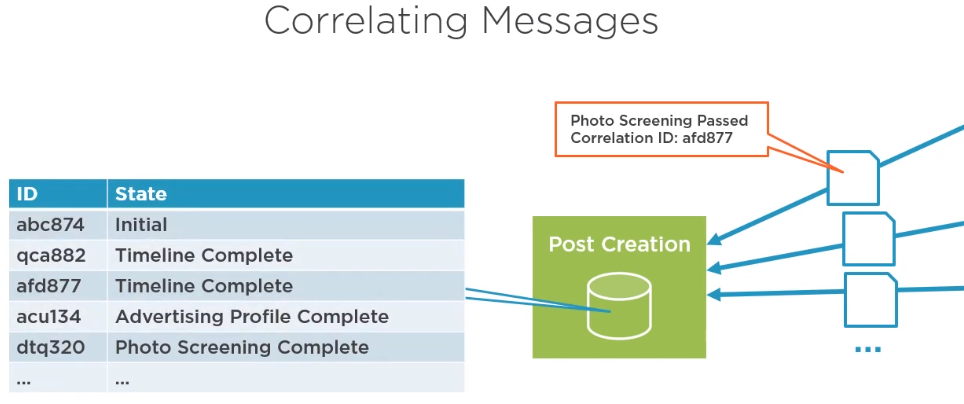
What is Saga pattern in Microservices?
The Saga pattern keeps data consistent across microservices without a distributed (two-phase commit) transaction. A business process is split into a sequence of local transactions, one per…
What are the different architectural patterns in Microservices?
Several companies have adopted the Microservices architectural patterns to address business challenges particular to their industries. This section describes a few examples of Microservices adoption, the most…

What is MVC and Why use MVC?
Model View Controller (MVC) The MVC is an architecture pattern that separates an application into three main logical components Model, View, and Controller. Each of these components…

Exploring Directory Structure in laravel.
Laravel applications follow the Model-View-Controller architecture design pattern. Models represent the entities in the database and help you to query the database and return the data Views are the pages that…
Microservices Architectural Design Patterns Playbook
Rajesh KumarI’m Rajesh Kumar, a DevOps, SRE, DevSecOps, Cloud, and Platform Engineering expert passionate about sharing practical knowledge, real-world experiences, and industry best practices. I have worked…