Are you curious about predictive analytics and its different types? Let’s dive into the world of predictive analytics and understand its types.
Introduction
Predictive analytics refers to the use of statistical and machine learning techniques to analyze historical data and make predictions about future events or behaviors. It involves the use of data, algorithms, and machine learning models to identify patterns and make predictions. Predictive analytics finds its application in various fields like marketing, healthcare, finance, and many more.
Types of Predictive Analytics
There are several types of predictive analytics techniques, and each has its unique application. Let’s look at the most commonly used types of predictive analytics.
1. Regression Analysis
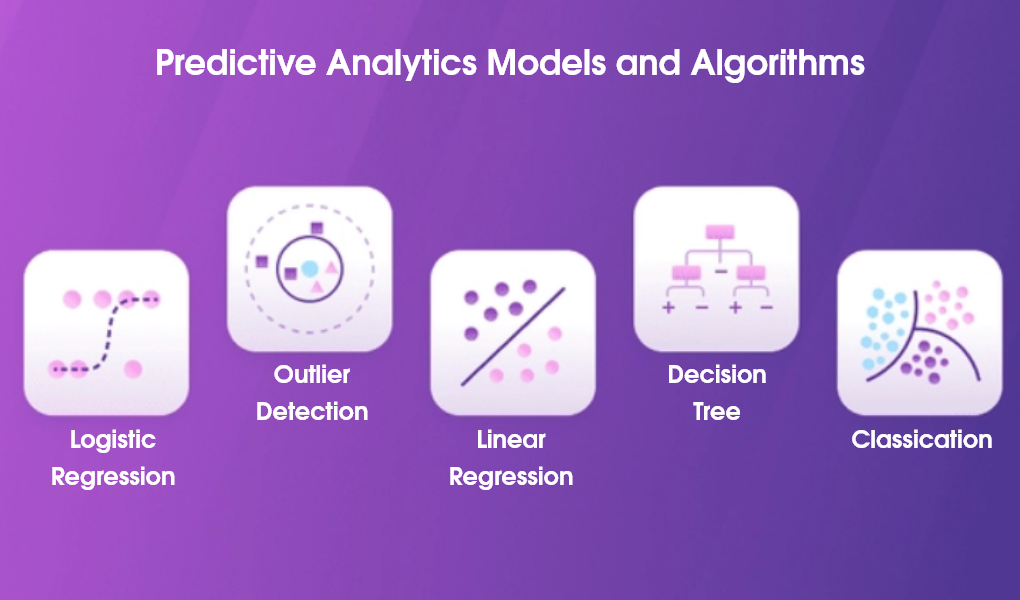
Regression analysis is a statistical technique used to identify the relationship between two or more variables. It helps in predicting the value of a dependent variable based on the values of one or more independent variables. Regression analysis is widely used in finance to predict stock prices, in marketing to predict consumer behavior, and in healthcare to predict patient outcomes.
2. Decision Trees
A decision tree is a graphical representation of a decision-making process. It is a tree-like structure where each node represents a decision, and each branch represents the possible outcomes of that decision. Decision trees are widely used in business to make decisions about product development, marketing strategies, and customer segmentation.
3. Neural Networks
Neural networks are a type of machine learning model that mimics the structure and function of the human brain. It consists of input and output layers and one or more hidden layers in between. Neural networks are widely used in image recognition, speech recognition, and natural language processing.
4. Time Series Analysis
Time series analysis is a statistical technique used to analyze time-dependent data. It helps in predicting future values based on the past values of a variable. Time series analysis is widely used in finance to predict stock prices and in weather forecasting to predict future weather conditions.
5. Clustering
Clustering is a machine learning technique used to group similar data points together. It helps in identifying patterns and relationships within the data. Clustering is widely used in customer segmentation, fraud detection, and anomaly detection.
Conclusion
Predictive analytics is an essential tool for businesses and organizations to make informed decisions. It helps in identifying patterns and predicting future events. With the help of different types of predictive analytics techniques like regression analysis, decision trees, neural networks, time series analysis, and clustering, businesses can make more accurate predictions about their customers, products, and markets.

👤 About the Author
Ashwani is passionate about DevOps, DevSecOps, SRE, MLOps, and AiOps, with a strong drive to simplify and scale modern IT operations. Through continuous learning and sharing, Ashwani helps organizations and engineers adopt best practices for automation, security, reliability, and AI-driven operations.
🌐 Connect & Follow:
Website: WizBrand.com
Facebook: facebook.com/DevOpsSchool
X (Twitter): x.com/DevOpsSchools
LinkedIn: linkedin.com/company/devopsschool
YouTube: youtube.com/@TheDevOpsSchool
Instagram: instagram.com/devopsschool
Quora: devopsschool.quora.com
Email– contact@devopsschool.com
Find Trusted Cardiac Hospitals
Compare heart hospitals by city and services — all in one place.
Explore Hospitals