
Find the Best Cosmetic Hospitals

Explore trusted cosmetic hospitals and make a confident choice for your transformation.

“Invest in yourself — your confidence is always worth it.”

Explore Cosmetic Hospitals

Start your journey today — compare options in one place.

What are the RESTful services?

RESTful web services

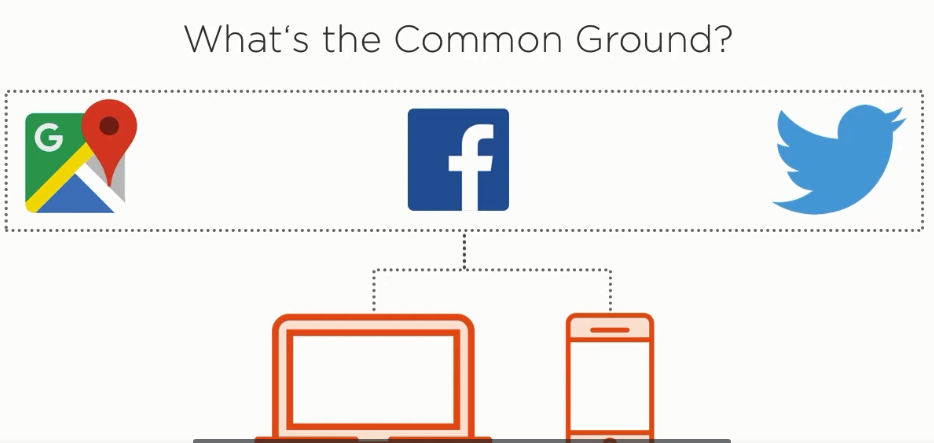
So let’s start by thinking about what RESTful services actually are. Have a look at the Images. you see we have two clients, a laptop and a smartphone,
and we have the three applications you probably all know, Google Maps, Facebook, and Twitter. The question is what’s the common ground here?

Well, all these applications can be accessed from different devices. Neither Google Maps nor Facebook or Twitter are only accessible via the browser on your notebook or a smartphone app. All these services are exposed to different devices.

Now as you are probably also aware, all these services live from the data they store on the internet or they can fetch from servers, so the solution certainly is a device. Instead, what is used here is a RESTful API, or some sort of API to which the different devices, or applications running on those devices, can reach out in order to fetch data, or store data, or do whatever they have to do. This underlines the importance of such APIs, and why it’s a good thing to know how to build something like that. This course, of course, specifically is about RESTful services, which according to this definition provides a uniform,

standardized access with clear request requirements and response structure. This of course means that RESTful services allow us to know
which data they will receive so that the server is able to handle this data, and that they provide a clear and standardized response, which can
be handled by different applications accessing the service.

Find Trusted Cardiac Hospitals

Compare heart hospitals by city and services — all in one place.

Explore Hospitals

Related Posts

Team Foundation Server 2015 Installation Guide (SQL Express + Update 3)

Install Team Foundation Server 2015 using the original Microsoft download paths, with clear guidance for online, offline, and ISO-based setup. This revised guide also includes an installation workflow, command example, and practical pitfalls to avoid.

Read More

How to Access a Running Docker Container Shell: docker exec vs docker attach

Need a shell inside a running container that is already in detached mode? This updated guide shows the correct workflow, compares docker exec and docker attach, and explains when SSH does and does not make sense.

Read More

Host Your Own NuGet Feed: Local Source vs NuGet.Server vs NuGetGallery

Learn how to host a private NuGet feed using three practical approaches: a local folder source, NuGet.Server, and NuGetGallery. This revised guide includes setup steps, command examples, and a workflow diagram to help you choose the right model.

Read More

Publish NuGet Packages to NuGet.org: CLI Steps, Workflow, and CI Example

Learn how to publish a NuGet package to NuGet.org using either nuget.exe or the dotnet CLI. This revised guide includes a workflow diagram, command comparison, and a CI-friendly example.

Read More

How to Create NuGet Packages with nuget.exe (Assembly, .nuspec, and .csproj Methods)

Learn three practical ways to build NuGet packages using nuget.exe: from an existing assembly, from a convention-based folder layout, or directly from a Visual Studio project. This guide includes commands, folder conventions, token behavior, and common pitfalls.

Read More

Virtualization in DevOps: Using Vagrant, Docker, and Cloud Platforms Together

This guide explains how VM-based workflows, containers, and cloud platforms complement each other in DevOps. It includes a practical workflow, trade-off table, and command examples for day-to-day use.

Read More




