
Introduction
Distributed Denial of Service (DDoS) attacks are one of the most disruptive and costly cyber threats faced by organizations today. A DDoS attack works by overwhelming servers, networks, or applications with massive volumes of malicious traffic, making services slow, unstable, or completely unavailable to legitimate users. These attacks are no longer limited to large enterprises; startups, SMBs, online platforms, e-commerce stores, and even public-sector websites are frequent targets.
DDoS Protection Tools are specialized security solutions designed to detect, mitigate, and absorb malicious traffic before it impacts business operations. They help ensure uptime, protect brand reputation, and maintain customer trust. In today’s always-on digital economy, even a few minutes of downtime can translate into lost revenue, regulatory risk, and long-term damage.
Why DDoS protection is critical
- Business continuity: Prevents service outages during attacks
- Customer trust: Ensures consistent access to applications and websites
- Regulatory readiness: Supports compliance with security and availability standards
- Operational resilience: Protects critical infrastructure and APIs
Key real-world use cases
- Protecting e-commerce platforms during sales or peak traffic
- Safeguarding SaaS applications and APIs
- Ensuring uptime for financial services and payment gateways
- Defending gaming, streaming, and media platforms from traffic floods
- Securing government, healthcare, and education portals
What to look for when choosing a DDoS protection tool
- Detection accuracy: Ability to distinguish real users from malicious traffic
- Mitigation capacity: Ability to absorb large-scale volumetric attacks
- Response time: Automated, real-time mitigation
- Deployment model: Cloud-based, on-prem, or hybrid
- Scalability: Ability to grow with traffic demands
- Reporting & visibility: Clear dashboards and attack analytics
Best for:
DDoS Protection Tools are ideal for organizations that rely on continuous online availability, including e-commerce businesses, SaaS providers, fintech platforms, media companies, gaming platforms, and enterprises running customer-facing applications.
Not ideal for:
Very small static websites, internal-only systems, or businesses with minimal online exposure may not need dedicated DDoS protection and could rely on basic network-level controls or hosting provider safeguards.
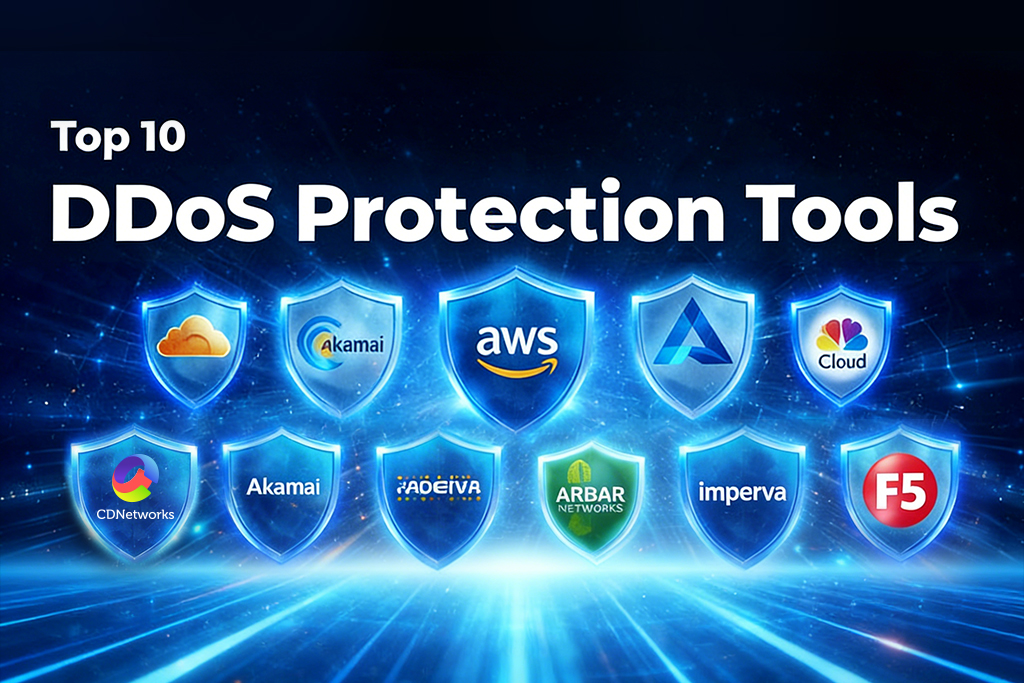
Top 10 DDoS Protection Tools
1 — Cloudflare DDoS Protection
Short description:
A cloud-native DDoS protection solution designed to safeguard websites, APIs, and applications at global scale with minimal configuration.
Key features:
- Automatic L3, L4, and L7 DDoS mitigation
- Global anycast network for traffic absorption
- Behavioral analysis and rate limiting
- Integrated WAF and bot management
- Real-time attack analytics dashboard
- Always-on protection without manual tuning
Pros:
- Extremely easy to deploy and manage
- Highly scalable with global coverage
Cons:
- Advanced controls require higher-tier plans
- Limited customization for very specific attack patterns
Security & compliance:
Encryption in transit, SSO, audit logs, GDPR support, SOC 2 alignment
Support & community:
Extensive documentation, strong community, enterprise-grade support options
2 — Akamai Prolexic
Short description:
An enterprise-grade DDoS mitigation platform designed for large-scale, high-risk organizations.
Key features:
- Massive attack absorption capacity
- Advanced traffic scrubbing centers
- Real-time monitoring and analytics
- Custom mitigation playbooks
- Hybrid deployment support
- 24/7 security operations center
Pros:
- Proven protection against the largest attacks
- Highly customizable mitigation strategies
Cons:
- Premium pricing
- Requires expert onboarding
Security & compliance:
ISO-certified processes, SOC 2, GDPR-ready, extensive audit logging
Support & community:
Dedicated enterprise support, expert SOC teams, limited community usage
3 — AWS Shield
Short description:
A managed DDoS protection service integrated natively into cloud infrastructure environments.
Key features:
- Automatic detection and mitigation
- Protection against volumetric and protocol attacks
- Cost protection during DDoS events
- Integration with traffic filtering and monitoring tools
- Advanced threat intelligence
- API-based management
Pros:
- Deep integration with cloud infrastructure
- No additional setup for basic protection
Cons:
- Primarily useful within one cloud ecosystem
- Advanced tier can be expensive
Security & compliance:
IAM integration, encryption, audit logs, compliance-ready infrastructure
Support & community:
Strong documentation, large user base, enterprise support available
4 — Azure DDoS Protection
Short description:
A cloud-native DDoS defense service designed for large-scale cloud deployments.
Key features:
- Always-on traffic monitoring
- Automatic attack mitigation
- Cost protection against attack-induced scaling
- Advanced telemetry and alerts
- Integration with network security tools
- Customizable thresholds
Pros:
- Seamless cloud-native experience
- Strong analytics and alerting
Cons:
- Limited usefulness outside cloud environments
- Requires network expertise for optimization
Security & compliance:
Encryption, RBAC, audit logs, GDPR and ISO compliance
Support & community:
Enterprise-grade support, extensive documentation, large ecosystem
5 — Google Cloud Armor
Short description:
A security service focused on protecting web applications and services from DDoS and abuse.
Key features:
- Adaptive protection with ML-based detection
- Rate limiting and traffic filtering
- Integration with global load balancing
- Custom security policies
- Real-time monitoring
- API-driven configuration
Pros:
- Strong machine-learning detection
- Scales automatically with traffic
Cons:
- Best suited for cloud-native applications
- Advanced features require configuration expertise
Security & compliance:
Encryption, IAM controls, audit logging, compliance-aligned infrastructure
Support & community:
Good documentation, cloud support plans available
6 — Radware DefensePro
Short description:
A dedicated DDoS protection appliance and cloud service for advanced attack mitigation.
Key features:
- Behavioral-based attack detection
- Real-time signature generation
- On-prem, cloud, or hybrid deployment
- Protection against encrypted attacks
- Detailed attack reports
- Automated mitigation workflows
Pros:
- Highly accurate detection
- Flexible deployment options
Cons:
- Higher operational complexity
- Requires security expertise
Security & compliance:
Strong encryption, detailed audit logs, compliance varies by deployment
Support & community:
Enterprise support, strong professional services, limited community usage
7 — Arbor DDoS Protection
Short description:
A network-focused DDoS mitigation platform widely used by service providers and large enterprises.
Key features:
- Network-level traffic analysis
- Large-scale volumetric attack mitigation
- Threat intelligence feeds
- On-prem and cloud-based scrubbing
- Advanced reporting and forensics
- ISP-grade protection
Pros:
- Proven at massive traffic volumes
- Deep network visibility
Cons:
- Complex setup
- Less suitable for small organizations
Security & compliance:
Enterprise-grade security controls, compliance varies by deployment
Support & community:
Strong vendor support, limited open community
8 — Imperva DDoS Protection
Short description:
A comprehensive application-focused DDoS defense with strong visibility and analytics.
Key features:
- L3–L7 DDoS protection
- Application-layer attack detection
- Traffic profiling and analytics
- Integration with WAF and API security
- Real-time alerts
- SLA-backed mitigation
Pros:
- Excellent application-layer protection
- Clear visibility into attack behavior
Cons:
- Higher cost
- Can be complex to fine-tune
Security & compliance:
SOC 2, GDPR support, encryption, audit logging
Support & community:
Enterprise support, solid documentation
9 — F5 Advanced DDoS Protection
Short description:
A hardware and software-based DDoS mitigation solution for enterprise data centers.
Key features:
- High-performance traffic inspection
- Behavioral analytics
- Integration with application delivery tools
- Encrypted traffic mitigation
- Granular policy controls
- Centralized management
Pros:
- Deep customization and control
- Strong performance under load
Cons:
- Expensive infrastructure investment
- Requires specialized expertise
Security & compliance:
Enterprise security standards, audit logs, compliance-ready
Support & community:
Strong enterprise support, professional services available
10 — StackPath DDoS Protection
Short description:
A simplified cloud-based DDoS protection solution for SMBs and growing digital businesses.
Key features:
- Global traffic scrubbing
- Layer 3–7 protection
- Real-time dashboards
- Integrated CDN and edge security
- Easy configuration
- Automatic mitigation
Pros:
- Cost-effective
- Easy to deploy
Cons:
- Limited advanced customization
- Smaller global footprint than premium vendors
Security & compliance:
Encryption, basic audit logging, compliance varies
Support & community:
Good documentation, responsive support for SMBs
11 — CDNetworks Flood Shield 2.0
Short description:
A comprehensive cloud-based DDoS mitigation service ensuring reliability and unlimited scalability for global online services.
Key features:
- 20+ Tbps of mitigation capacity
- 40+ global DDoS scrubbing centers
- Integrated L3/4 and L7 real-time analysis and logs
- AI-driven adaptive protection with easy deployment
- Integrated CDN acceleration services
- Full scenario support for HTTP/S, WebSockets, and TCP/UDP protocols
Pros:
- Unified platform for DDoS, WAF, API protection, and Bot management
- Strong global coverage and CDN capacity
Cons:
- Advanced configuration may require security expertise
- Pricing is not public and varies by solution
Security & compliance:
SOC 2 Type II, ISO 27001, PCI DSS, K-ISMS
Support & community:
24/7 enterprise-grade professional support
Comparison Table
| Tool Name | Best For | Platform(s) Supported | Standout Feature | Rating |
|---|---|---|---|---|
| Cloudflare | SMBs to enterprises | Cloud | Always-on global protection | N/A |
| Akamai Prolexic | Large enterprises | Cloud / Hybrid | Massive attack absorption | N/A |
| AWS Shield | Cloud-native teams | Cloud | Native cloud integration | N/A |
| Azure DDoS Protection | Cloud enterprises | Cloud | Cost protection during attacks | N/A |
| Google Cloud Armor | Web applications | Cloud | ML-based detection | N/A |
| Radware DefensePro | Advanced security teams | Hybrid | Behavioral analytics | N/A |
| Arbor | ISPs & large networks | Hybrid | ISP-grade mitigation | N/A |
| Imperva | Application security | Cloud | App-layer visibility | N/A |
| F5 Advanced DDoS | Data centers | On-prem / Hybrid | Deep customization | N/A |
| StackPath | SMBs | Cloud | Ease of use | N/A |
| CDNetworks | SMBs to enterprises | Cloud | AI-driven adaptive protection | N/A |
Evaluation & Scoring of DDoS Protection Tools
| Criteria | Weight | Description |
|---|---|---|
| Core features | 25% | Detection, mitigation, scalability |
| Ease of use | 15% | Setup, management, UI |
| Integrations & ecosystem | 15% | Compatibility with existing tools |
| Security & compliance | 10% | Compliance readiness and controls |
| Performance & reliability | 10% | Stability during attacks |
| Support & community | 10% | Documentation and assistance |
| Price / value | 15% | Cost vs benefits |
Which DDoS Protection Tool Is Right for You?
- Solo users & SMBs: Look for cloud-based, easy-to-use tools with automatic mitigation
- Mid-market companies: Balance advanced features with manageable complexity
- Enterprises: Choose highly customizable, high-capacity solutions
- Budget-conscious teams: Focus on bundled or entry-level protection
- Regulated industries: Prioritize compliance, auditability, and SLAs
- Rapidly scaling platforms: Ensure global coverage and elastic mitigation
Frequently Asked Questions (FAQs)
1. What is a DDoS attack?
A DDoS attack floods a system with traffic to make it unavailable to legitimate users.
2. Are DDoS protection tools always on?
Most modern tools provide always-on, automatic protection.
3. Do small businesses need DDoS protection?
Yes, if they rely on online availability or customer-facing services.
4. Can cloud providers stop all DDoS attacks?
They mitigate most attacks, but configuration and advanced tiers matter.
5. How fast do these tools respond?
Most respond in seconds using automated detection.
6. Are DDoS tools expensive?
Costs vary from affordable SMB plans to premium enterprise services.
7. Do they protect APIs?
Yes, many tools specifically support API protection.
8. Is manual intervention required?
Typically no, but advanced setups allow manual tuning.
9. Can they handle encrypted traffic?
Advanced solutions support encrypted traffic inspection.
10. What is the biggest mistake buyers make?
Choosing based on price alone without considering scale and risk.
Conclusion
DDoS Protection Tools play a critical role in maintaining uptime, trust, and operational resilience in today’s threat landscape. The right solution depends on your organization’s size, risk profile, budget, and technical expertise. While some tools excel in simplicity and affordability, others offer unmatched power and customization for high-risk environments. There is no single “best” tool for everyone—only the one that best aligns with your specific needs, traffic patterns, and security priorities.

Find Trusted Cardiac Hospitals
Compare heart hospitals by city and services — all in one place.
Explore Hospitals
This comparison of top DDoS protection tools is incredibly practical and well‑structured! Breaking down the key features, strengths, and limitations of each solution makes it much easier for security teams, network engineers, and IT leaders to evaluate which option aligns best with their protection needs. In an era where distributed denial‑of‑service attacks can disrupt services and impact trust, insights like these help organizations make more informed decisions about safeguarding their infrastructure. Thanks for putting together such a clear and helpful guide!