
Introduction
Financial Stress Testing Platforms are specialized software solutions designed to simulate adverse economic scenarios and measure how financial institutions, portfolios, or balance sheets would perform under stress. These tools model shocks such as recessions, interest-rate spikes, market crashes, liquidity shortages, or credit defaults, helping organizations anticipate risks before they materialize.
Stress testing has become mission-critical due to tighter regulatory scrutiny, volatile global markets, and growing complexity in financial products. Banks, insurers, asset managers, fintech firms, and even large corporates rely on stress testing to meet regulatory requirements, protect capital adequacy, and improve strategic decision-making.
In real-world use, these platforms support:
- Regulatory stress tests (CCAR-style, ICAAP, ORSA-type exercises)
- Portfolio-level risk assessment
- Capital and liquidity planning
- What-if analysis for extreme but plausible events
- Enterprise-wide risk governance
When choosing a Financial Stress Testing Platform, buyers should evaluate:
- Modeling depth and scenario flexibility
- Ease of use for non-quant users
- Integration with existing risk, finance, and data systems
- Regulatory alignment and audit readiness
- Performance, scalability, and data governance
Best for:
Risk managers, CROs, treasury teams, quantitative analysts, compliance teams, regulators, and financial leadership at banks, insurers, asset managers, fintechs, and large enterprises operating in regulated or volatile environments.
Not ideal for:
Very small businesses, startups with simple financial structures, or teams that only require basic spreadsheet-based forecasting rather than enterprise-grade stress testing.
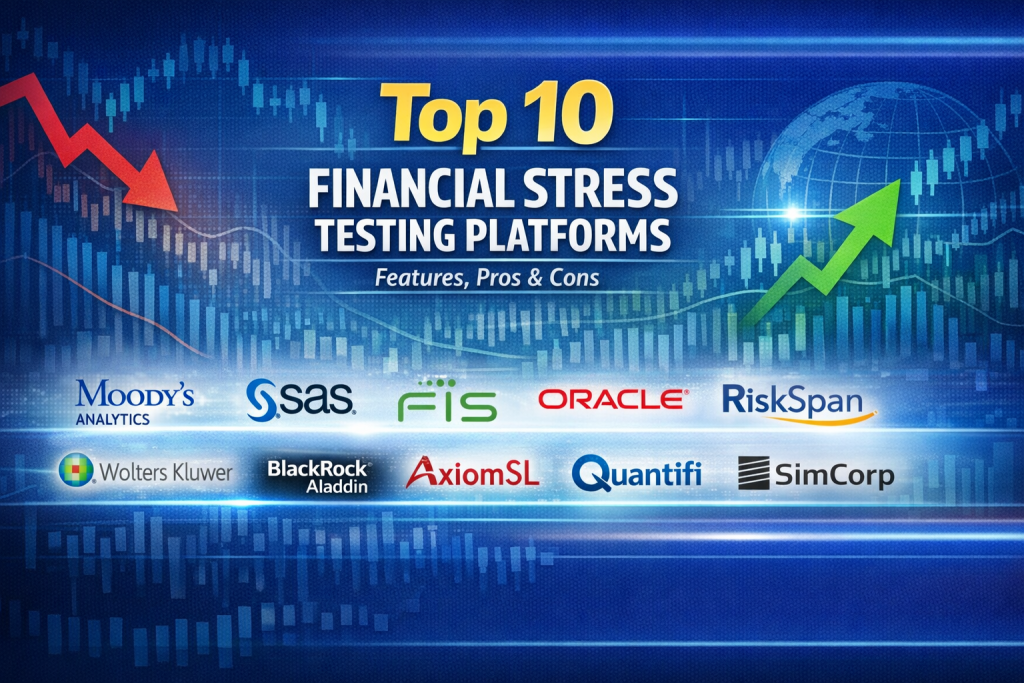
Top 10 Financial Stress Testing Platforms Tools
1 — Moody’s Analytics
Short description:
A comprehensive stress testing and risk analytics platform used by global banks and regulators for capital adequacy, credit risk, and macroeconomic stress testing.
Key features
- Advanced macroeconomic scenario modeling
- Credit, market, and liquidity stress testing
- Regulatory-aligned templates and workflows
- Integrated data, models, and reporting
- Portfolio-level and enterprise-wide analysis
- Strong audit trail and governance controls
Pros
- Industry-leading modeling depth
- Widely trusted by regulators and large institutions
- Strong integration with credit risk data
Cons
- High cost for smaller organizations
- Requires skilled risk professionals
- Longer implementation timelines
Security & compliance
SOC 2, ISO standards, encryption, audit logs, GDPR support
Support & community
Enterprise-grade support, detailed documentation, professional services, global user base
2 — SAS
Short description:
An enterprise analytics platform offering powerful stress testing, scenario analysis, and regulatory risk management capabilities.
Key features
- End-to-end stress testing workflows
- Advanced statistical and simulation engines
- Scenario design and sensitivity analysis
- Regulatory reporting support
- Scalable enterprise architecture
- Integration with data lakes and BI tools
Pros
- Extremely flexible and powerful analytics
- Suitable for complex institutions
- Strong governance and transparency
Cons
- Steep learning curve
- Higher infrastructure requirements
- Premium pricing
Security & compliance
SOC 2, ISO, encryption, role-based access, audit logging
Support & community
Strong enterprise support, training programs, active analytics community
3 — FIS
Short description:
A financial risk and treasury platform delivering stress testing for banks and financial institutions focused on capital and liquidity risk.
Key features
- Balance sheet and liquidity stress testing
- Capital adequacy modeling
- Scenario-based forecasting
- Regulatory compliance support
- Integration with core banking systems
- Real-time risk monitoring
Pros
- Deep banking domain expertise
- Strong treasury and liquidity focus
- Reliable enterprise performance
Cons
- Less intuitive UI
- Customization may require vendor support
- Best suited for banks rather than non-financial firms
Security & compliance
ISO standards, encryption, access controls, audit logs
Support & community
Dedicated enterprise support, onboarding assistance, financial services expertise
4 — Oracle Financial Services
Short description:
An enterprise-grade risk and finance suite supporting regulatory stress testing, capital planning, and enterprise risk management.
Key features
- Integrated finance and risk modeling
- Regulatory stress testing frameworks
- Scenario management and forecasting
- Strong data governance
- Scalable cloud and on-prem options
- Enterprise reporting and dashboards
Pros
- Unified finance and risk view
- Highly scalable
- Strong data management
Cons
- Complex implementation
- Higher total cost of ownership
- Requires experienced teams
Security & compliance
Enterprise security controls, encryption, GDPR support, audit logging
Support & community
Enterprise support, documentation, professional services ecosystem
5 — RiskSpan
Short description:
A modern cloud-based platform focused on stress testing and scenario analysis for portfolios, structured finance, and credit assets.
Key features
- Cloud-native stress testing engine
- Scenario and sensitivity analysis
- Portfolio and asset-level modeling
- Automated reporting
- Flexible APIs and integrations
- Faster deployment than legacy tools
Pros
- Modern architecture
- Faster time-to-value
- Strong for structured finance use cases
Cons
- Narrower scope than large suites
- Less suitable for full enterprise ERM
- Smaller ecosystem
Security & compliance
Encryption, role-based access, cloud security standards
Support & community
Responsive support, clear documentation, focused user base
6 — Wolters Kluwer
Short description:
A regulatory and risk management platform offering stress testing aligned with compliance and reporting requirements.
Key features
- Regulatory stress testing workflows
- Scenario analysis and modeling
- Compliance-driven reporting
- Data validation and audit trails
- Integration with governance tools
- Regulatory content updates
Pros
- Strong regulatory alignment
- Clear auditability
- Trusted compliance expertise
Cons
- Less advanced quantitative modeling
- UI can feel conservative
- Limited customization
Security & compliance
SOC 2, GDPR, encryption, audit logs
Support & community
Reliable support, regulatory expertise, extensive documentation
7 — BlackRock Aladdin
Short description:
A leading investment risk platform used by asset managers and institutions for portfolio stress testing and scenario analysis.
Key features
- Portfolio-level stress testing
- Market and macro scenario modeling
- Asset class-specific analytics
- Integrated performance and risk views
- Scalable global infrastructure
- Real-time insights
Pros
- Excellent for asset managers
- Deep market data integration
- Strong visualization
Cons
- Primarily investment-focused
- Less suited for banking capital stress tests
- Premium pricing
Security & compliance
Enterprise security, encryption, audit controls
Support & community
High-touch support, strong institutional adoption
8 — AxiomSL
Short description:
A regulatory reporting and risk data platform supporting stress testing through accurate, transparent financial data management.
Key features
- Regulatory data aggregation
- Stress testing data preparation
- Scenario-driven reporting
- Auditability and traceability
- Scalable enterprise data model
- Integration with risk engines
Pros
- Strong data accuracy and lineage
- Trusted for regulatory submissions
- High transparency
Cons
- Not a standalone stress engine
- Requires integration with modeling tools
- Complex setup
Security & compliance
Regulatory-grade security, audit logs, encryption
Support & community
Enterprise support, regulatory expertise, strong documentation
9 — Quantifi
Short description:
A quantitative risk analytics platform delivering stress testing across credit, market, and counterparty risk.
Key features
- Advanced quantitative stress testing
- Scenario and sensitivity analysis
- Cross-asset risk modeling
- Flexible configuration
- API-driven integrations
- High-performance calculations
Pros
- Strong quantitative capabilities
- Flexible risk modeling
- Suitable for complex portfolios
Cons
- Requires quant expertise
- Less intuitive UI
- Smaller market presence
Security & compliance
Encryption, access controls, audit logs
Support & community
Specialized support, technical documentation, niche community
10 — SimCorp
Short description:
An investment management platform offering stress testing and scenario analysis integrated with front-to-back operations.
Key features
- Portfolio stress testing
- Scenario and sensitivity analysis
- Investment performance integration
- Risk reporting dashboards
- Scalable architecture
- Data consistency across functions
Pros
- Integrated investment workflows
- Strong data consistency
- Trusted by asset managers
Cons
- Focused on investment firms
- Less coverage for banking stress tests
- Implementation effort
Security & compliance
Enterprise security standards, encryption, audit logging
Support & community
Global support teams, structured onboarding, strong user network
Comparison Table
| Tool Name | Best For | Platform(s) Supported | Standout Feature | Rating |
|---|---|---|---|---|
| Moody’s Analytics | Large banks & regulators | Cloud / On-prem | Macroeconomic stress depth | N/A |
| SAS | Enterprise risk teams | Cloud / On-prem | Advanced analytics engine | N/A |
| FIS | Banking & treasury | Cloud / On-prem | Liquidity stress expertise | N/A |
| Oracle Financial Services | Large financial enterprises | Cloud / On-prem | Unified finance & risk | N/A |
| RiskSpan | Structured finance | Cloud | Modern cloud architecture | N/A |
| Wolters Kluwer | Compliance-driven firms | Cloud | Regulatory alignment | N/A |
| BlackRock Aladdin | Asset managers | Cloud | Portfolio stress insights | N/A |
| AxiomSL | Regulatory reporting teams | Cloud / On-prem | Data lineage & audit | N/A |
| Quantifi | Quant-heavy institutions | Cloud / On-prem | Cross-asset modeling | N/A |
| SimCorp | Investment managers | Cloud / On-prem | Front-to-back integration | N/A |
Evaluation & Scoring of Financial Stress Testing Platforms
| Criteria | Weight | Moody’s | SAS | FIS | Oracle | RiskSpan | WK | Aladdin | AxiomSL | Quantifi | SimCorp |
|---|---|---|---|---|---|---|---|---|---|---|---|
| Core features | 25% | High | High | High | High | Medium | Medium | Medium | Medium | High | Medium |
| Ease of use | 15% | Medium | Medium | Medium | Low | High | Medium | High | Medium | Low | Medium |
| Integrations | 15% | High | High | High | High | Medium | Medium | High | High | Medium | Medium |
| Security & compliance | 10% | High | High | High | High | Medium | High | High | High | Medium | High |
| Performance | 10% | High | High | High | High | Medium | Medium | High | Medium | High | Medium |
| Support | 10% | High | High | High | High | Medium | High | High | High | Medium | High |
| Price / value | 15% | Low | Low | Medium | Low | High | Medium | Low | Medium | Medium | Medium |
Which Financial Stress Testing Platforms Tool Is Right for You?
- Solo users & small teams: Lightweight, cloud-native tools with faster onboarding work best.
- SMBs & mid-market: Look for balanced platforms with strong scenarios but manageable complexity.
- Large enterprises: Prioritize scalability, regulatory alignment, governance, and auditability.
- Budget-conscious teams: Focus on modular tools with focused stress testing features.
- Premium buyers: Enterprise suites deliver depth, integration, and regulatory confidence.
- Feature depth vs ease: Advanced modeling often trades simplicity for power.
- Integration needs: Ensure compatibility with data warehouses, finance, and risk systems.
- Security requirements: Regulated industries must prioritize encryption, audit logs, and compliance.
Frequently Asked Questions (FAQs)
1. What is financial stress testing?
It simulates adverse economic scenarios to evaluate financial resilience and risk exposure.
2. Is stress testing mandatory?
Often yes for regulated financial institutions, but also valuable voluntarily.
3. How long does implementation take?
From weeks for cloud tools to months for enterprise suites.
4. Do these platforms replace spreadsheets?
They significantly reduce reliance on error-prone manual spreadsheets.
5. Are these tools only for banks?
No, insurers, asset managers, and large corporates also benefit.
6. How important is regulatory alignment?
Critical for auditability and supervisory acceptance.
7. Can non-quant users use these platforms?
Some offer user-friendly interfaces, but complex tools require expertise.
8. Are cloud platforms secure?
Yes, when built with enterprise-grade security controls.
9. What is the biggest buying mistake?
Over-buying complexity without internal expertise.
10. Can stress testing support strategy?
Absolutely—it informs capital planning and risk-aware decisions.
Conclusion
Financial Stress Testing Platforms play a vital role in helping organizations anticipate risk, meet regulatory expectations, and strengthen financial resilience. The best tools combine robust scenario modeling, governance, integration, and usability.
There is no universal winner. The right choice depends on your institution’s size, regulatory exposure, data maturity, budget, and internal expertise. By aligning tool capabilities with real business needs, organizations can transform stress testing from a compliance exercise into a strategic advantage.

Find Trusted Cardiac Hospitals
Compare heart hospitals by city and services — all in one place.
Explore Hospitals
Really informative article — thanks for clearly outlining the pros and cons of each stress testing platform! With financial models becoming more complex and regulations tighter than ever, this comparison makes it easier to see which tools might fit different institutional needs. I’m curious how others balance advanced analytics with ease of use — does anyone prefer platforms that focus more on scenario flexibility even if they have a steeper learning curve? Overall, this guide is a solid resource for anyone evaluating stress testing solutions!