
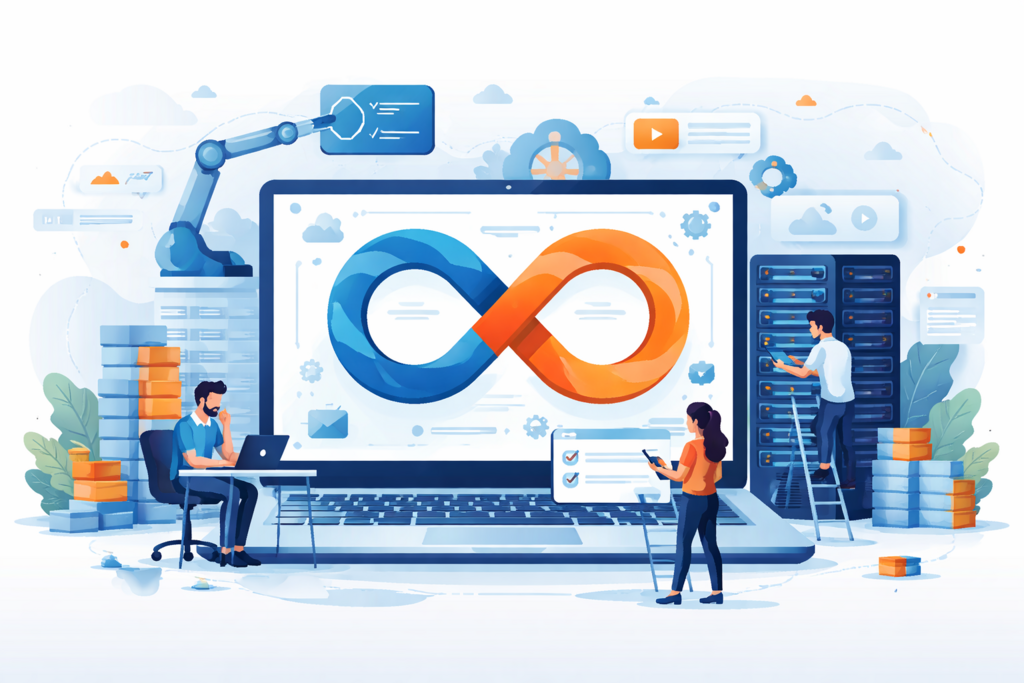
If you’ve ever shipped a feature on Friday and spent the weekend putting out fires, you already know the short answer to why is CI/CD important: it reduces chaos. CI/CD is the set of practices that helps teams merge code more often, test automatically, and release changes in a predictable way. It’s not “extra process.” It’s the thing that makes modern development feel less like gambling.
Teams usually start searching why CI/CD is important when the pain becomes visible: releases take too long, bugs slip into production, hotfixes get scary, and the team spends more time reacting than building. CI/CD flips that situation by turning delivery into a routine rather than an event.
What CI and CD Actually Mean
Continuous Integration (CI) is about integrating changes frequently and validating them automatically. Instead of letting code sit in branches for days, developers merge small updates often, and the pipeline runs tests right away.
Continuous Delivery (CD) takes validated builds and makes them ready to deploy at any time (often with a manual approval step). Continuous Deployment goes one step further and pushes changes to production automatically when they pass checks.
A simple way to explain why continuous integration is important: it keeps problems small. When you merge and test constantly, you find issues when they are easier to fix – and when the person who caused them still remembers what they did.
Case: From Friday Deploy Panic to Calm Weekly Releases

Let’s make this concrete.
Imagine a mid-size SaaS team (about 12 engineers) shipping a subscription product. For years, their release process looked “fine” on paper: features were developed in branches, QA tested everything at the end of a sprint, and deployments happened every two weeks. But the reality was messy:
- Releases routinely slipped because testing found issues too late.
- Hotfixes were scary because nobody was fully sure what would break.
- Customer support kept reporting “it worked yesterday” problems after each release.
- Engineers avoided touching certain parts of the codebase because merges were painful.
This is the moment when why CI/CD is important stops being a theory question and becomes a survival question.
What they changed (the CI/CD shift)
They didn’t rewrite the product or change the whole stack. They changed the delivery habits:
- Smaller merges, every day
They moved to frequent merges with automated checks on every pull request. That alone reduced the “big bang” merge conflicts. The importance of continuous integration showed up in week one: fewer surprises, fewer broken builds, and fewer “wait, whose change broke this?” - A test pyramid that matched reality
They kept unit tests fast, added a small set of meaningful integration tests, and stopped trying to run the entire universe on every commit. That made the pipeline reliable and quick, which is critical for trust. This is one of the most practical continuous integration benefits: developers actually believe the signal. - A release process that didn’t rely on heroics
They introduced continuous delivery: every successful build was deployable, and production releases became smaller and more frequent. The benefits of continuous delivery became obvious fast: rollbacks were easy, outages were rarer, and releases stopped being “events.”
If you want a team to implement this properly (without turning CI/CD into a slow, flaky monster), it helps to have people who’ve done it across different stacks and maturity levels. That’s why teams often bring in specialists like AppRecode for setup, pipeline design, and guardrails – here’s their page CI/CD consulting services.
What improved (real outcomes users care about)
Within 6–8 weeks, the team saw changes that even non-technical stakeholders noticed:
- Deployments went from “every two weeks + stress” to “several times a week + calm.”
- Bug reports after releases dropped because issues were caught earlier in the pipeline.
- Developers stopped wasting time on merge conflicts and mystery failures.
- Support had fewer spikes after releases, so customers trusted updates again.
This is the “human” value behind the benefits of continuous integration: less context switching, less firefighting, more building.
And yes, speed improved too – but the bigger win was predictability. That’s the core reason why continuous integration is important: it keeps problems small and fixes fast.
The Hidden Cost of “Big Bang” Releases
Traditional release cycles often look like this: build features for weeks, test at the end, patch issues late, then pray during deployment. The result is predictable: late surprises, late nights, and unpredictable quality.
This is exactly where the importance of continuous integration becomes obvious. CI prevents the “giant merge conflict” scenario and avoids the moment when you discover that five features don’t work together. In practice, it’s not only about speed – it’s about confidence.
When people ask why CI/CD is important, they often focus on faster releases. But the bigger win is that CI/CD reduces the cost of mistakes. You still make mistakes (everyone does), but you detect them earlier and recover faster.
How CI Improves Quality (Without Slowing You Down)
It sounds almost too nice: ship faster and improve quality at the same time. But the logic is straightforward. Automated tests, linting, and static checks run every time code changes. That means quality control happens continuously, not as a last-minute gate.
Here are the benefits of continuous integration you actually feel week to week:
- Bugs are caught closer to the moment they were introduced.
- Integration issues show up early, not at the end of a sprint.
- Developers get quick feedback, so fixes are cheaper and faster.
- Code reviews become easier because changes are smaller.
This is why teams talk about continuous integration benefits not as theory, but as something they experience: fewer “mystery failures,” fewer broken builds, fewer deployments that feel like a gamble.
And yes, why continuous integration is important also comes down to team health. When failures are constant but small, stress goes down. When failures are rare but massive, stress goes up.
Speed Is Nice, Predictability Is Better
CI/CD doesn’t only help you move faster. It helps you move in a controlled way. Instead of shipping 50 changes at once, you ship 5 changes ten times. That makes rollbacks easier, incident response faster, and root cause analysis less painful.
This is where the benefits of continuous delivery show up clearly:
- Releases become routine, not dramatic.
- You can deploy on a schedule that matches business needs.
- You reduce downtime because deployment becomes repeatable.
- You can ship smaller changes, which reduces risk.
The best part is that the benefits of continuous delivery aren’t limited to big companies. Even small teams gain a lot because they have fewer people to “babysit” releases. A good pipeline becomes the extra teammate who never gets tired.
CI/CD and Security: Moving Security Earlier
Security problems are expensive mostly because they show up late. CI/CD supports DevSecOps by embedding checks into the pipeline: dependency scanning, SAST, container scanning, secrets detection, IaC validation, and policy checks. When security is automated and consistent, it stops being a last-minute blocker.
This is another angle of why is CI/CD important: it makes security measurable and repeatable. You’re not relying on a heroic person to remember all the steps. The pipeline enforces standards the same way every time.
Common Challenges (And What Actually Helps)
CI/CD adoption isn’t always smooth. Teams run into flaky tests, slow pipelines, unclear ownership, or “too many tools.” The good news is that most of these issues are fixable with practical habits:
- Keep pipelines fast: prioritize quick tests on every commit, run heavier suites on schedule or on merge.
- Treat the pipeline as a product: version it, review it, and improve it like any other code.
- Make failures actionable: tests should tell you what broke and why, not just that “something failed.”
- Start small: one service, one pipeline, and expand once it’s stable.
The importance of continuous integration really depends on discipline here. CI only works when teams trust it. If the pipeline is unreliable, people will bypass it. If it’s reliable, it becomes the default way of working.
What This Looks Like for a Real Team
Imagine a team shipping a web app. Before CI/CD, releases happen once every two weeks, and deployment takes a couple of hours. After CI/CD, developers merge daily, tests run automatically, and production releases happen several times a week.
The shift is not just technical – it’s cultural. The team stops treating deployment as a special occasion. That’s why people describe continuous integration benefits as “less fear” and “more control,” not only “more speed.”
And that’s also why CI/CD is important for product teams: you can respond to user feedback faster, fix issues without drama, and keep momentum without sacrificing reliability.
Conclusion: The Real Answer
So, why is CI/CD important? Because modern software is never “done.” Users expect frequent improvements, bugs must be fixed quickly, and security can’t be an afterthought. CI/CD makes that reality manageable.
The simple truth about the benefits of continuous integration is that they compound over time. Every small improvement – faster feedback, fewer broken builds, cleaner releases – adds up to a calmer, more productive team.
And if someone asks again why continuous integration is important, the most human answer is: it helps you sleep better after you deploy.

I’m Rajesh Kumar, a DevOps, SRE, DevSecOps, Cloud, and Platform Engineering expert passionate about sharing practical knowledge, real-world experiences, and industry best practices. I have worked at Cotocus and regularly write about technology, travel, investing, health, product reviews, and digital marketing through my various platforms.
I publish technical articles at DevOps School, travel stories at Holiday Landmark, stock market insights at Stocks Mantra, health and fitness guidance at My Medic Plus, product reviews at TrueReviewNow, and SEO and digital marketing strategies at Wizbrand.
Find Trusted Cardiac Hospitals
Compare heart hospitals by city and services — all in one place.
Explore Hospitals
Really useful read! I love how you explain why CI/CD matters in real life and not just as a concept — the real-world examples make it click. It’s a great reminder of how much smoother development gets when these practices are actually implemented. Thanks for sharing!