
What is the Concept behind Partitioning a Table?
- Each Table in Teradata has a Primary Index unless it is a NoPI table.
- The Primary Index is the mechanism that allows Teradata to physically distribute the rows of a table across the AMPs.
- AMPs Sort their rows by the Row-ID, so the system can perform a lightning fast Binary Search since the rows are in Row-ID Order.
- Partitioning merely tells the AMP to sort its tables’ rows by the Partition first, but then sort the rows by Row-ID within the partition.
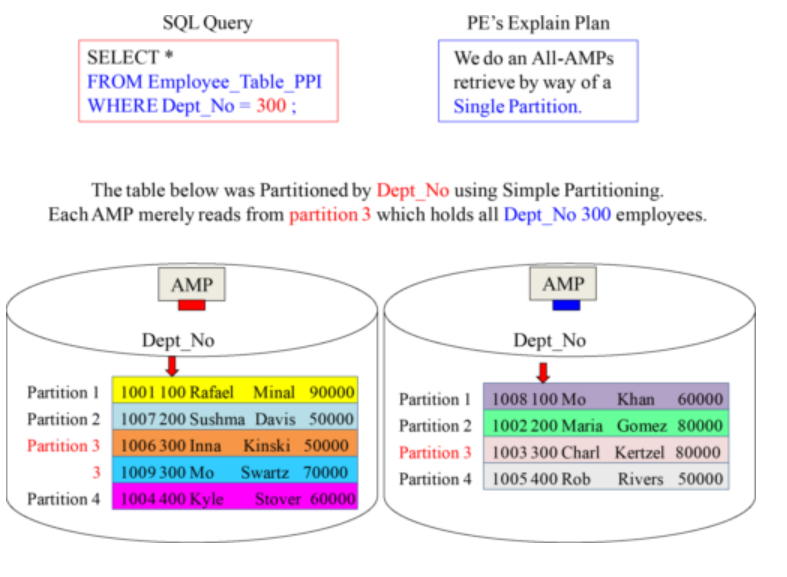
- Partitioning queries will involve all AMPs, but partitioned tables are designed to prevent FULL Table Scans.
Advantages and Disadvantages of Partitioning
Advantages
- Increase query efficiency by avoiding full table scans
- PPI’s are defined on a table in order to increase query efficiency by avoiding full table scans without the overhead and maintenance costs of secondary indexes.
- Deleting large volumes of rows in entire partitions can be extremely fast.
- For range based queries we can effectively remove SI and use PPI, thus saving overhead of SI subtable.
- It can access a subset of a large table quickly.
- Maximum partitions allowed by Teradata – 65,535
Disadvantages
- Partitioned rows are2 or 8 bytes longer. Table uses more PERM space.
- A PI access may be degraded if the partitioning column is not part of the PI
- Joins to non-partitioned tables with the same PI may be degraded.
- The PI can’t be defined as unique when the partitioning column is not part of the PI.
Creating a PPI Table with Simple Partitioning
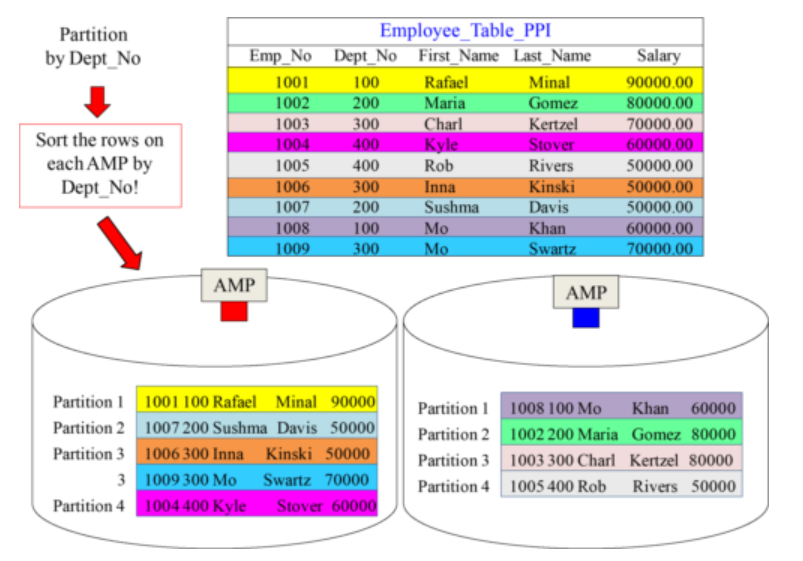
- A PPI table has the AMPs sort (order) the rows on the table by the Partition.
- This allows for people to avoid Full Table Scans.
A Visual Display of Simple Partitioning
An SQL Example that explains Simple Partitioning
Creating a PPI Table with RANGE_N
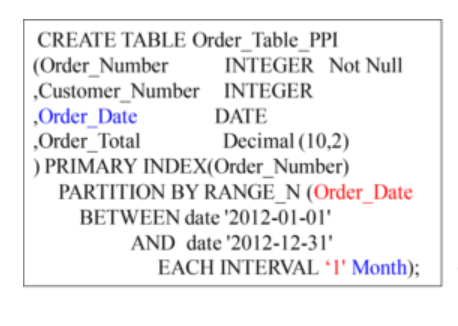
- The expression is evaluated and is mapped into one of a list of specified ranges.
- Ranges are listed in increasing order and must not overlap with each other.
- Result is the data row being placed into a partition associated with that range.
Examples:
Example 1 – Creating a PPI Table with RANGE_N Partitioning per Month
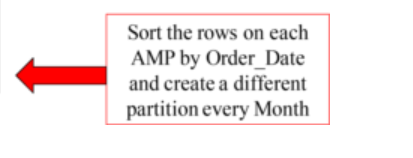
A Visual of One Year of Data with Range_N per Month
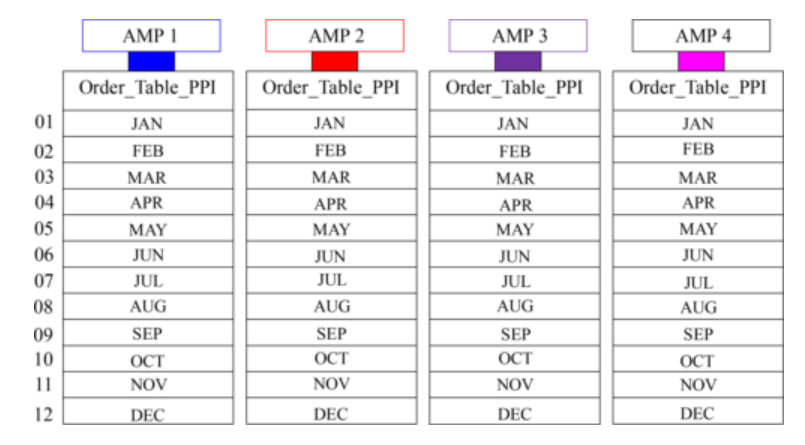
Each AMP sorts their rows by Month (of Order_Date).
An SQL Example explaining Range_N Partitioning per Month
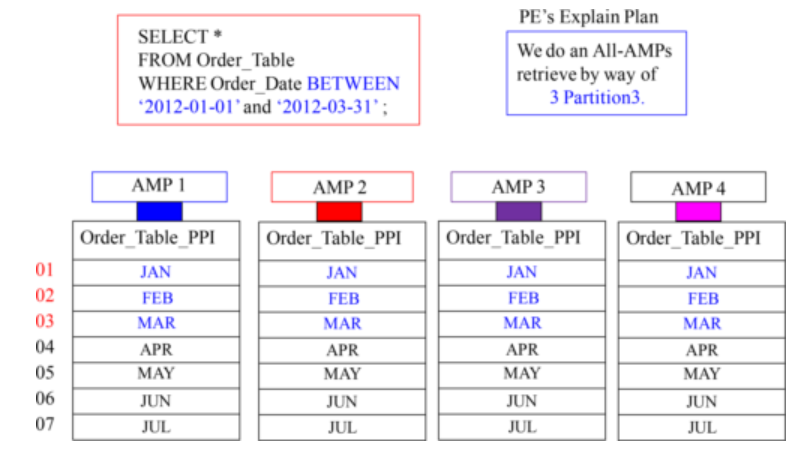
Example 2 – Creating a PPI Table with RANGE_N Partitioning per Day
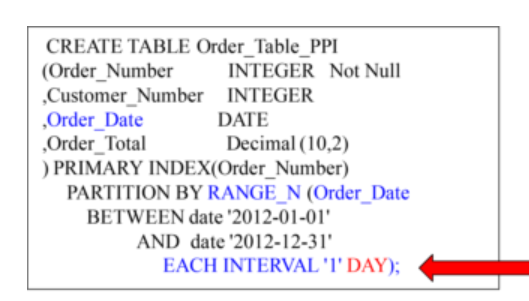
A Visual of Range_N Partitioning Per Day
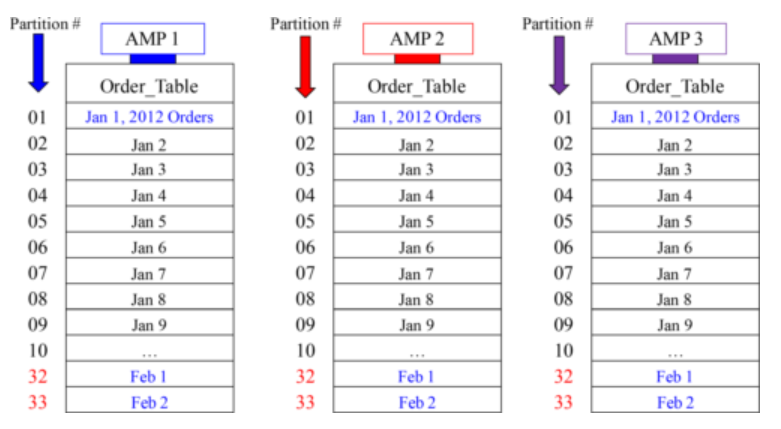
An SQL Example that explains Range_N Partitioning per Day
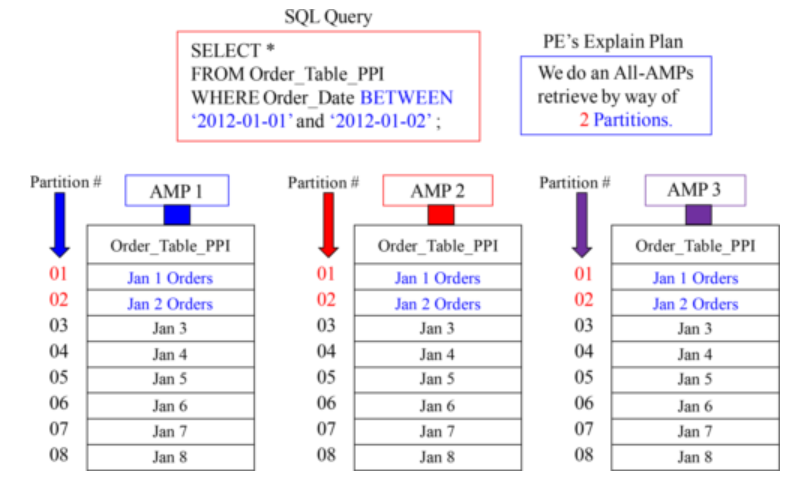
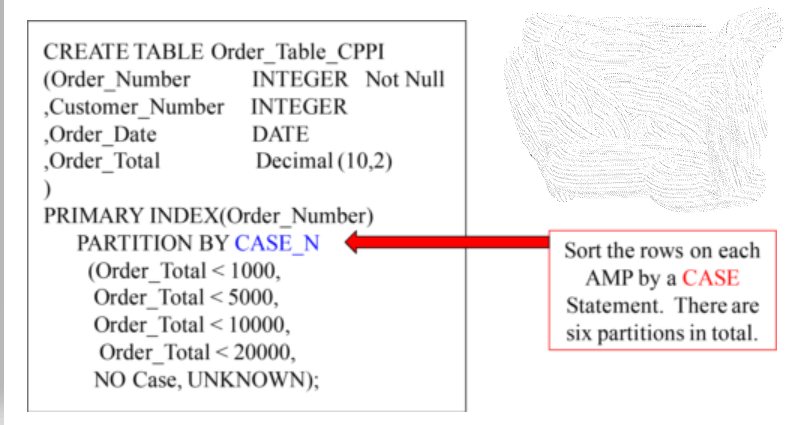
Creating a PPI Table with CASE_N
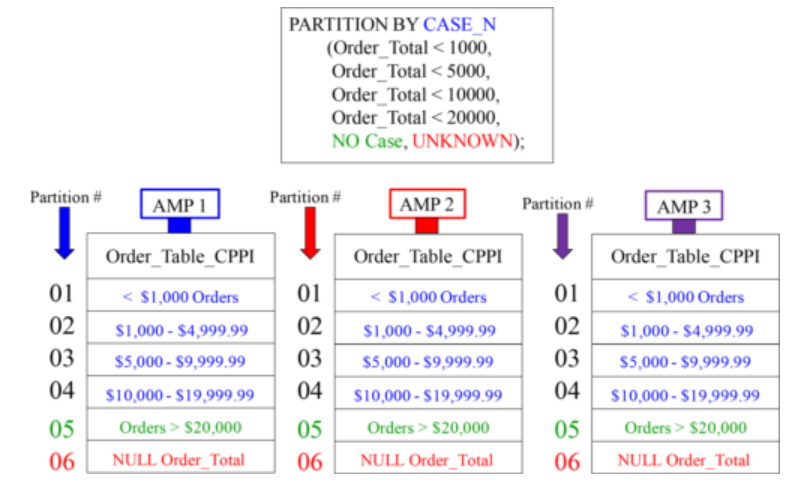
A Visual of Case_N Partitioning
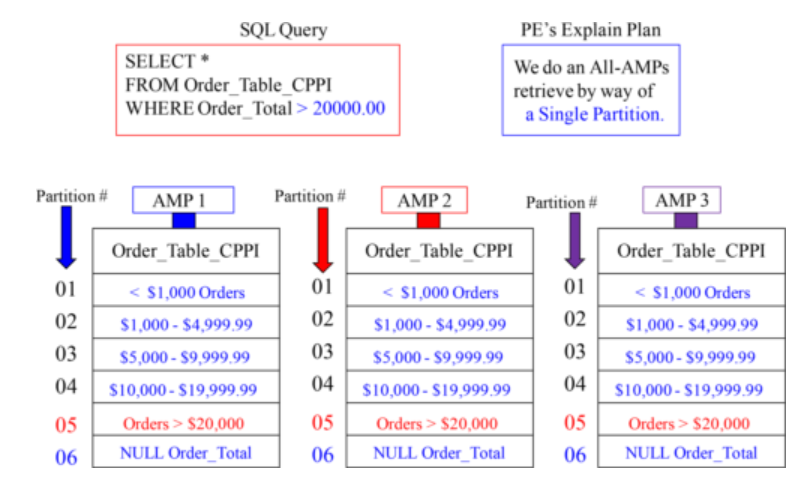
An SQL Example that explains CASE_N Partitioning
Note: NO CASE, NO RANGE, and UNKNOWN options are also available which we can use in RANGE_N and CASE_N Partitioning

MotoShare.in is your go-to platform for adventure and exploration. Rent premium bikes for epic journeys or simple scooters for your daily errands—all with the MotoShare.in advantage of affordability and ease.
Find Trusted Cardiac Hospitals
Compare heart hospitals by city and services — all in one place.
Explore Hospitals