
Introduction
Digital assets such as cryptocurrencies, tokens, NFTs, and tokenized securities are now part of mainstream finance. With this growth comes increasing scrutiny from regulators, auditors, and internal risk teams. Digital Asset Compliance Tools are specialized platforms designed to help organizations monitor, analyze, and manage compliance risks related to digital assets.
These tools play a critical role in anti-money laundering (AML), know-your-customer (KYC), transaction monitoring, fraud detection, sanctions screening, and regulatory reporting. As global regulations evolve, businesses dealing with digital assets must demonstrate transparency, traceability, and governance across complex blockchain ecosystems.
Real-world use cases include crypto exchanges monitoring suspicious wallets, fintech companies ensuring regulatory reporting accuracy, NFT marketplaces detecting illicit transactions, and enterprises managing digital asset custody controls.
When choosing a digital asset compliance tool, buyers should evaluate regulatory coverage, blockchain analytics depth, ease of use, scalability, security posture, integrations, and overall value. The right platform can significantly reduce compliance risk while enabling confident growth in the digital asset economy.
Best for:
Compliance officers, risk managers, crypto exchanges, fintech companies, Web3 startups, financial institutions, and enterprises managing digital assets at scale.
Not ideal for:
Small hobby projects, individual traders, or teams without regulatory exposure where manual tracking or basic accounting tools may be sufficient.
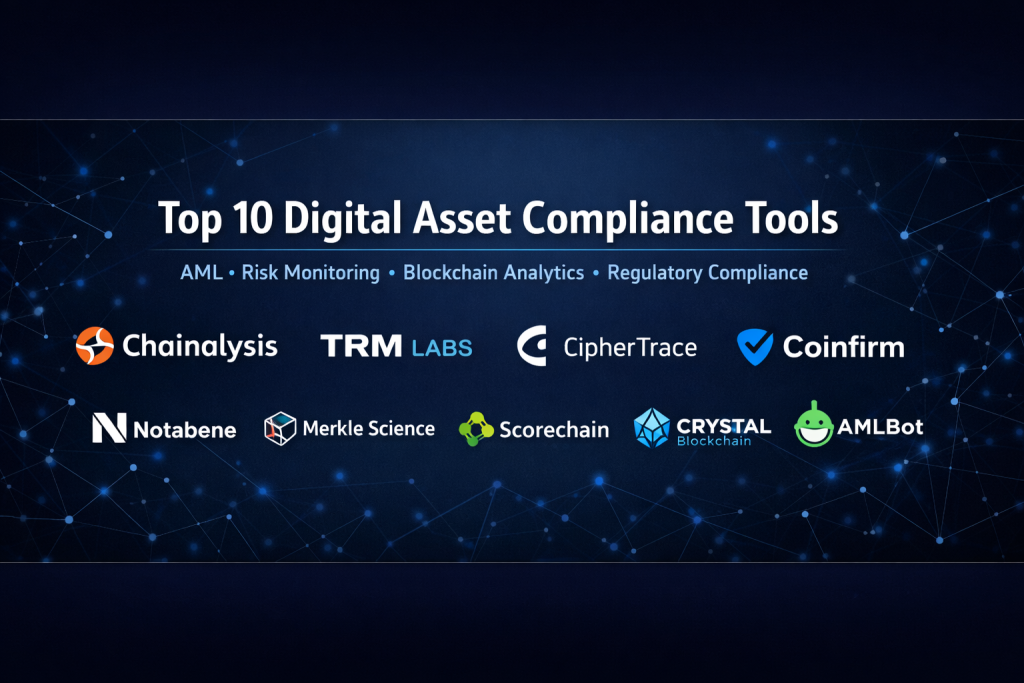
Top 10 Digital Asset Compliance Tools
1 — Chainalysis
Short description:
A market-leading blockchain analytics platform used by regulators, exchanges, and financial institutions to detect, investigate, and prevent illicit crypto activity.
Key features
- Blockchain transaction monitoring and attribution
- AML and sanctions screening
- Risk scoring for wallets and transactions
- Investigation and case management tools
- Regulatory reporting support
- Coverage across major blockchains
Pros
- Industry benchmark for crypto compliance
- Strong regulatory acceptance
Cons
- Premium pricing
- Can be complex for smaller teams
Security & compliance
SOC 2, encryption at rest and in transit, audit logs, GDPR alignment
Support & community
Enterprise-grade onboarding, detailed documentation, strong analyst support
2 — TRM Labs
Short description:
A risk management and compliance platform focused on blockchain intelligence, fraud detection, and transaction monitoring.
Key features
- Real-time transaction monitoring
- Wallet risk profiling
- Sanctions and watchlist screening
- NFT and DeFi coverage
- Case investigation workflows
- API-first architecture
Pros
- Broad asset and chain coverage
- Intuitive UI for analysts
Cons
- Advanced features require training
- Pricing not transparent
Security & compliance
SOC 2, GDPR-ready, SSO support, detailed audit trails
Support & community
Strong customer success team, active knowledge base
3 — Elliptic
Short description:
A compliance and risk analytics platform helping organizations manage crypto AML and financial crime risks.
Key features
- Crypto AML monitoring
- Transaction and wallet screening
- DeFi risk insights
- Compliance reporting tools
- Blockchain forensic analysis
Pros
- Strong forensic capabilities
- Trusted by regulators
Cons
- Enterprise-focused pricing
- UI can feel analyst-heavy
Security & compliance
ISO-aligned controls, encryption, audit logging
Support & community
Professional services available, comprehensive documentation
4 — CipherTrace
Short description:
A digital asset intelligence solution focused on AML, fraud detection, and blockchain risk analytics.
Key features
- Crypto transaction monitoring
- Wallet attribution database
- Regulatory reporting tools
- Risk scoring engine
- DeFi and cross-chain analysis
Pros
- Deep risk intelligence
- Strong compliance reporting
Cons
- Steep learning curve
- Limited customization for SMBs
Security & compliance
SOC 2 controls, encryption, compliance-ready reporting
Support & community
Dedicated enterprise support, analyst assistance
5 — Coinfirm
Short description:
An AML and compliance platform designed for crypto businesses seeking automated regulatory controls.
Key features
- AML transaction monitoring
- Wallet risk scoring
- Regulatory rule engine
- API-based integration
- Compliance dashboards
Pros
- Good balance of automation and control
- Flexible integration options
Cons
- UI less polished than peers
- Limited advanced analytics
Security & compliance
GDPR compliance, encryption, audit trails
Support & community
Standard onboarding, growing user community
6 — Notabene
Short description:
A compliance platform focused on crypto Travel Rule messaging and regulatory data exchange.
Key features
- Travel Rule data exchange
- Secure counterparty messaging
- VASP directory management
- Compliance reporting
- API-based integrations
Pros
- Strong Travel Rule specialization
- Interoperability focus
Cons
- Narrow use case
- Not a full AML suite
Security & compliance
Encryption, secure messaging, GDPR-aligned
Support & community
Clear documentation, responsive support
7 — Merkle Science
Short description:
A blockchain intelligence platform designed to help businesses manage crypto risk and compliance.
Key features
- Transaction monitoring
- Wallet and entity risk scoring
- Fraud and scam detection
- Investigation dashboards
- API integrations
Pros
- Strong scam detection
- User-friendly dashboards
Cons
- Smaller ecosystem
- Fewer enterprise features
Security & compliance
Standard encryption, role-based access controls
Support & community
Hands-on onboarding, growing documentation
8 — Scorechain
Short description:
A blockchain analytics platform aimed at AML compliance and crypto transaction risk analysis.
Key features
- Transaction and address monitoring
- AML risk indicators
- Case management tools
- Customizable alerts
- Blockchain explorer integration
Pros
- Customizable compliance rules
- Good reporting tools
Cons
- Limited chain coverage
- Smaller market presence
Security & compliance
Encryption, audit logging, GDPR support
Support & community
Documentation-driven support, responsive team
9 — Crystal Blockchain
Short description:
A compliance and investigation tool offering blockchain intelligence for AML and risk analysis.
Key features
- Transaction visualization
- Wallet risk scoring
- AML compliance reporting
- Investigation workflows
- Multi-chain support
Pros
- Visual investigation tools
- Competitive pricing
Cons
- Less automation than leaders
- Smaller integrations ecosystem
Security & compliance
Standard security controls, audit-ready logs
Support & community
Email and ticket-based support
10 — AMLBot
Short description:
A lightweight AML compliance solution focused on transaction screening and wallet risk checks.
Key features
- Wallet screening
- Transaction risk scoring
- API access
- Basic compliance reports
- Multi-chain support
Pros
- Easy to implement
- Cost-effective for SMBs
Cons
- Limited advanced analytics
- Not enterprise-grade
Security & compliance
Encryption, basic audit logging
Support & community
Simple documentation, standard support
Comparison Table
| Tool Name | Best For | Platform(s) Supported | Standout Feature | Rating |
|---|---|---|---|---|
| Chainalysis | Large enterprises, regulators | Web, API | Deep blockchain intelligence | N/A |
| TRM Labs | Exchanges, fintechs | Web, API | Real-time risk monitoring | N/A |
| Elliptic | Compliance-heavy orgs | Web, API | Forensic analytics | N/A |
| CipherTrace | Financial institutions | Web, API | Risk attribution depth | N/A |
| Coinfirm | Mid-market crypto firms | Web, API | Automated AML rules | N/A |
| Notabene | Travel Rule compliance | Web, API | Secure VASP messaging | N/A |
| Merkle Science | Web3 startups | Web, API | Scam detection | N/A |
| Scorechain | Custom AML needs | Web, API | Configurable alerts | N/A |
| Crystal Blockchain | Investigations | Web | Visual analytics | N/A |
| AMLBot | SMBs, startups | API | Fast AML screening | N/A |
Evaluation & Scoring of Digital Asset Compliance Tools
| Criteria | Weight | What It Measures |
|---|---|---|
| Core features | 25% | AML, monitoring, analytics depth |
| Ease of use | 15% | UI clarity, learning curve |
| Integrations & ecosystem | 15% | APIs, partner tools |
| Security & compliance | 10% | Certifications, controls |
| Performance & reliability | 10% | Speed, uptime |
| Support & community | 10% | Onboarding, help quality |
| Price / value | 15% | ROI vs cost |
Which Digital Asset Compliance Tool Is Right for You?
- Solo users & startups: Lightweight tools with APIs and simple dashboards work best.
- SMBs & mid-market: Look for balance—strong AML features without enterprise complexity.
- Enterprises & regulators: Choose platforms with proven regulatory acceptance and scalability.
- Budget-conscious teams: Prioritize essential monitoring and reporting over advanced forensics.
- High-compliance industries: Security certifications, audit logs, and policy controls are critical.
The best choice depends on risk exposure, transaction volume, regulatory environment, and growth plans.
Frequently Asked Questions (FAQs)
1. What are digital asset compliance tools?
They help organizations monitor, analyze, and manage regulatory risks related to cryptocurrencies and blockchain assets.
2. Are these tools required by law?
Requirements vary by jurisdiction, but many regulators expect AML and transaction monitoring controls.
3. Do they support multiple blockchains?
Most modern tools support major chains, with coverage expanding regularly.
4. Are they suitable for NFT platforms?
Yes, several tools now offer NFT and marketplace transaction analysis.
5. How difficult is implementation?
API-first tools can be deployed quickly, while enterprise platforms require onboarding.
6. Do these tools replace internal compliance teams?
No, they support and enhance human decision-making.
7. How is data secured?
Most use encryption, role-based access, and audit logs.
8. Can small startups afford them?
Some tools offer SMB-friendly pricing or limited plans.
9. Are Travel Rule features included?
Only specialized platforms fully support Travel Rule compliance.
10. What’s the most common mistake buyers make?
Choosing overly complex tools without matching their actual compliance needs.
Conclusion
Digital asset compliance tools are no longer optional for organizations operating in the crypto and blockchain ecosystem. They provide visibility, control, and confidence in an increasingly regulated environment.
The most important factors to consider are regulatory coverage, usability, scalability, and security. There is no single “best” tool for everyone—the right solution depends on your organization’s size, risk profile, and compliance obligations.
By aligning tool capabilities with real-world needs, businesses can stay compliant while continuing to innovate in the digital asset space.

Find Trusted Cardiac Hospitals
Compare heart hospitals by city and services — all in one place.
Explore Hospitals
