
Introduction
Hotel Revenue Management Systems (RMS) are specialized software platforms designed to help hotels sell the right room, to the right guest, at the right price, at the right time. These systems use historical data, real-time demand signals, market trends, and predictive analytics to recommend optimal pricing and inventory strategies. In an increasingly competitive hospitality landscape, manual pricing or spreadsheet-based forecasting is no longer sufficient.
A modern RMS helps hotels maximize revenue, improve occupancy rates, and protect profitability, even during fluctuating demand cycles. From dynamic pricing and demand forecasting to competitor rate intelligence and channel optimization, these tools have become essential for data-driven hotel operations.
Why Hotel Revenue Management Systems Are Important
- Guest demand changes daily based on seasonality, events, and market behavior
- Online travel agencies (OTAs) and price transparency increase competition
- Incorrect pricing leads to revenue loss or poor occupancy
- Automation reduces human error and saves time
Key Real-World Use Cases
- Dynamic room pricing based on demand patterns
- Forecasting occupancy and revenue months in advance
- Rate parity monitoring across booking channels
- Event-based pricing for peak periods
- Strategic decisions for promotions and restrictions
What to Look for When Choosing an RMS (Evaluation Criteria)
- Accuracy of demand forecasting
- Automation vs manual control balance
- Integration with PMS, CRS, and channel managers
- Ease of use for non-technical staff
- Reporting depth and business intelligence
- Scalability across multiple properties
Best for:
Hotel Revenue Management Systems are best suited for independent hotels, hotel chains, resorts, serviced apartments, and hospitality groups seeking to optimize pricing, improve forecasting accuracy, and increase RevPAR (Revenue Per Available Room).
Not ideal for:
Very small guesthouses, homestays, or properties with fixed pricing and minimal seasonal variation may not need a full RMS and could rely on basic pricing tools or manual strategies.
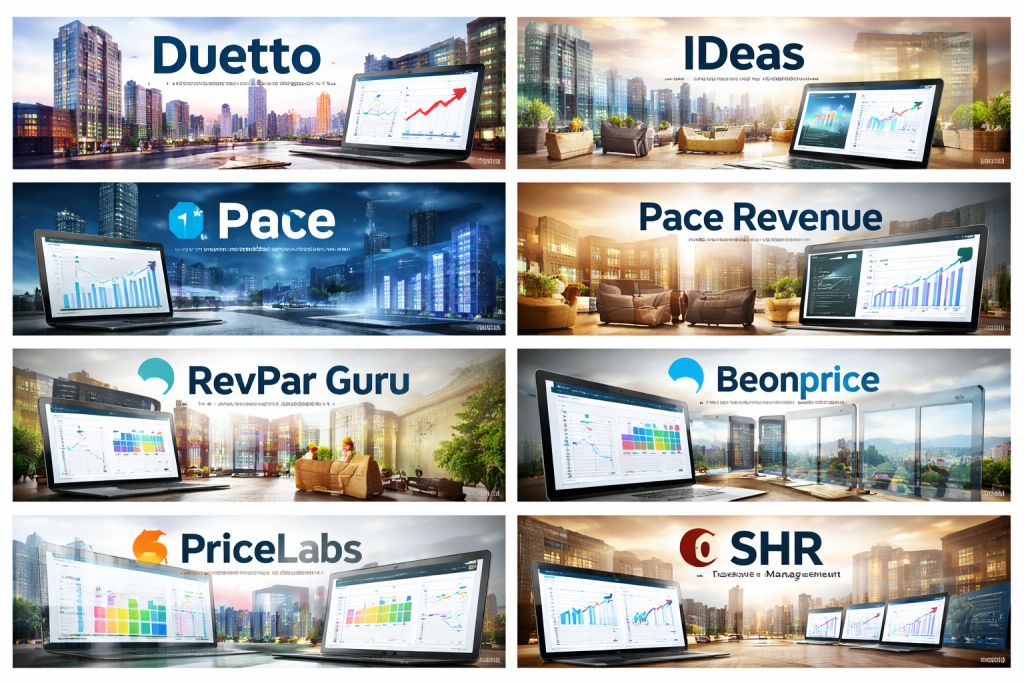
Top 10 Hotel Revenue Management Systems Tools
1 — Duetto
Short description:
A cloud-based revenue management platform built for hotels, resorts, and casinos, focusing on open pricing and predictive analytics.
Key features:
- Open pricing model without rate restrictions
- Advanced demand forecasting
- Real-time pricing recommendations
- Segmentation-based revenue optimization
- Portfolio-level performance insights
- Automated pricing rules
Pros:
- Highly flexible pricing strategies
- Strong analytics for complex properties
- Scales well for multi-property groups
Cons:
- Steeper learning curve
- Premium pricing for smaller hotels
Security & compliance:
Enterprise-grade encryption, GDPR compliance, role-based access, audit logs
Support & community:
Dedicated onboarding, enterprise support, strong documentation, account managers
2 — IDeaS Revenue Solutions
Short description:
An AI-driven revenue management system designed for hotels of all sizes, backed by deep hospitality science.
Key features:
- AI-powered demand forecasting
- Automated price optimization
- Market response intelligence
- Group pricing optimization
- Performance dashboards
- Scenario-based forecasting
Pros:
- Proven algorithms with strong accuracy
- Trusted by large hotel brands
- Extensive reporting
Cons:
- Interface may feel complex for beginners
- Implementation requires training
Security & compliance:
ISO-aligned security practices, GDPR compliance, data encryption
Support & community:
Global support teams, structured onboarding, extensive knowledge base
3 — Atomize
Short description:
A modern RMS focused on automation and simplicity, ideal for independent hotels and mid-sized chains.
Key features:
- Automated daily pricing decisions
- AI-driven demand forecasts
- Real-time competitor rate analysis
- Event-based pricing intelligence
- Revenue performance insights
Pros:
- Easy-to-use interface
- Fast implementation
- Strong automation
Cons:
- Limited customization for advanced users
- Reporting depth could be expanded
Security & compliance:
Cloud security standards, GDPR compliant, encrypted data
Support & community:
Responsive customer support, onboarding assistance, online help center
4 — Pace Revenue
Short description:
A data-driven revenue management platform combining forecasting, reporting, and pricing automation.
Key features:
- Machine-learning demand forecasting
- Dynamic pricing recommendations
- Revenue performance dashboards
- Market and competitor analysis
- Budget and forecast alignment
Pros:
- Clean, modern UI
- Good balance of automation and control
- Suitable for growing hotels
Cons:
- Fewer integrations compared to legacy tools
- Smaller ecosystem
Security & compliance:
GDPR compliance, role-based permissions, encrypted storage
Support & community:
Hands-on onboarding, dedicated support managers, training sessions
5 — RevPar Guru
Short description:
An affordable, AI-based RMS tailored for independent hotels and small chains.
Key features:
- Automated rate recommendations
- Demand forecasting
- Channel performance tracking
- Rate parity monitoring
- Custom pricing rules
Pros:
- Cost-effective solution
- Quick setup
- Ideal for budget-conscious hotels
Cons:
- Limited enterprise features
- UI is more functional than modern
Security & compliance:
Basic cloud security, GDPR compliant, access controls
Support & community:
Email and chat support, onboarding assistance, learning resources
6 — Beonprice
Short description:
A revenue optimization platform focused on demand forecasting and strategic pricing.
Key features:
- AI-driven forecasting models
- Dynamic pricing engine
- Market demand insights
- KPI and performance dashboards
- Scenario planning tools
Pros:
- Strong forecasting accuracy
- Strategic insights for revenue leaders
- Scalable architecture
Cons:
- Requires revenue management expertise
- Setup may take time
Security & compliance:
GDPR compliant, encrypted data, audit logging
Support & community:
Dedicated onboarding, expert consultants, documentation library
7 — RoomPriceGenie
Short description:
A simple and automated RMS built for small hotels and B&Bs.
Key features:
- Automatic daily price updates
- Demand-based pricing
- Competitor rate tracking
- PMS and channel manager integration
- Easy setup
Pros:
- Extremely easy to use
- Affordable pricing
- Minimal setup effort
Cons:
- Limited advanced controls
- Not ideal for large portfolios
Security & compliance:
Standard cloud security, GDPR compliant
Support & community:
Friendly support team, quick onboarding, simple guides
8 — TakeUp
Short description:
An intelligent RMS designed for hotels seeking flexible pricing strategies.
Key features:
- Real-time demand analysis
- Dynamic pricing recommendations
- Revenue performance insights
- Scenario simulations
- Channel optimization
Pros:
- Strong analytical depth
- Flexible pricing models
- Good reporting
Cons:
- UI can feel dense
- Learning curve for new users
Security & compliance:
Data encryption, GDPR compliance, role-based access
Support & community:
Dedicated account support, training programs, online documentation
9 — PriceLabs (Hospitality Edition)
Short description:
A dynamic pricing tool adapted from short-term rental pricing into hotel revenue optimization.
Key features:
- Demand-based dynamic pricing
- Event and seasonality pricing
- Custom pricing rules
- Portfolio-level controls
- Performance analytics
Pros:
- Flexible pricing logic
- Good value for money
- Easy configuration
Cons:
- Less hotel-specific reporting
- Limited enterprise features
Security & compliance:
GDPR compliant, encrypted cloud infrastructure
Support & community:
Knowledge base, email support, onboarding guides
10 — SHR Revenue Management
Short description:
A comprehensive RMS solution integrated within a broader hospitality technology ecosystem.
Key features:
- Automated pricing strategies
- Forecasting and budgeting tools
- Market intelligence
- Portfolio performance dashboards
- Integration with CRS and PMS
Pros:
- Strong ecosystem integrations
- Suitable for chains and groups
- Reliable performance
Cons:
- Interface may feel traditional
- Best value when used within SHR ecosystem
Security & compliance:
Enterprise security standards, GDPR compliance, access controls
Support & community:
Global support teams, enterprise onboarding, documentation resources
Comparison Table
| Tool Name | Best For | Platform(s) Supported | Standout Feature | Rating |
|---|---|---|---|---|
| Duetto | Large hotels & resorts | Cloud-based | Open pricing model | N/A |
| IDeaS | Enterprise & chains | Cloud-based | AI-driven forecasting | N/A |
| Atomize | Independent & mid-size hotels | Cloud-based | Full automation | N/A |
| Pace Revenue | Growing hotel groups | Cloud-based | Forecast accuracy | N/A |
| RevPar Guru | Budget-conscious hotels | Cloud-based | Affordable AI RMS | N/A |
| Beonprice | Revenue-focused teams | Cloud-based | Advanced forecasting | N/A |
| RoomPriceGenie | Small hotels & B&Bs | Cloud-based | Simplicity | N/A |
| TakeUp | Strategy-driven hotels | Cloud-based | Scenario modeling | N/A |
| PriceLabs | Flexible pricing users | Cloud-based | Rule-based pricing | N/A |
| SHR RMS | Hotel chains | Cloud-based | Ecosystem integration | N/A |
Evaluation & Scoring of Hotel Revenue Management Systems
| Criteria | Weight | Evaluation Notes |
|---|---|---|
| Core features | 25% | Forecasting, pricing, reporting depth |
| Ease of use | 15% | UI, learning curve, automation |
| Integrations & ecosystem | 15% | PMS, CRS, channel managers |
| Security & compliance | 10% | Data protection, GDPR |
| Performance & reliability | 10% | Accuracy and uptime |
| Support & community | 10% | Onboarding, responsiveness |
| Price / value | 15% | ROI vs cost |
Which Hotel Revenue Management Systems Tool Is Right for You?
- Solo or small hotels: Look for simplicity, automation, and affordability
- SMBs and growing hotels: Balance between automation and manual control
- Mid-market hotels: Strong forecasting and integrations matter
- Enterprise chains: Advanced analytics, scalability, and portfolio controls
Budget-conscious vs premium:
Affordable tools offer automation with limited customization, while premium tools provide deep analytics and enterprise features.
Feature depth vs ease of use:
More features mean complexity. Choose based on your team’s expertise.
Integration & scalability:
Ensure seamless PMS and channel manager connectivity.
Security & compliance:
Essential for multi-property operations handling sensitive data.
Frequently Asked Questions (FAQs)
1. What is a Hotel Revenue Management System?
It is software that helps hotels optimize room pricing and inventory using data and forecasting.
2. Is RMS suitable for small hotels?
Yes, many tools are designed specifically for small and independent hotels.
3. How long does implementation take?
Anywhere from a few days to several weeks depending on complexity.
4. Do RMS tools replace revenue managers?
No, they support decision-making but do not replace strategic oversight.
5. Can RMS integrate with my PMS?
Most modern RMS platforms integrate with popular PMS solutions.
6. Are these tools expensive?
Pricing varies widely, from affordable monthly plans to enterprise contracts.
7. How accurate are pricing recommendations?
Accuracy improves over time as the system learns from data.
8. Do RMS tools support multiple properties?
Many platforms offer portfolio-level management features.
9. Is manual pricing control possible?
Yes, most tools allow overrides and custom rules.
10. What mistakes should hotels avoid?
Ignoring data quality, over-automation without oversight, and poor integration planning.
Conclusion
Hotel Revenue Management Systems have become a critical pillar of modern hospitality operations. They empower hotels to respond to demand shifts, maximize revenue, and make informed pricing decisions with confidence. While the tools listed above offer powerful capabilities, the best RMS depends on your hotel’s size, budget, expertise, and growth goals.
Rather than chasing a one-size-fits-all solution, focus on accuracy, usability, integration, and long-term value. When aligned with your business strategy, the right revenue management system can significantly improve profitability and competitive positioning.

Find Trusted Cardiac Hospitals
Compare heart hospitals by city and services — all in one place.
Explore Hospitals