
Introduction
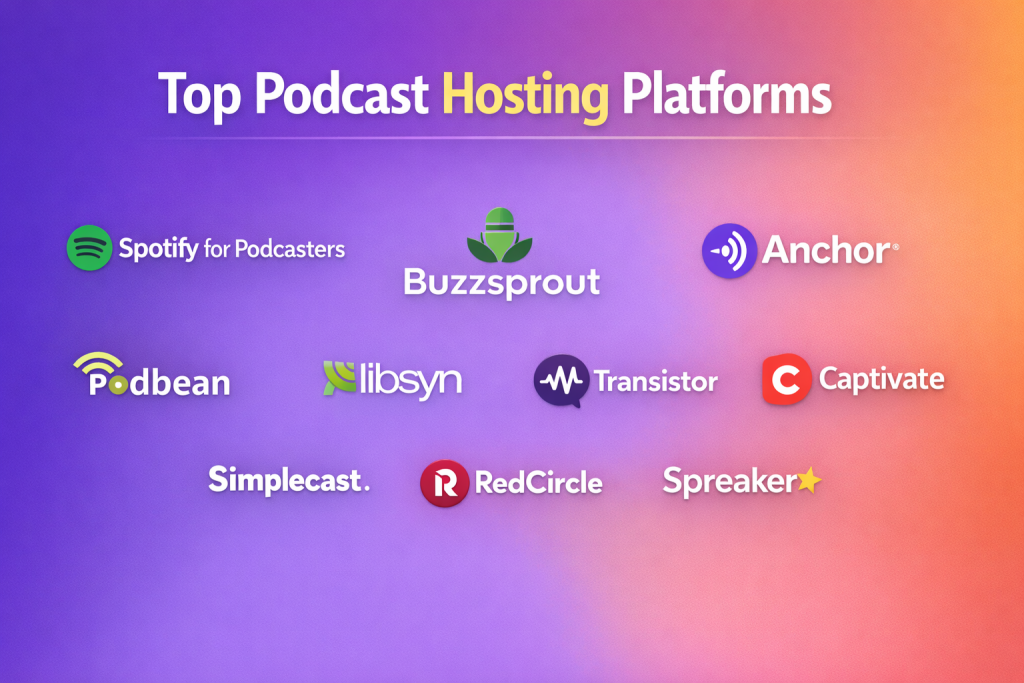
Podcast hosting platforms are specialized tools that store, distribute, manage, and analyze podcast audio files. Unlike simple file storage, these platforms are designed to reliably deliver audio content to major podcast directories and listening apps, while also providing creators with analytics, monetization options, and workflow tools. In simple terms, a podcast hosting platform is the backbone that ensures your podcast episodes are uploaded once and then automatically delivered everywhere your audience listens.
Podcast hosting is important because podcasts involve large audio files, recurring publishing schedules, and distribution across multiple channels. Using a generic hosting solution can lead to performance issues, missing analytics, and limited reach. A dedicated podcast hosting platform ensures fast delivery, accurate listener data, and long-term scalability as your show grows.
Real-world use cases include independent creators launching personal podcasts, brands running content marketing shows, educators distributing audio lessons, media companies managing multiple podcast networks, and enterprises using private podcasts for internal communication or training.
When choosing a podcast hosting platform, users should evaluate:
- Audio storage limits and bandwidth
- Distribution capabilities
- Analytics depth and accuracy
- Monetization and growth tools
- Ease of use and workflow
- Scalability and long-term reliability
- Security and compliance (for business or private podcasts)
Best for:
Podcast hosting platforms are ideal for solo podcasters, content creators, educators, marketers, media companies, startups, and enterprises looking to distribute audio content professionally. They are widely used across industries such as media, education, marketing, healthcare, technology, and internal corporate communications.
Not ideal for:
These tools may not be necessary for users who only want to host a single audio file for limited sharing, or those who rely entirely on video-first platforms. In such cases, simpler file hosting or video platforms may be more cost-effective.
Top 10 Podcast Hosting Platforms Tools
1 — Buzzsprout
Short description:
Buzzsprout is a beginner-friendly podcast hosting platform designed for independent creators who want simplicity without sacrificing essential features.
Key features:
- Easy episode upload and publishing workflow
- Automatic distribution to major podcast directories
- Basic but clear podcast analytics
- Episode optimization and audio enhancements
- Embeddable podcast players
- Episode scheduling and tagging
Pros:
- Extremely easy to use for beginners
- Clean interface with minimal setup time
- Helpful educational resources
Cons:
- Limited advanced analytics
- Storage limits on lower plans
- Fewer monetization options compared to competitors
Security & compliance:
Standard data security practices; advanced compliance certifications are N/A.
Support & community:
Strong documentation, onboarding guides, responsive email support, and an active creator community.
2 — Anchor (Spotify for Podcasters)
Short description:
Anchor, now part of Spotify for Podcasters, is a free podcast hosting platform focused on ease of publishing and direct integration with Spotify.
Key features:
- Free unlimited podcast hosting
- Built-in recording and editing tools
- Automatic distribution to listening platforms
- Basic audience analytics
- Monetization options through ads and subscriptions
- Mobile-first creation tools
Pros:
- Completely free with no storage limits
- Seamless Spotify integration
- Good for first-time podcasters
Cons:
- Limited control over distribution settings
- Analytics are less detailed
- Platform changes are controlled by Spotify
Security & compliance:
Enterprise-grade infrastructure through Spotify; specific compliance details vary.
Support & community:
Extensive help center, community forums, and self-service support.
3 — Podbean
Short description:
Podbean is a versatile podcast hosting platform offering hosting, monetization, and live streaming capabilities.
Key features:
- Unlimited audio hosting plans
- Podcast monetization and advertising tools
- Live podcast streaming
- Detailed listener analytics
- Custom podcast websites
- Private podcasting options
Pros:
- Strong monetization features
- Scales well for growing shows
- Supports both public and private podcasts
Cons:
- Interface can feel cluttered
- Advanced features require higher plans
- Learning curve for beginners
Security & compliance:
Standard encryption and account security; compliance certifications vary.
Support & community:
Email support, knowledge base, and a growing user community.
4 — Libsyn
Short description:
Libsyn is one of the oldest podcast hosting platforms, trusted by professional podcasters and media networks.
Key features:
- Reliable and scalable podcast hosting
- Advanced distribution controls
- Detailed download and audience statistics
- Monetization and advertising marketplace
- Team collaboration features
- Multiple shows under one account
Pros:
- Proven reliability and uptime
- Strong analytics and distribution control
- Suitable for professional podcasters
Cons:
- User interface feels outdated
- Storage-based pricing model
- Less beginner-friendly
Security & compliance:
Secure hosting infrastructure; enterprise compliance varies by plan.
Support & community:
Extensive documentation, ticket-based support, and long-standing industry presence.
5 — Transistor
Short description:
Transistor is a modern podcast hosting platform built for businesses, networks, and creators managing multiple shows.
Key features:
- Unlimited podcasts under one account
- Team collaboration and user roles
- Advanced analytics and reporting
- Private podcast feeds
- Branded podcast websites
- Easy episode distribution
Pros:
- Excellent for podcast networks
- Clean, modern interface
- Strong analytics and team features
Cons:
- Higher pricing than entry-level tools
- Limited built-in editing tools
- No free plan
Security & compliance:
Secure data handling; compliance certifications are limited.
Support & community:
High-quality documentation, responsive support, and a professional user base.
6 — Simplecast
Short description:
Simplecast is a premium podcast hosting solution focused on analytics, performance, and brand-level publishing.
Key features:
- Advanced audience analytics
- Recast and episode sharing tools
- Team collaboration workflows
- High-performance content delivery
- Custom podcast players
- Network-level management
Pros:
- Industry-leading analytics
- Designed for serious podcasters
- Strong performance and reliability
Cons:
- Premium pricing
- Overkill for casual creators
- Fewer beginner-focused guides
Security & compliance:
Enterprise-grade security practices; compliance varies by subscription tier.
Support & community:
Professional support, onboarding assistance, and enterprise-level help options.
7 — Captivate
Short description:
Captivate is a growth-focused podcast hosting platform designed to help creators expand their audience.
Key features:
- Unlimited podcast hosting
- Marketing and growth tools
- Call-to-action links within episodes
- Advanced analytics dashboard
- Podcast website builder
- Multiple shows support
Pros:
- Strong focus on audience growth
- Transparent pricing
- Unlimited uploads
Cons:
- Fewer monetization tools
- Interface can feel busy
- Smaller ecosystem
Security & compliance:
Standard security controls; compliance certifications are limited.
Support & community:
Helpful documentation, email support, and an engaged user community.
8 — Spreaker
Short description:
Spreaker combines podcast hosting with live broadcasting and monetization tools for creators who want flexibility.
Key features:
- Podcast hosting and live streaming
- Monetization through ads and subscriptions
- Detailed analytics
- Audio editing and publishing tools
- Mobile podcast management
Pros:
- Strong live podcasting features
- Integrated monetization
- Flexible publishing options
Cons:
- Storage limits on lower plans
- Interface can feel complex
- Analytics not as deep as premium tools
Security & compliance:
Standard platform security; compliance varies.
Support & community:
Knowledge base, email support, and community resources.
9 — RSS.com
Short description:
RSS.com is a straightforward podcast hosting platform focusing on reliability and transparent pricing.
Key features:
- Unlimited podcast episodes
- Distribution to major directories
- Basic analytics
- Custom podcast website
- Episode scheduling
- Multiple monetization options
Pros:
- Simple pricing model
- Reliable hosting
- Easy setup
Cons:
- Limited advanced analytics
- Fewer customization options
- Smaller ecosystem
Security & compliance:
Basic security measures; advanced compliance not emphasized.
Support & community:
Email support, onboarding guides, and growing documentation library.
10 — Castos
Short description:
Castos is a podcast hosting platform focused on private podcasting, education, and business use cases.
Key features:
- Public and private podcast hosting
- Secure private feeds
- Advanced analytics
- Integration with learning platforms
- Custom podcast players
- Team collaboration tools
Pros:
- Excellent private podcast features
- Good for education and internal training
- Clean user experience
Cons:
- Monetization tools are limited
- Higher cost for advanced features
- Not ideal for hobbyists
Security & compliance:
Secure private feeds and access control; enterprise compliance varies.
Support & community:
Strong documentation, responsive support, and business-focused onboarding.
Comparison Table
| Tool Name | Best For | Platform(s) Supported | Standout Feature | Rating |
|---|---|---|---|---|
| Buzzsprout | Beginners | Web | Ease of use | N/A |
| Anchor | New podcasters | Web, Mobile | Free unlimited hosting | N/A |
| Podbean | Monetization-focused | Web, Mobile | Live podcasting | N/A |
| Libsyn | Professionals | Web | Reliability & longevity | N/A |
| Transistor | Podcast networks | Web | Multiple shows per account | N/A |
| Simplecast | Premium brands | Web | Advanced analytics | N/A |
| Captivate | Growth-focused creators | Web | Marketing tools | N/A |
| Spreaker | Live podcasters | Web, Mobile | Live broadcasting | N/A |
| RSS.com | Budget users | Web | Simple pricing | N/A |
| Castos | Businesses & education | Web | Private podcasting | N/A |
Evaluation & Scoring of Podcast Hosting Platforms
| Criteria | Weight | Average Score (Out of 10) |
|---|---|---|
| Core features | 25% | 8.5 |
| Ease of use | 15% | 8.0 |
| Integrations & ecosystem | 15% | 7.5 |
| Security & compliance | 10% | 7.0 |
| Performance & reliability | 10% | 8.5 |
| Support & community | 10% | 8.0 |
| Price / value | 15% | 7.8 |
Which Podcast Hosting Platforms Tool Is Right for You?
- Solo users: Tools like Buzzsprout or Anchor work well due to simplicity and low cost.
- SMBs: Podbean, Captivate, and RSS.com offer good balance between features and pricing.
- Mid-market: Transistor and Castos are ideal for teams managing multiple shows or private podcasts.
- Enterprise: Simplecast and Libsyn provide scalability, reliability, and advanced analytics.
Budget-conscious users should focus on free or flat-rate platforms, while premium users benefit from deeper analytics and performance guarantees.
If you value ease of use, beginner-focused platforms are best. If you need feature depth, choose tools built for networks and businesses.
Security and compliance become critical for internal, private, or regulated use cases.
Frequently Asked Questions (FAQs)
- What is a podcast hosting platform?
A podcast hosting platform stores your audio files and distributes them to listening apps while providing analytics and management tools. - Can I host a podcast for free?
Yes, some platforms offer free plans, but they may have limitations on features or control. - Do podcast hosts distribute episodes automatically?
Most platforms handle distribution automatically once set up. - How important are analytics?
Analytics help you understand listener behavior, growth trends, and content performance. - Can I monetize my podcast through hosting platforms?
Many platforms offer ads, subscriptions, or listener support tools. - Are private podcasts supported?
Some platforms specialize in secure, private podcast feeds for businesses or education. - Is storage unlimited on all platforms?
No, some platforms limit storage or charge based on upload volume. - Can I move my podcast to another host later?
Yes, most platforms support podcast migration through RSS feeds. - Do I need technical skills to use these tools?
Most modern platforms are designed for non-technical users. - What is the biggest mistake new podcasters make?
Choosing a platform without considering long-term growth, analytics, and monetization needs.
Conclusion
Podcast hosting platforms play a critical role in the success of any podcast by ensuring reliable distribution, performance, and audience insights. While many tools offer similar core functionality, they differ significantly in ease of use, analytics depth, monetization options, and scalability.
The most important factors to consider are your goals, budget, audience size, and whether you plan to grow into a more professional or business-focused podcast. There is no single “best” podcast hosting platform for everyone. The right choice depends on your specific needs, workflow, and long-term vision.

Find Trusted Cardiac Hospitals
Compare heart hospitals by city and services — all in one place.
Explore Hospitals