
Introduction
Secure Access Service Edge (SASE) platforms represent a major shift in how modern organizations approach networking and security. Instead of managing separate tools for VPN, firewall, secure web gateway, and cloud access security, SASE brings everything together into a single, cloud-delivered framework. It combines wide-area networking (WAN) capabilities with advanced security controls, ensuring users can securely access applications and data from anywhere.
SASE is important because today’s workforce is no longer tied to offices or traditional networks. Employees, contractors, and partners work remotely, use cloud apps, and connect from multiple devices. Traditional perimeter-based security struggles to keep up. SASE addresses this by enforcing identity-based, context-aware access while maintaining strong performance and visibility.
Real-world use cases include remote workforce enablement, cloud migration security, branch office connectivity, and protecting SaaS usage. When choosing a SASE platform, users should evaluate security depth, performance, global coverage, ease of management, integration capabilities, and cost-effectiveness.
Best for:
SASE platforms are ideal for mid-sized to large enterprises, distributed teams, cloud-first organizations, IT and security leaders, regulated industries, and companies undergoing digital transformation.
Not ideal for:
Very small businesses with minimal remote access needs, organizations with no cloud adoption, or teams that only require a basic VPN or firewall solution.
Top 10 SASE Platforms Tools
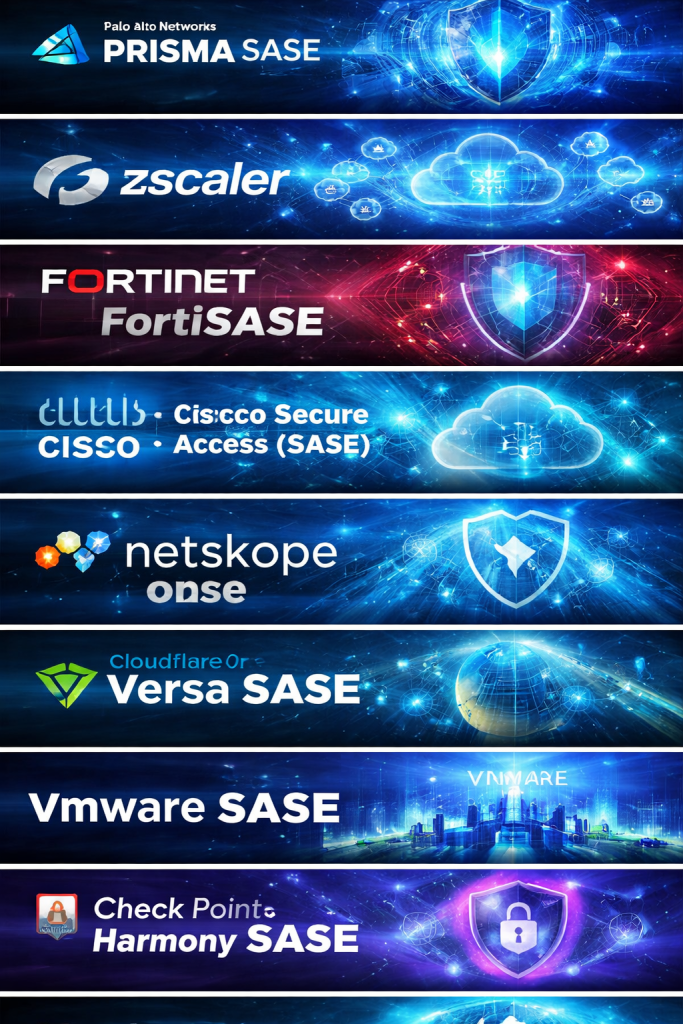
1 — Palo Alto Networks Prisma SASE
Short description:
A comprehensive, enterprise-grade SASE platform combining advanced networking and industry-leading security for large, distributed organizations.
Key features:
- Zero Trust Network Access (ZTNA)
- Secure Web Gateway (SWG)
- Cloud firewall and threat prevention
- SD-WAN integration
- Advanced threat intelligence
- Centralized policy management
Pros:
- Very strong security capabilities
- Excellent visibility and control
- Scales well for global enterprises
Cons:
- Higher cost compared to competitors
- Complex initial setup
Security & compliance:
SSO, encryption, audit logs, SOC 2, ISO, GDPR support.
Support & community:
Enterprise-grade support, extensive documentation, strong customer success programs.
2 — Zscaler SASE
Short description:
A cloud-native SASE platform focused on zero trust access and secure internet and application connectivity.
Key features:
- Zero Trust Exchange architecture
- Secure Web Gateway
- Cloud Access Security Broker (CASB)
- Private application access
- Data loss prevention
- Global cloud footprint
Pros:
- Proven zero trust model
- High performance due to global presence
- Strong cloud security expertise
Cons:
- Pricing can be complex
- Limited on-prem flexibility
Security & compliance:
SOC 2, ISO, GDPR, HIPAA-ready environments.
Support & community:
Strong documentation, enterprise onboarding, active customer community.
3 — Fortinet FortiSASE
Short description:
An integrated SASE offering that extends Fortinet’s well-known security ecosystem into the cloud.
Key features:
- Secure Web Gateway
- ZTNA
- Firewall-as-a-Service
- SD-WAN integration
- Unified security fabric
- Threat intelligence
Pros:
- Seamless integration with Fortinet products
- Strong performance
- Cost-effective for existing customers
Cons:
- Best value only if using Fortinet ecosystem
- UI learning curve
Security & compliance:
SOC 2, ISO, GDPR-aligned controls.
Support & community:
Large user base, solid documentation, enterprise support.
4 — Cisco Secure Access (SASE)
Short description:
Cisco’s SASE solution designed for enterprises seeking deep networking and security integration.
Key features:
- Zero Trust access
- Secure Web Gateway
- Cloud-delivered firewall
- SD-WAN integration
- Identity-based access control
- Advanced analytics
Pros:
- Trusted enterprise vendor
- Strong networking capabilities
- Reliable performance
Cons:
- Complex licensing
- Heavier management overhead
Security & compliance:
SOC 2, ISO, GDPR, extensive compliance coverage.
Support & community:
Large global support network, extensive learning resources.
5 — Netskope SASE
Short description:
A security-focused SASE platform with deep visibility into cloud and SaaS usage.
Key features:
- Cloud Access Security Broker
- Secure Web Gateway
- ZTNA
- Advanced data protection
- User behavior analytics
- Cloud traffic inspection
Pros:
- Excellent SaaS visibility
- Strong data protection
- Modern UI
Cons:
- Limited networking focus
- Pricing may be high for SMBs
Security & compliance:
SOC 2, ISO, GDPR, HIPAA-ready.
Support & community:
Good documentation, responsive enterprise support.
6 — Cloudflare One
Short description:
A globally distributed SASE platform built on a massive edge network for performance and simplicity.
Key features:
- Zero Trust access
- Secure Web Gateway
- DDoS protection
- Global edge network
- Identity-aware routing
- DNS security
Pros:
- Excellent performance
- Simple deployment
- Competitive pricing
Cons:
- Advanced features still evolving
- Limited legacy integration
Security & compliance:
SOC 2, ISO, GDPR support.
Support & community:
Strong documentation, growing enterprise support.
7 — Versa SASE
Short description:
A flexible SASE solution combining advanced SD-WAN with robust security features.
Key features:
- Integrated SD-WAN and security
- ZTNA
- Secure Web Gateway
- Unified management
- Analytics and reporting
- Multi-tenant support
Pros:
- Strong networking focus
- Highly customizable
- Good performance
Cons:
- Less brand recognition
- UI can feel complex
Security & compliance:
SOC 2, ISO, GDPR-aligned.
Support & community:
Enterprise-focused support, detailed technical documentation.
8 — VMware SASE (VeloCloud)
Short description:
A SASE platform built around VMware’s SD-WAN expertise with integrated cloud security.
Key features:
- SD-WAN backbone
- ZTNA integration
- Secure Web Gateway
- Application performance optimization
- Cloud management
- Analytics dashboard
Pros:
- Strong SD-WAN performance
- Good integration with VMware stack
- Reliable for hybrid environments
Cons:
- Security less advanced than leaders
- Best suited for VMware users
Security & compliance:
SOC 2, ISO, GDPR.
Support & community:
Enterprise support, VMware ecosystem community.
9 — Check Point Harmony SASE
Short description:
A security-first SASE platform built on Check Point’s threat prevention expertise.
Key features:
- ZTNA
- Secure Web Gateway
- Threat prevention
- Sandboxing
- Identity-based access
- Unified policy management
Pros:
- Strong threat detection
- Trusted security vendor
- Simple policy control
Cons:
- Limited SD-WAN features
- Smaller global footprint
Security & compliance:
SOC 2, ISO, GDPR.
Support & community:
Strong documentation, responsive support.
10 — Aryaka SASE
Short description:
A managed SASE solution combining network optimization with integrated security services.
Key features:
- Managed SD-WAN
- Secure Web Gateway
- ZTNA
- Global private backbone
- Performance optimization
- Centralized visibility
Pros:
- Excellent application performance
- Fully managed option
- Ideal for global enterprises
Cons:
- Higher cost
- Less DIY flexibility
Security & compliance:
SOC 2, ISO, GDPR support.
Support & community:
High-touch managed support, strong enterprise onboarding.
Comparison Table
| Tool Name | Best For | Platform(s) Supported | Standout Feature | Rating |
|---|---|---|---|---|
| Prisma SASE | Large enterprises | Cloud-based | Advanced threat prevention | N/A |
| Zscaler | Cloud-first orgs | Cloud-based | Zero Trust Exchange | N/A |
| FortiSASE | Fortinet users | Cloud + hybrid | Unified Security Fabric | N/A |
| Cisco Secure Access | Enterprises | Cloud + hybrid | Network-security integration | N/A |
| Netskope | SaaS-heavy orgs | Cloud-based | Deep SaaS visibility | N/A |
| Cloudflare One | Performance-focused teams | Cloud-based | Global edge network | N/A |
| Versa SASE | Network-centric orgs | Cloud + hybrid | SD-WAN flexibility | N/A |
| VMware SASE | VMware customers | Cloud + hybrid | SD-WAN strength | N/A |
| Check Point Harmony | Security-driven teams | Cloud-based | Threat prevention | N/A |
| Aryaka SASE | Managed SASE users | Cloud-based | Private backbone | N/A |
Evaluation & Scoring of SASE Platforms
| Criteria | Weight | Evaluation Notes |
|---|---|---|
| Core features | 25% | Breadth of SASE services |
| Ease of use | 15% | UI, deployment simplicity |
| Integrations & ecosystem | 15% | Compatibility with tools |
| Security & compliance | 10% | Standards and controls |
| Performance & reliability | 10% | Latency, uptime |
| Support & community | 10% | Documentation and help |
| Price / value | 15% | Cost vs capabilities |
Which SASE Platforms Tool Is Right for You?
- Solo users / SMBs: Lightweight, cloud-native solutions with simple management.
- Mid-market: Balanced platforms offering security and performance without heavy complexity.
- Enterprises: Full-featured, scalable platforms with global coverage and compliance.
- Budget-conscious teams: Look for bundled features and predictable pricing.
- Premium needs: Choose vendors with advanced threat intelligence and analytics.
- Ease of use vs depth: Simpler tools trade flexibility for speed; advanced tools offer control.
- Compliance-heavy industries: Prioritize audit logs, encryption, and certifications.
Frequently Asked Questions (FAQs)
- What is SASE in simple terms?
It is a cloud-based model that combines networking and security into one platform. - Is SASE only for large enterprises?
No, but it is most valuable for distributed and cloud-first organizations. - Does SASE replace VPNs?
Yes, in many cases SASE replaces traditional VPNs with zero trust access. - How secure are SASE platforms?
They use strong encryption, identity checks, and continuous monitoring. - Is SASE expensive?
Costs vary; some platforms are premium while others are cost-efficient. - How long does implementation take?
From days to weeks depending on complexity. - Can SASE work with legacy systems?
Most platforms offer hybrid integration options. - Does SASE affect performance?
Properly deployed SASE often improves performance. - Is SASE suitable for regulated industries?
Yes, many platforms support strict compliance needs. - What is the biggest mistake when choosing SASE?
Focusing only on cost instead of security and scalability.
Conclusion
SASE platforms are reshaping how organizations secure and connect their users, applications, and data. The right choice depends on business size, security priorities, network complexity, and budget. There is no single best SASE platform for everyone. What matters most is selecting a solution that aligns with your operational needs, supports growth, and delivers both security and performance without unnecessary complexity.

Find Trusted Cardiac Hospitals
Compare heart hospitals by city and services — all in one place.
Explore Hospitals
