
Introduction
Smart Contract Development Tools are specialized software platforms, frameworks, and environments that help developers design, write, test, debug, deploy, and maintain smart contracts on blockchain networks. These tools abstract complex blockchain mechanics, reduce development errors, and accelerate delivery—making decentralized applications (dApps) more reliable and secure.
Smart contracts now power DeFi protocols, NFTs, DAOs, supply-chain automation, gaming economies, and enterprise blockchain solutions. As adoption grows, so do the risks: security flaws, gas inefficiencies, and poor testing can result in financial losses and reputational damage. That is why professional-grade development tools are no longer optional—they are essential.
When choosing a Smart Contract Development Tool, teams should evaluate language support, testing depth, debugging experience, network compatibility, security tooling, integrations, performance, and community support. The right choice depends on use case, team maturity, and scale.
Best for:
Blockchain developers, Web3 engineers, DeFi startups, NFT creators, enterprise blockchain teams, fintech innovators, and research institutions building decentralized logic.
Not ideal for:
Teams with no blockchain use cases, simple data-storage applications, or projects where centralized databases and traditional backend systems are more practical and cost-effective.
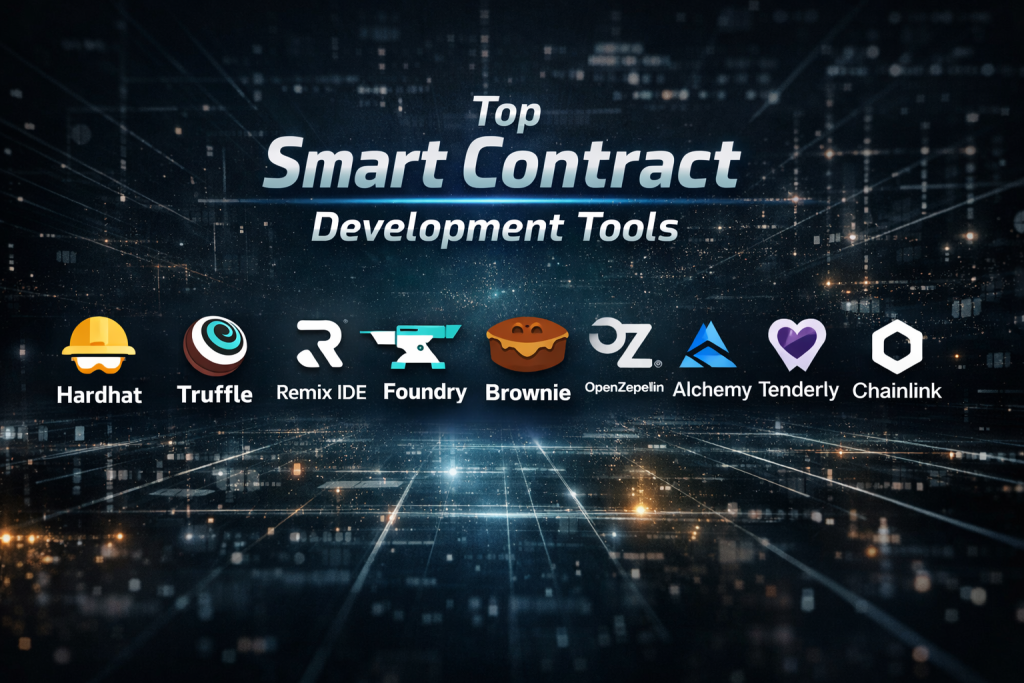
Top 10 Smart Contract Development Tools
1 — Hardhat
Short description:
Hardhat is a modern Ethereum development environment designed for professional-grade smart contract workflows, focusing on debugging, testing, and extensibility.
Key features
- Local Ethereum network for fast testing
- Advanced Solidity stack traces
- Plugin-based extensibility
- JavaScript and TypeScript support
- Gas usage reporting
- Contract verification workflows
Pros
- Excellent debugging experience
- Highly customizable and developer-friendly
Cons
- Steeper learning curve for beginners
- Primarily Ethereum-focused
Security & compliance
- Supports audit workflows, test coverage, and secure deployments
- Compliance depends on implementation
Support & community
- Strong documentation
- Large open-source community
- Widely adopted in production environments
2 — Truffle
Short description:
Truffle is a full-suite framework that simplifies smart contract compilation, deployment, and testing for Ethereum-based projects.
Key features
- Integrated testing framework
- Built-in migration system
- Network management tools
- Solidity compilation
- Frontend integration support
Pros
- Beginner-friendly structure
- Mature and stable ecosystem
Cons
- Slower updates compared to newer tools
- Less flexible than modular frameworks
Security & compliance
- Relies on developer-defined security practices
- No built-in compliance certifications
Support & community
- Well-documented
- Large legacy user base
- Enterprise adoption history
3 — Remix IDE
Short description:
Remix IDE is a browser-based smart contract IDE ideal for learning, prototyping, and quick testing of Solidity contracts.
Key features
- No installation required
- Solidity compiler integration
- Visual debugging tools
- Plugin system
- Static analysis support
Pros
- Perfect for beginners
- Fast experimentation
Cons
- Not suited for large-scale projects
- Limited CI/CD integration
Security & compliance
- Includes static analysis plugins
- Compliance varies by usage
Support & community
- Excellent tutorials
- Active learning community
4 — Foundry
Short description:
Foundry is a high-performance smart contract toolchain written in Rust, designed for speed and advanced testing.
Key features
- Blazing-fast test execution
- Native Solidity testing
- Fuzz testing support
- Gas benchmarking
- Scriptable deployments
Pros
- Extremely fast
- Ideal for advanced developers
Cons
- Less beginner-friendly
- Smaller ecosystem
Security & compliance
- Strong testing and fuzzing capabilities
- No formal compliance certifications
Support & community
- Growing developer community
- Strong GitHub-driven support
5 — Brownie
Short description:
Brownie is a Python-based smart contract framework tailored for Python developers entering Web3.
Key features
- Python-native testing
- Pytest integration
- Gas profiling
- Contract debugging
- Network management
Pros
- Excellent for Python teams
- Clean testing workflows
Cons
- Smaller community
- Less tooling than JavaScript-based frameworks
Security & compliance
- Relies on test coverage and audits
- Compliance varies
Support & community
- Good documentation
- Niche but helpful community
6 — OpenZeppelin
Short description:
OpenZeppelin provides battle-tested smart contract libraries and security tooling used across the Web3 ecosystem.
Key features
- Secure contract templates
- Upgradeable contract patterns
- Governance modules
- Access control systems
- Security audits tooling
Pros
- Industry-standard security
- Reduces vulnerability risks
Cons
- Not a full IDE
- Requires integration with other tools
Security & compliance
- Strong security focus
- Audit-grade libraries
Support & community
- Extensive documentation
- Enterprise and open-source support
7 — Alchemy
Short description:
Alchemy is a blockchain developer platform offering infrastructure, APIs, and monitoring tools for smart contract deployments.
Key features
- Blockchain API access
- Smart contract monitoring
- Debugging dashboards
- Analytics and alerts
- Multi-chain support
Pros
- Enterprise-grade reliability
- Excellent observability
Cons
- Paid tiers required at scale
- Infrastructure-focused rather than coding
Security & compliance
- Enterprise security controls
- Compliance varies by plan
Support & community
- Strong documentation
- Dedicated enterprise support
8 — Tenderly
Short description:
Tenderly is a debugging, simulation, and monitoring platform for live smart contracts.
Key features
- Transaction simulation
- Contract monitoring
- Debugging on live networks
- Alerts and analytics
- Team collaboration
Pros
- Prevents costly deployment errors
- Excellent production visibility
Cons
- Advanced features require paid plans
- Not a coding environment
Security & compliance
- Strong observability
- Compliance depends on deployment
Support & community
- Professional documentation
- Responsive support
9 — Ganache
Short description:
Ganache is a local blockchain simulator used for testing smart contracts without deploying to public networks.
Key features
- Local Ethereum blockchain
- Deterministic accounts
- Transaction inspection
- Fast resets
- GUI and CLI modes
Pros
- Simple and reliable testing
- Ideal for local development
Cons
- Limited to testing
- No production monitoring
Security & compliance
- Testing-only environment
- Compliance not applicable
Support & community
- Stable documentation
- Widely known tool
10 — Chainlink
Short description:
Chainlink enables smart contracts to interact with real-world data through decentralized oracle networks.
Key features
- Secure oracle feeds
- Automation services
- Cross-chain communication
- Data integrity guarantees
- DeFi integrations
Pros
- Essential for real-world use cases
- Highly trusted infrastructure
Cons
- Not a development IDE
- Learning curve for integration
Security & compliance
- Decentralized security model
- Enterprise-grade reliability
Support & community
- Extensive documentation
- Large global community
Comparison Table
| Tool Name | Best For | Platform(s) Supported | Standout Feature | Rating |
|---|---|---|---|---|
| Hardhat | Professional Ethereum devs | Windows, macOS, Linux | Advanced debugging | N/A |
| Truffle | Full-stack beginners | Cross-platform | Built-in migrations | N/A |
| Remix IDE | Learning & prototyping | Browser-based | Zero setup | N/A |
| Foundry | High-performance testing | Cross-platform | Native Solidity tests | N/A |
| Brownie | Python developers | Cross-platform | Python-native workflow | N/A |
| OpenZeppelin | Secure contracts | All platforms | Audited libraries | N/A |
| Alchemy | Scalable infrastructure | Cloud | Blockchain APIs | N/A |
| Tenderly | Production monitoring | Cloud | Transaction simulation | N/A |
| Ganache | Local testing | Cross-platform | Local blockchain | N/A |
| Chainlink | Real-world data | Multi-chain | Decentralized oracles | N/A |
Evaluation & Scoring of Smart Contract Development Tools
| Tool | Core Features (25%) | Ease of Use (15%) | Integrations (15%) | Security (10%) | Performance (10%) | Support (10%) | Price/Value (15%) | Total Score |
|---|---|---|---|---|---|---|---|---|
| Hardhat | 23 | 12 | 14 | 9 | 9 | 9 | 12 | 88 |
| Truffle | 21 | 13 | 13 | 8 | 8 | 8 | 13 | 84 |
| Remix | 18 | 15 | 10 | 7 | 7 | 9 | 15 | 81 |
| Foundry | 24 | 10 | 12 | 9 | 10 | 8 | 11 | 84 |
| OpenZeppelin | 25 | 12 | 14 | 10 | 8 | 9 | 10 | 88 |
Which Smart Contract Development Tool Is Right for You?
- Solo developers: Remix, Brownie, Ganache
- SMBs and startups: Hardhat, Truffle, Foundry
- Enterprise teams: OpenZeppelin, Alchemy, Tenderly
- Budget-conscious teams: Open-source frameworks
- Security-focused projects: OpenZeppelin + Hardhat
- Scalability needs: Alchemy + Chainlink integrations
Frequently Asked Questions (FAQs)
- Are smart contract tools only for Ethereum?
No. Many tools support multiple EVM-compatible chains. - Do I need programming experience?
Yes, basic programming knowledge is essential. - Which language is most common?
Solidity remains the most widely used. - Are these tools secure by default?
Security depends on proper testing and audits. - Can I use multiple tools together?
Yes, most teams combine frameworks and platforms. - Are open-source tools reliable?
Many are industry standards with strong communities. - Do enterprises use these tools?
Yes, especially for DeFi and blockchain finance. - Is local testing enough?
No. Testnets and audits are also critical. - Are there compliance certifications?
Tools support compliance, but apps must implement controls. - What is the biggest mistake developers make?
Skipping testing and security reviews.
Conclusion
Smart Contract Development Tools form the backbone of secure, scalable, and reliable blockchain applications. From coding and testing to monitoring and real-world data integration, each tool serves a distinct purpose.
There is no single “best” tool for everyone. The right choice depends on team size, technical expertise, security requirements, and long-term scalability goals. By aligning your needs with the strengths of each platform, you can build smart contracts that are not only functional—but trustworthy and future-ready.

Find Trusted Cardiac Hospitals
Compare heart hospitals by city and services — all in one place.
Explore Hospitals
