

What is H20?
H2O is a open source, distributed in-memory machine learning platform with linear scalability. H2O supports the most widely used statistical & machine learning algorithms including gradient boosted machines, generalized linear models, deep learning and more. H2O also has an industry leading AutoML functionality that automatically runs through all the algorithms and their hyperparameters to produce a leaderboard of the best models. The H2O platform is used by over 18,000 organizations globally and is extremely popular in both the R & Python communities.
History
In July 2014, Kazuho Oku [ja] started the development H2O as a mobile game server inside DeNA. The initial version was released in December 2014, and the first stable version was released in February 2015 when the HTTP/2 specification was finalized.
Feature
- H2O Driverless AI empowers data scientists to work on projects faster and more efficiently by using automation to accomplish tasks quickly with automatic feature engineering, model tuning, model tuning, model selection, model validation and machine learning interpretability, custom recipes, time-series and automatic deployment pipeline generation for model scoring.
- H2O Q is a new AI platform that provides the essential building blocks to make AI apps and will bring the power of AI to millions of business users. It delivers automatic insights and predictions for “in the moment” business questions and is ideal for data analysts, citizen data scientists and all business users.
- H2O is a Java-based software for data modeling and general computing. The H2O software is many things, but the primary purpose of H2O is as a distributed (many machines), parallel (many CPUs), in memory (several hundred GBs Xmx) processing engine.
- H2O is open-source software for big-data analysis. The H2O software runs can be called from the statistical package R, Python, and other environments. It is used for exploring and analyzing datasets held in cloud computing systems … The H2O software is written in Java, Python, and R.
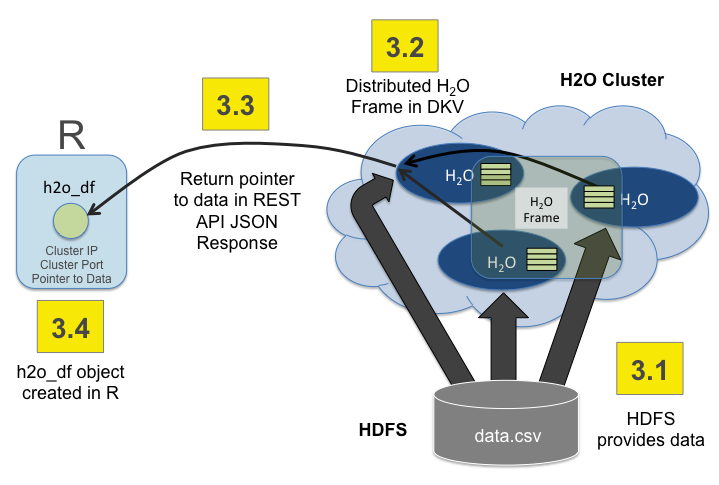
Architecture of H2O
Alternatives to H2O
- DataRobot.
- RapidMiner.
- Amazon SageMaker.
- Dataiku DSS.
- Alteryx.
- Google Cloud AutoML.
- MATLAB.
- RStudio.
Interview questions and answers for H20
Best Resources, Tutorials and Guide
Best Courses and Insitute for learning
If you want certification course for such top course. So please visit “DevOpsSchool.com”. You will find more certification courses here.


I’m Rajesh Kumar, a DevOps, SRE, DevSecOps, Cloud, and Platform Engineering expert passionate about sharing practical knowledge, real-world experiences, and industry best practices. I have worked at Cotocus and regularly write about technology, travel, investing, health, product reviews, and digital marketing through my various platforms.
I publish technical articles at DevOps School, travel stories at Holiday Landmark, stock market insights at Stocks Mantra, health and fitness guidance at My Medic Plus, product reviews at TrueReviewNow, and SEO and digital marketing strategies at Wizbrand.
Find Trusted Cardiac Hospitals
Compare heart hospitals by city and services — all in one place.
Explore Hospitals





