
Introduction
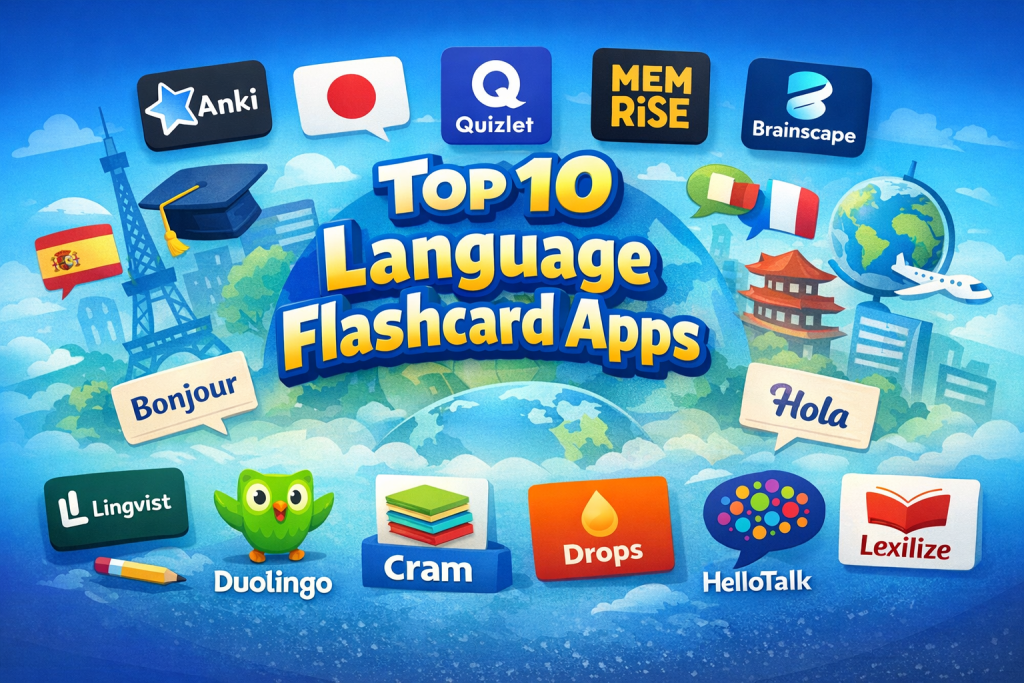
Language Flashcard Apps are digital tools designed to help learners build, retain, and recall vocabulary, phrases, and grammar patterns using proven memory techniques such as spaced repetition and active recall. Instead of passive reading or rote memorization, these apps encourage short, frequent practice sessions that align with how the human brain actually learns and forgets information.
These apps matter because vocabulary acquisition is the single biggest barrier for most language learners. Whether you are learning English for work, preparing for international travel, studying for exams, or maintaining fluency in a second language, flashcard apps provide a structured, measurable, and efficient learning approach. They are widely used by students, professionals, educators, and polyglots alike.
Real-world use cases include:
- Learning daily vocabulary for a new language
- Exam preparation (IELTS, TOEFL, JLPT, DELE, etc.)
- Improving professional language skills for global work
- Supporting classroom or self-paced learning
- Maintaining long-term language retention
When choosing a Language Flashcard App, users should evaluate:
- Spaced repetition quality
- Content depth and customization
- Ease of use and daily motivation
- Cross-device availability
- Offline access
- Data privacy and reliability
Best for:
Students, self-learners, travelers, educators, language coaches, and professionals working in multilingual environments.
Not ideal for:
Users who prefer immersive conversation-only learning, advanced grammar theory learners, or those seeking full language tutoring instead of vocabulary-focused tools.
Top 10 Language Flashcard Apps Tools
1 — Anki
Short description:
Anki is a highly customizable flashcard app built around spaced repetition, favored by serious learners and professionals who want full control over their study material.
Key features:
- Advanced spaced repetition algorithm
- Fully customizable decks
- Supports images, audio, and video
- Large community-shared decks
- Offline access
- Cross-platform sync
- Add-ons for extended functionality
Pros:
- Extremely powerful and flexible
- Excellent long-term retention
Cons:
- Steep learning curve
- Interface feels outdated
Security & compliance:
Varies / N/A
Support & community:
Strong global community, extensive forums, community documentation
2 — Quizlet
Short description:
Quizlet is a popular flashcard and study platform focused on simplicity, collaboration, and classroom use.
Key features:
- Pre-made language decks
- Multiple study modes (learn, test, match)
- Audio pronunciation support
- Collaborative learning
- Mobile and web access
- Gamified learning
Pros:
- Very easy to use
- Excellent for beginners and classrooms
Cons:
- Limited spaced repetition depth
- Advanced features behind paywall
Security & compliance:
GDPR compliant, standard encryption
Support & community:
Good documentation, strong educator community
3 — Memrise
Short description:
Memrise blends flashcards with video-based learning to help users acquire real-world language skills.
Key features:
- Native speaker video clips
- Spaced repetition
- AI-assisted review
- Gamification and streaks
- Offline mode
- Pronunciation training
Pros:
- Engaging and motivating
- Strong real-world language focus
Cons:
- Less customization
- Subscription required for full access
Security & compliance:
GDPR compliant
Support & community:
Good onboarding, responsive support, active learner base
4 — Brainscape
Short description:
Brainscape uses confidence-based repetition to optimize how often cards are reviewed.
Key features:
- Adaptive repetition algorithm
- Language-specific decks
- Confidence-based self-rating
- Mobile and web access
- Instructor-created content
- Clean interface
Pros:
- Science-driven approach
- Structured learning experience
Cons:
- Smaller language catalog
- Limited customization
Security & compliance:
Standard data protection practices
Support & community:
Clear documentation, educator-friendly support
5 — Lingvist
Short description:
Lingvist focuses on high-frequency vocabulary using AI-driven flashcards.
Key features:
- AI-powered word selection
- Context-based sentences
- Real-time progress tracking
- Minimalist interface
- Grammar insights
- Offline learning
Pros:
- Efficient vocabulary growth
- Clean, distraction-free design
Cons:
- Limited language availability
- Less suitable for beginners
Security & compliance:
GDPR compliant
Support & community:
Standard support, limited community interaction
6 — Duolingo
Short description:
Duolingo integrates flashcards into a gamified language learning ecosystem.
Key features:
- Spaced repetition practice
- Game-like progression
- Daily streak motivation
- Audio and speaking exercises
- Adaptive difficulty
- Wide language support
Pros:
- Highly engaging
- Ideal for casual learners
Cons:
- Limited advanced vocabulary depth
- Ads in free version
Security & compliance:
GDPR compliant
Support & community:
Large global community, strong help resources
7 — Cram
Short description:
Cram is a straightforward flashcard app suitable for quick vocabulary memorization.
Key features:
- Simple flashcard creation
- Millions of public decks
- Mobile and web support
- Memorize and test modes
- Offline access
Pros:
- Very easy to start
- Free basic usage
Cons:
- Minimal spaced repetition logic
- Dated UI
Security & compliance:
Varies / N/A
Support & community:
Basic documentation, limited community activity
8 — HelloTalk
Short description:
HelloTalk combines flashcard-style vocabulary with real-time language exchange.
Key features:
- Vocabulary saving and review
- Native speaker interaction
- Pronunciation tools
- Translation assistance
- Cultural exchange
Pros:
- Real conversational exposure
- Community-driven learning
Cons:
- Flashcards not primary focus
- Requires active participation
Security & compliance:
Standard privacy controls
Support & community:
Large active user base, in-app support
9 — Drops
Short description:
Drops emphasizes visual memory and micro-learning through flashcard-like interactions.
Key features:
- Visual-based flashcards
- Short daily sessions
- Touch-based interactions
- Offline mode
- Wide language selection
Pros:
- Highly engaging visuals
- Great for beginners
Cons:
- Limited sentence practice
- Time-restricted sessions
Security & compliance:
GDPR compliant
Support & community:
Good onboarding, moderate community presence
10 — Lexilize
Short description:
Lexilize is a flashcard-focused app designed for structured vocabulary building.
Key features:
- Spaced repetition
- Grammar tagging
- Image-based cards
- Offline access
- Cross-platform sync
Pros:
- Focused vocabulary training
- Simple and effective
Cons:
- Smaller ecosystem
- Limited integrations
Security & compliance:
Varies / N/A
Support & community:
Basic documentation, limited community
Comparison Table
| Tool Name | Best For | Platform(s) Supported | Standout Feature | Rating |
|---|---|---|---|---|
| Anki | Advanced learners | Web, iOS, Android, Desktop | Custom SRS | N/A |
| Quizlet | Students & classrooms | Web, iOS, Android | Simplicity | N/A |
| Memrise | Real-world language | Web, iOS, Android | Native videos | N/A |
| Brainscape | Structured learning | Web, iOS, Android | Confidence scoring | N/A |
| Lingvist | Fast vocabulary growth | Web, iOS, Android | AI selection | N/A |
| Duolingo | Casual learners | Web, iOS, Android | Gamification | N/A |
| Cram | Quick memorization | Web, iOS, Android | Free decks | N/A |
| HelloTalk | Conversational learners | iOS, Android | Language exchange | N/A |
| Drops | Visual learners | iOS, Android | Visual memory | N/A |
| Lexilize | Vocabulary focus | iOS, Android | Grammar tagging | N/A |
Evaluation & Scoring of Language Flashcard Apps
| Criteria | Weight | Avg Score |
|---|---|---|
| Core features | 25% | High |
| Ease of use | 15% | High |
| Integrations & ecosystem | 15% | Medium |
| Security & compliance | 10% | Medium |
| Performance & reliability | 10% | High |
| Support & community | 10% | Medium |
| Price / value | 15% | High |
Which Language Flashcard Apps Tool Is Right for You?
- Solo learners: Anki, Lingvist, Drops
- Students & SMBs: Quizlet, Brainscape
- Casual learners: Duolingo, Memrise
- Conversation-focused users: HelloTalk
- Budget-conscious: Anki, Cram
- Premium experience seekers: Memrise, Lingvist
Balance feature depth vs simplicity, and choose based on learning style, not popularity.
Frequently Asked Questions (FAQs)
1. Are language flashcard apps effective?
Yes, especially when combined with spaced repetition and daily practice.
2. Do these apps replace language courses?
No, they complement courses by strengthening vocabulary retention.
3. Which app is best for long-term memory?
Apps with strong spaced repetition like Anki perform best.
4. Are free versions enough?
For basic learning, yes. Advanced features usually require upgrades.
5. Can I use these apps offline?
Most support offline learning with downloaded content.
6. Are they suitable for children?
Yes, especially gamified apps like Duolingo and Drops.
7. Do these apps support pronunciation?
Many include audio and native speaker examples.
8. How much time should I spend daily?
10–20 minutes daily is ideal for consistent progress.
9. Are my learning data secure?
Most mainstream apps follow standard data protection practices.
10. What is the biggest mistake learners make?
Inconsistent usage and relying only on flashcards without context.
Conclusion
Language Flashcard Apps remain one of the most effective tools for vocabulary acquisition and long-term retention. The right app depends on your learning goals, preferred study style, and commitment level. Some prioritize control and depth, while others focus on motivation and ease.
There is no single universal winner. The best Language Flashcard App is the one that fits naturally into your daily routine and keeps you learning consistently.

Find Trusted Cardiac Hospitals
Compare heart hospitals by city and services — all in one place.
Explore Hospitals