
Introduction
Civic Engagement Platforms are digital tools designed to help governments, public institutions, nonprofits, and community organizations connect meaningfully with citizens. These platforms make it easier for people to share feedback, participate in decision-making, respond to surveys, attend virtual town halls, report issues, and stay informed about public initiatives.
In an era where trust in institutions is fragile and expectations for transparency are high, civic engagement software plays a critical role. It helps leaders listen at scale, respond faster, and demonstrate accountability. From city planning consultations and participatory budgeting to crisis communication and neighborhood issue reporting, these platforms turn one-way announcements into two-way conversations.
When evaluating Civic Engagement Platforms, buyers should look beyond basic surveys. Key criteria include multi-channel outreach, accessibility, data transparency, analytics, security, scalability, and ease of adoption—both for administrators and citizens.
Best for:
Local and state governments, smart cities, public sector agencies, NGOs, universities, housing authorities, utilities, and enterprises running community-facing initiatives.
Not ideal for:
Organizations that only need internal employee feedback tools, one-off survey tools, or informal social media engagement without compliance, structure, or analytics.
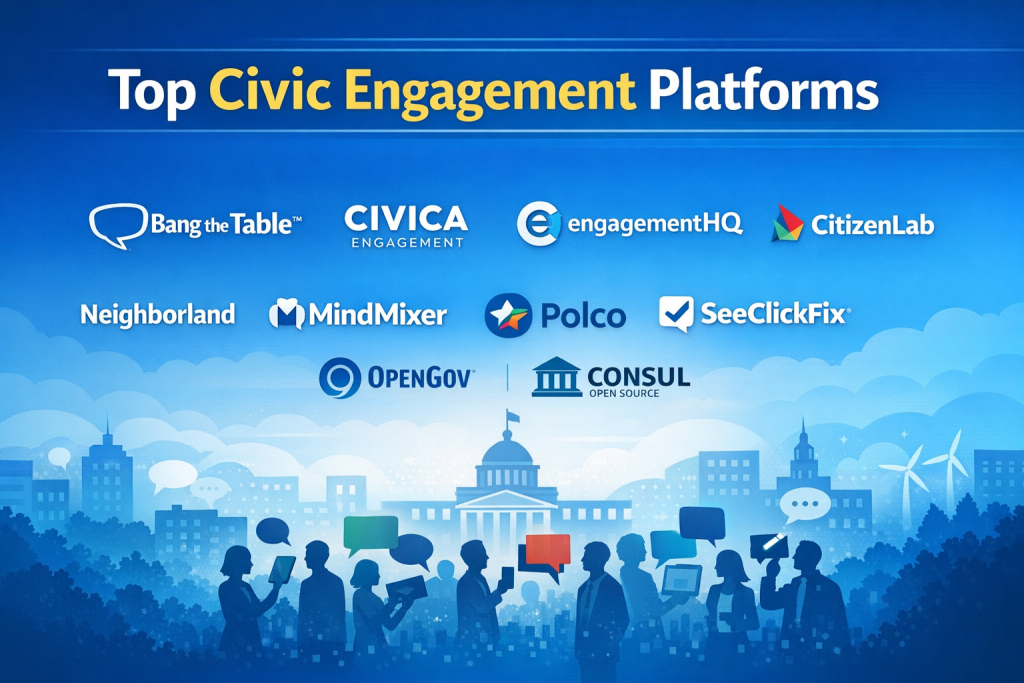
Top 10 Civic Engagement Platforms Tools
1 — Bang the Table
Short description:
A comprehensive civic engagement platform built for governments to run consultations, surveys, forums, and participatory initiatives in one place.
Key features
- Online engagement hubs and microsites
- Surveys, idea boards, and discussion forums
- Interactive mapping for planning projects
- Participation analytics and reporting
- Accessibility-focused design
- Moderation and sentiment tracking
Pros
- Purpose-built for public sector engagement
- Strong analytics for decision-makers
- Scales well across departments
Cons
- Higher learning curve for small teams
- Pricing not ideal for very small municipalities
Security & compliance
GDPR support, data encryption, role-based access (enterprise compliance varies)
Support & community
Strong onboarding, dedicated customer success, extensive documentation
2 — Civica Engagement
Short description:
Part of a broader government software ecosystem focused on citizen communication, feedback, and service improvement.
Key features
- Citizen feedback and consultation tools
- Surveys and polls
- Integrated case and service management
- Multi-language support
- Analytics dashboards
- Integration with other Civica modules
Pros
- Fits well into existing public sector systems
- Strong data governance
- Reliable enterprise support
Cons
- Less flexible as a standalone tool
- UI feels dated compared to newer platforms
Security & compliance
Enterprise-grade security, GDPR alignment, audit trails
Support & community
Professional services-led support, strong public sector presence
3 — EngagementHQ
Short description:
A modern engagement platform designed for governments to co-create policy and programs with citizens.
Key features
- Idea submission and voting
- Surveys and quick polls
- Engagement lifecycle management
- Sentiment analysis
- Participation heatmaps
- Custom branding
Pros
- Clean, citizen-friendly interface
- Flexible engagement workflows
- Strong reporting tools
Cons
- Limited advanced integrations
- Customization may require support help
Security & compliance
GDPR-ready, encrypted data, role-based permissions
Support & community
Responsive support team, guided onboarding, training resources
4 — CitizenLab
Short description:
A participation platform focused on inclusive decision-making and long-term community trust.
Key features
- Idea collection and feedback loops
- Surveys and polls
- Project timelines and updates
- Inclusivity and accessibility tools
- Participation analytics
- Community segmentation
Pros
- Strong focus on inclusivity
- Excellent UX for citizens
- Clear feedback-to-action tracking
Cons
- Fewer enterprise integrations
- Reporting depth may not satisfy large governments
Security & compliance
GDPR compliant, encrypted data storage
Support & community
High-quality documentation, responsive customer support
5 — Neighborland
Short description:
A platform built to help communities share ideas, build consensus, and collaborate with local institutions.
Key features
- Idea boards and discussions
- Voting and prioritization
- Community storytelling tools
- Event engagement
- Basic analytics
- Moderation tools
Pros
- Human-centric design
- Encourages constructive dialogue
- Easy for citizens to adopt
Cons
- Limited enterprise features
- Not ideal for complex policy programs
Security & compliance
Standard encryption, compliance varies by deployment
Support & community
Community-driven support, onboarding assistance
6 — MindMixer
Short description:
One of the earlier civic engagement platforms, widely used by local governments for consultations.
Key features
- Idea sharing and surveys
- Engagement analytics
- Moderation tools
- Mobile-friendly access
- Custom engagement sites
- Participation reporting
Pros
- Proven public sector adoption
- Easy setup for common use cases
- Familiar workflows
Cons
- Interface feels dated
- Less innovation compared to newer platforms
Security & compliance
GDPR-aligned, secure hosting
Support & community
Reliable support, onboarding assistance, legacy user base
7 — Polco
Short description:
A data-driven civic engagement and survey platform focused on statistically valid community insights.
Key features
- Scientific survey methodology
- Benchmarking against peer cities
- Dashboards and reports
- Policy impact insights
- Community panels
- Visualization tools
Pros
- High credibility survey results
- Strong decision-support insights
- Trusted by policymakers
Cons
- Less interactive engagement tools
- Not ideal for open forums or ideation
Security & compliance
Strong data protection, GDPR-ready
Support & community
Research-oriented support, guided analysis help
8 — SeeClickFix
Short description:
A civic reporting platform focused on service requests and issue tracking between citizens and governments.
Key features
- Mobile issue reporting
- GIS-based request mapping
- Workflow and SLA tracking
- Citizen notifications
- Integration with work order systems
- Performance dashboards
Pros
- Excellent for service delivery transparency
- Strong mobile adoption
- Clear accountability
Cons
- Narrower engagement scope
- Not suitable for policy consultations
Security & compliance
Enterprise security standards, encrypted data
Support & community
Dedicated support, active municipal user base
9 — OpenGov
Short description:
A platform that combines civic engagement with financial transparency and performance reporting.
Key features
- Budget visualization and engagement
- Public dashboards
- Community feedback tools
- Data storytelling
- Performance metrics
- Integration with financial systems
Pros
- Strong transparency focus
- Executive-level reporting
- Scales well for large governments
Cons
- Expensive for small cities
- Steeper onboarding
Security & compliance
SOC-aligned controls, GDPR support, audit logging
Support & community
Enterprise support, structured onboarding programs
10 — Consul
Short description:
An open-source platform enabling participatory democracy, often used by cities and civic innovators.
Key features
- Participatory budgeting
- Citizen proposals and voting
- Open debates
- Transparency modules
- API access
- Community moderation
Pros
- Open-source flexibility
- Strong democratic credibility
- No licensing fees
Cons
- Requires technical resources
- Limited vendor support
Security & compliance
Varies by implementation
Support & community
Active open-source community, documentation-driven support
Comparison Table
| Tool Name | Best For | Platform(s) Supported | Standout Feature | Rating |
|---|---|---|---|---|
| Bang the Table | Enterprise governments | Web | Full engagement lifecycle | N/A |
| Civica Engagement | Public sector suites | Web | Deep system integration | N/A |
| EngagementHQ | Policy consultations | Web | Engagement workflows | N/A |
| CitizenLab | Inclusive participation | Web | UX and inclusivity | N/A |
| Neighborland | Community collaboration | Web | Human-centric dialogue | N/A |
| MindMixer | Local governments | Web | Proven adoption | N/A |
| Polco | Data-driven insights | Web | Scientific surveys | N/A |
| SeeClickFix | Service requests | Web, Mobile | Issue reporting | N/A |
| OpenGov | Transparency initiatives | Web | Budget engagement | N/A |
| Consul | Participatory democracy | Web | Open-source governance | N/A |
Evaluation & Scoring of Civic Engagement Platforms
| Criteria | Weight | Description |
|---|---|---|
| Core features | 25% | Breadth of engagement tools |
| Ease of use | 15% | Citizen and admin experience |
| Integrations & ecosystem | 15% | APIs and system connectivity |
| Security & compliance | 10% | Data protection and controls |
| Performance & reliability | 10% | Scalability and uptime |
| Support & community | 10% | Vendor and peer support |
| Price / value | 15% | ROI and affordability |
Which Civic Engagement Platforms Tool Is Right for You?
- Solo users / NGOs: CitizenLab, Neighborland
- SMBs & small cities: MindMixer, EngagementHQ
- Mid-market governments: Bang the Table, Polco
- Enterprise & smart cities: OpenGov, Civica Engagement
Budget-conscious teams benefit from open-source or modular tools.
Premium buyers gain analytics, compliance, and scale.
Ease of use matters for citizen adoption.
Security and compliance are critical for public trust.
Frequently Asked Questions (FAQs)
- What is a civic engagement platform?
A digital system that enables governments and organizations to involve citizens in decisions and services. - Are these platforms only for governments?
No, NGOs, universities, and utilities also use them. - Do citizens need accounts?
Some platforms allow anonymous participation; others require authentication. - How secure is citizen data?
Most platforms use encryption and comply with privacy regulations. - Can these tools replace town halls?
They complement, not replace, in-person engagement. - Are mobile apps necessary?
Helpful, but not mandatory for all use cases. - What is participatory budgeting?
A process where citizens vote on how public funds are spent. - How long does implementation take?
From days for simple setups to months for enterprise deployments. - Are open-source platforms reliable?
Yes, but they require internal technical capacity. - What is the biggest mistake buyers make?
Choosing tools without considering citizen usability.
Conclusion
Civic Engagement Platforms are no longer optional—they are essential infrastructure for transparent, responsive governance. The right platform empowers citizens, strengthens trust, and improves outcomes.
There is no single “best” tool. The ideal choice depends on scale, budget, engagement goals, and technical capacity. By focusing on usability, security, and real community impact, organizations can choose a platform that turns participation into progress.

Find Trusted Cardiac Hospitals
Compare heart hospitals by city and services — all in one place.
Explore Hospitals
This article gives a very insightful overview of civic engagement platforms by tying them directly to real public-sector needs like building trust, enabling two-way dialogue, and supporting participatory budgeting rather than just pushing out one-way announcements. The way it distinguishes consultation- and policy-focused tools (Bang the Table, EngagementHQ, CitizenLab, MindMixer), service-request platforms (SeeClickFix), data- and transparency-oriented options (Polco, OpenGov), and open-source democracy tools (Consul) makes it easy for governments and NGOs to align choices with their engagement goals, scale, and technical capacity. The emphasis on accessibility, multi-channel reach, analytics, and security/compliance is particularly useful for avoiding the common mistake of treating civic tech like a simple survey app instead of core democratic infrastructure. Overall, this guide is a strong starting point for any public institution or community organization that wants to move from ad-hoc outreach to structured, measurable, and inclusive citizen participation.