

Choosing the best virtual assistant service for small businesses can be more complex than it seems. As business owners continue to prioritize productivity and operational efficiency, the virtual assistant market is evolving at an incredible rate.
In the past, many small business owners assumed outsourced administrative support was reserved for large enterprises with complex operations. However, the right virtual assistant service can benefit any company, large or small.
With these services, companies can delegate repetitive tasks, strengthen team focus, and increase productivity and profitability. You can even reclaim significant hours weekly that would otherwise be spent on administrative work.
After reviewing dozens of virtual assistant service providers over the years, we’ve assembled this guide to help you choose the right virtual assistant service for your growing company based on pricing, service quality, specialization, and more.
What are Small Business Virtual Assistant Services?
A virtual assistant service, or VA service, is a company that provides dedicated or freelance administrative support to handle repetitive tasks and operational work. These services connect businesses with qualified professionals who can manage scheduling, customer relationship management, data entry, email management, and lead follow-up.
Some of that workload overlaps with what dedicated task automation tools are built to handle. The difference is judgment, since a trained assistant can read context, catch exceptions, and adapt when a process changes mid-week.
Small business virtual assistant services are specifically designed for the needs and priorities of SMBs. This means the support you access might be more flexible, cost-effective, and tailored to startup and growing company operations than enterprise-level solutions.
Core Qualities of the Best Virtual Assistant Services for Small Businesses
Finding the best virtual assistant service for small businesses means considering several factors when assessing potential providers. The right solution for you will depend on numerous factors, such as your business type, operational complexity, and the specific tasks you need to delegate.
Some of the core factors we recommend looking at include:
- Specialization: The best virtual assistant service for small businesses will have experience in your industry or with your specific type of work. Whether you need sales support, customer service, or administrative operations, look for providers with proven expertise in your area.
- Dedication and Continuity: Virtual assistant services work best when you have a dedicated person assigned to your account who understands your business. Look for services that provide consistent team members rather than rotating staff and that guarantee replacement if your assistant leaves. Continuity is one of the factors that leads to better work productivity for your entire team.
- Quality Screening: Administrative work requires attention to detail and reliability. Services that thoroughly vet and train their assistants deliver better results. Look for providers who screen extensively and provide ongoing training.
- Integration Capability: The best virtual assistant services integrate directly with your customer relationship management system, calendar, email, and other tools your team uses daily. This ensures smooth workflow without creating additional manual tasks.
- Communication and Responsiveness: Good virtual assistant services maintain consistent communication and respond quickly to urgent requests. Time zone alignment, availability during your business hours, and responsiveness to changing priorities matter significantly.
- Accountability and Oversight: Look for services that maintain performance standards, provide regular reporting, and have clear processes for addressing quality issues. You need confidence that your work is being handled to your standards.
In today’s rapidly evolving business world, focusing on virtual assistant services that embrace technology and innovation may also be worthwhile. Many top services now include workflow automation, AI-assisted task management, and data security features that enhance reliability.
The Best Virtual Assistant Services for Small Businesses: 5 Top Picks
The demand for efficient administrative support has sparked a rise in the number of virtual assistant service providers focusing on smaller companies. Delegating administrative work effectively can help teams focus on higher-impact activities and accelerate business growth.
While there’s no one-size-fits-all strategy to find the best virtual assistant service for small businesses, there are some solutions out there that we think stand out from the crowd.
1. Wing Assistant

Dedicated Virtual Assistants With Built-In Continuity
A virtual assistant service like Wing Assistant stands out as a dedicated provider focused on helping small businesses and growing companies scale operations without adding permanent headcount. The platform assigns dedicated virtual assistants to each client rather than rotating staff, ensuring consistency and deep understanding of your business processes.
Wing’s virtual assistant service covers sales operations, customer service, administrative tasks, scheduling and lead follow-up across multiple industries. Their virtual assistants are recruited from a global pool of qualified candidates and trained on your specific workflows. The service provides backup coverage, guaranteed replacement if your assistant leaves, and centralized performance management.
What sets Wing apart is the emphasis on operational ownership. Rather than treating virtual assistants as individual contractors, the service builds accountability into the model. You get a dedicated person who understands your business deeply, supported by a management team that handles recruitment, training, performance oversight, and continuity.
Pros:
- Dedicated virtual assistant assigned exclusively to your account
- Built-in continuity with guaranteed replacement coverage
- Thorough recruitment from a global pool of candidates
- Direct integration into your existing tools and workflows
- Transparent performance metrics and regular reporting
- Support across multiple industries and business verticals
Cons:
- Higher cost than freelance marketplaces
- Requires commitment period for relationship stability
- Setup and onboarding time needed for optimal results
2. Belay

Flexible Virtual Assistant Solutions for Growing Teams
Belay offers virtual assistant services with flexible team structures, allowing businesses to add or reduce support as needs change. The platform specializes in providing virtual assistants for customer service, administrative support, and back-office operations. Their virtual assistants are US-based or near-US time zones, which appeals to companies prioritizing same-time communication.
Belay’s virtual assistant service includes thorough training and quality control processes. They provide regular performance reporting and manage the hiring and management of your virtual assistant on your behalf. The service works well for businesses needing flexible scaling and direct communication with their support team.
Pros:
- US-based and near-US time zone availability
- Flexible service levels that adjust to your needs
- Rigorous training and quality control processes
- Regular performance reviews and reporting
- Support for multiple business functions
- Scalable team expansion available
Cons:
- Premium pricing for US-based support
- Less personalized than smaller boutique services
- Longer onboarding timeline
3. Time Etc

Administrative Expertise With Industry Focus
Time Etc specializes in providing virtual assistants for specific business needs, with particular strength in administrative operations, scheduling, email management and customer communication. The service maintains smaller client rosters per virtual assistant, which allows for deeper service customization.
Their virtual assistant service emphasizes communication and responsiveness. Time Etc virtual assistants typically work during your business hours or nearby time zones. The company provides detailed task management and maintains strong quality standards through structured processes and regular check-ins.
Pros:
- Specialized expertise in administrative operations
- Smaller client-to-virtual-assistant ratio allows customization
- Strong communication and responsiveness standards
- Detailed task tracking and management systems
- Industry-specific virtual assistant matching available
- Direct relationship with service management
Cons:
- Higher cost than volume-based competitors
- Limited availability for overflow demands
- Focused primarily on administrative roles
4. Fiverr
Budget-Friendly Virtual Assistant Services
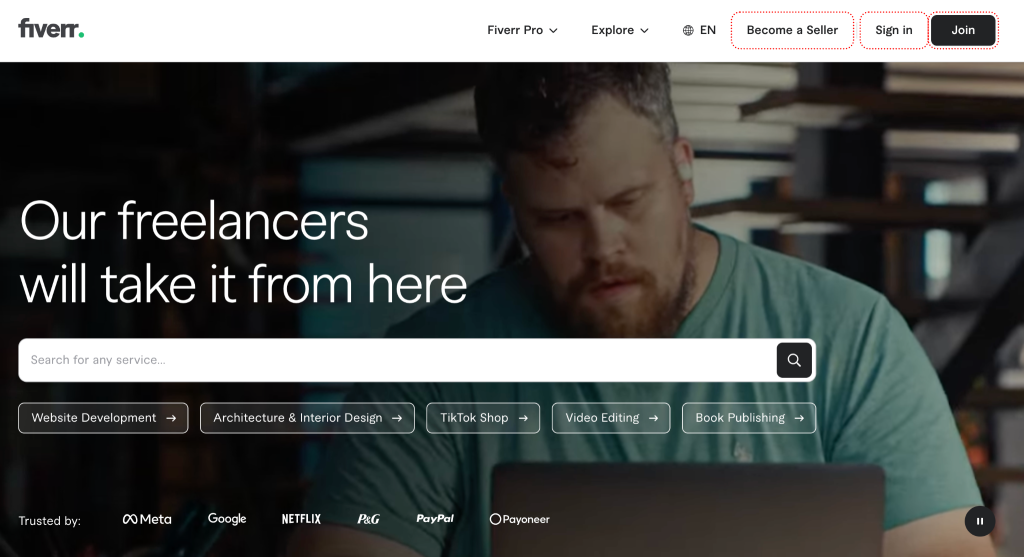
Fiverr operates as a gig marketplace where you can find virtual assistants offering specific services at set prices, starting from five dollars per task. The platform is ideal for businesses with limited budgets or specific one-off tasks requiring administrative support.
The virtual assistant service on Fiverr provides access to a large network of service providers globally. You can review profiles, pricing, and customer ratings before hiring. Many service providers offer package deals for recurring work.
Pros:
- Extremely low entry cost
- Wide selection of available assistants
- Customer ratings and reviews visible
- Global availability and diverse skill sets
- Flexible project-based engagements
- No minimum commitment
Cons:
- Significant quality variation
- Communication barriers common with global providers
- Difficult to establish continuity
- Limited recourse for poor quality work
- Time-intensive vetting process
- Not recommended for mission-critical work
5. Upwork

Massive Freelancer Marketplace for Virtual Assistance
Upwork operates as a large freelancer marketplace where you can hire virtual assistants for specific projects or ongoing work. The platform provides access to thousands of available virtual assistants at various price points and experience levels. You maintain direct control over hiring, payment, and management.
The virtual assistant service on Upwork offers maximum flexibility and direct communication with the people doing your work. You can hire for specific skills, hourly rates or fixed projects. The platform includes escrow payment protection and dispute resolution processes.
Pros:
- Access to thousands of available virtual assistants
- Complete control over hiring and management decisions
- Transparent pricing and direct negotiation
- Flexible hourly or project-based arrangements
- Global availability and diverse skill sets
- No long-term commitment required
Cons:
- Highly variable quality across assistants
- Significant time required for vetting and hiring
- High turnover and inconsistent service
- Minimal quality guarantees or oversight
- Your responsibility for management and training
- Onboarding and process-building burden
How to Choose the Best Virtual Assistant Service for Small Businesses
We’ve already covered some of the best virtual assistant services for small businesses and the key qualities you should look for in your provider. However, if you’re still struggling to make the right choice, here are some key steps you should follow:
- Know your specific tasks: Determine exactly which administrative tasks are consuming your time. Do you need help with lead follow-up and customer communication, scheduling and email management or customer service support? The clearer your task definition, the better you can evaluate services.
- Speak to your team members: Identify what administrative work frustrates them most or slows them down. Which tasks could be delegated without losing important context? How can you make their life easier by adding administrative support? Team input reveals the highest-impact delegation opportunities.
- Consider your time zone needs: Do you need someone available during your business hours for responsive support, or can overnight completion of tasks work? Do you need real-time communication or is asynchronous task management acceptable? Time zone alignment affects service costs and urgency management. Understanding the benefits and challenges of remote working arrangements can help you make the right choice about time zone coverage.
- Know your budget and scale: Determine how many hours weekly you actually need supported. Calculate what this costs internally versus outsourced options. Think carefully about the total value of administrative outsourcing, not just the lowest price. Consider whether you need dedicated or flexible service models.
- Do your research and request references: Learn as much as you can about providers that seem promising. Read reviews, compare customer testimonials, and request references from clients in your industry. Talk to existing customers about their real experience with continuity, quality, and responsiveness. This research-driven approach mirrors what professionals recommend for career advancement decisions, ensuring you’re making informed choices about your business investments.
Do You Need the Best Virtual Assistant Service for Small Businesses?
The best virtual assistant service for small businesses can be an extremely valuable tool. The right provider will remove administrative friction from your operations and free up significant time for your team to focus on revenue-generating work.
With a robust virtual assistant service, you can improve team focus, reduce operational mistakes through dedicated attention to detail, and accelerate business growth. Administrative delegation compounds benefits over time as your team operates more efficiently and your business can respond faster to opportunities. In fact, delegating administrative work is one of the most effective strategies for achieving better work-life balance and increasing overall team satisfaction.
Although you might need to invest in a quality virtual assistant service initially, the long-term results can be excellent. You may find your virtual assistant service reduces your operational costs by freeing up expensive time, increases revenue through faster sales follow-up and customer management, and boosts team morale through reduced administrative burden.
FAQ
Is a virtual assistant service suitable for small businesses?
Implementing a virtual assistant service into your small business operations can be extremely valuable. It helps you delegate repetitive administrative tasks, improves follow-up consistency, and frees up your team for higher-impact work.
What is the most cost-effective virtual assistant service?
Cost-effective options include Fiverr and Upwork if you’re managing hiring and onboarding yourself, though quality is variable. If you want managed services handling recruitment and oversight, Belay and Time Etc offer reasonable pricing for quality.
How quickly can we get started with a virtual assistant service?
Freelancer marketplaces can connect you within days, though onboarding varies. Managed virtual assistant services typically require two to four weeks for recruitment, training, and integration into your workflows. In-house hiring takes eight to twelve weeks.

I’m Rajesh Kumar, a DevOps, SRE, DevSecOps, Cloud, and Platform Engineering expert passionate about sharing practical knowledge, real-world experiences, and industry best practices. I have worked at Cotocus and regularly write about technology, travel, investing, health, product reviews, and digital marketing through my various platforms.
I publish technical articles at DevOps School, travel stories at Holiday Landmark, stock market insights at Stocks Mantra, health and fitness guidance at My Medic Plus, product reviews at TrueReviewNow, and SEO and digital marketing strategies at Wizbrand.
Find Trusted Cardiac Hospitals
Compare heart hospitals by city and services — all in one place.
Explore Hospitals
A useful point to consider is measuring whether a VA is actually saving the business time. Completing tasks isn’t the whole picture if work regularly needs corrections or repeated instructions. Looking at turnaround time, rework, task volume, and how often management has to step in can give a much clearer view of the real value the service provides.