
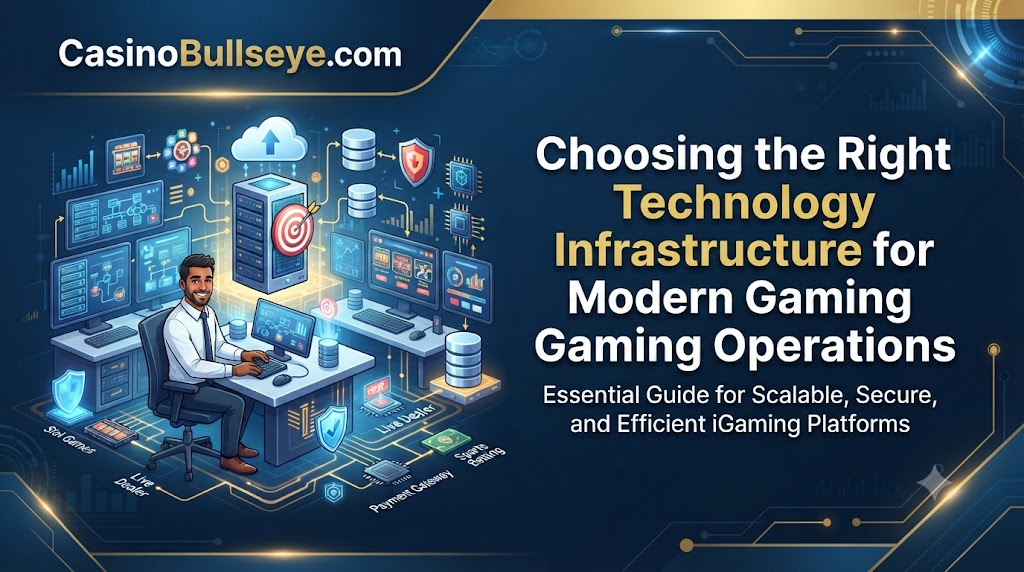
Technology has evolved from a simple support function into the absolute core of modern casino and iGaming operations. Today, digital platforms must handle thousands of concurrent players, process complex financial transactions securely, deliver lightning-fast front-end experiences, and maintain strict adherence to regional compliance frameworks.
Digital casino operations require multiple connected systems working in harmony. This ecosystem relies heavily on specialized content management, scalable backend architecture, robust API integrations, and highly secure infrastructure. As the industry matures, operators, platform architects, and technology teams must understand how various technical components interact to support operational efficiency and long-term digital growth.
What Is a Casino CMS?
A casino CMS is a specialized content management system designed to organize, publish, and update digital assets across a gaming website. Unlike generic blogging platforms, a dedicated casino CMS helps operators manage structured data such as game pages, provider details, promotional banners, editorial reviews, and regulatory disclosures.
A well-architected content management system allows marketing and editorial teams to update promotional campaigns, modify bonus information where legally appropriate, and manage localization efforts across multiple markets without constantly depending on developer intervention. Furthermore, it streamlines SEO workflows, metadata management, and media asset storage. The exact capabilities of a CMS depend heavily on its underlying architecture and its intended use within the broader digital ecosystem.
What Is Casino Management Software?
While a content platform focuses on the public-facing website, casino management software handles the heavier operational backbone of an organization. This broader software category encompasses tools designed for day-to-day business administration, player account tracking, loyalty program management, staff workflows, and detailed reporting.
Operational management systems help teams monitor performance metrics, analyze marketing campaign effectiveness, manage customer support workflows, and execute system integrations. Additionally, these systems often incorporate security controls and compliance-related processes. It is essential to distinguish between a CMS used primarily for publishing digital content and broader operational management systems designed to handle transactional data and business logic.
Understanding iGaming Software
The term iGaming software generally refers to the complete collection of digital tools and backend services required to run an online gaming business. This expansive software ecosystem typically includes player account management systems, secure digital wallets, game aggregation integrations, payment gateways, customer relationship management tools, and business intelligence reporting.
Modern iGaming software must also support robust responsible gaming controls, identity verification pipelines, risk management engines, and real-time analytics. Because online gaming operates across strict regulatory boundaries, these software components are engineered to maintain high availability, data integrity, and strict security standards without compromising user experience.
What Is Casino Software?
Casino software serves as a broad umbrella category encompassing nearly every technological asset utilized in the digital gaming industry. Depending on the context, it can refer to game development engines, live dealer streaming platforms, backend management tools, payment processors, analytics suites, affiliate tracking technology, and security frameworks.
Because the term is so broad, industry professionals usually specify the exact domain they are addressing—whether that involves front-end user interfaces, backend platform logic, or specialized marketing and retention tools. Understanding this categorization helps technology teams select modular components rather than relying on monolithic systems that are difficult to scale.
Understanding an iGaming CMS
An iGaming CMS differs significantly from a standard corporate website content manager due to the complex, highly structured nature of online gaming content. Managing an extensive game catalog requires a system capable of handling game metadata, provider certifications, volatile RTP details, and frequently changing promotional terms.
An effective iGaming CMS provides advanced localization features, multi-market publishing workflows, granular user permissions, and robust integration hooks. Because regulatory requirements vary widely across jurisdictions, the content management layer must empower operators to display jurisdiction-specific disclaimers, responsible gaming notices, and localized terms instantly.
What Is Casino Platform Software?
Platform-level technology sits at the center of online gaming operations, connecting player-facing interfaces with backend services, payment providers, and game studios. Casino platform software manages the core architecture that processes bets, updates player balances, records game histories, and triggers real-time messaging.
A reliable platform architecture relies on clean APIs, scalable databases, and modular services. This decoupling of the front-end user experience from back-end transactional logic allows operators to update their website interfaces or integrate new game providers without destabilizing core platform functions.
Understanding a Casino Content Management System
Implementing a dedicated casino content management system allows digital publishers and operators to maintain large, content-heavy websites efficiently. Beyond basic page editing, these systems provide structured databases for reviewing games, managing affiliate relationships, organizing promotional landing pages, and executing search engine optimization strategies.
Advanced content versioning, editorial approval workflows, and scheduled publishing capabilities ensure that marketing campaigns go live precisely when intended. By organizing content logically, technical teams reduce site bloat, improve page load performance, and enhance the overall user journey.
What Should Casino Website Software Include?
Modern casino website software must meet rigorous technical benchmarks to satisfy both users and search engines. Key considerations include mobile responsiveness, sub-second page performance, scalable cloud infrastructure, secure authentication protocols, and comprehensive accessibility standards.
Websites must also incorporate robust search functionality, flexible content layouts, localization modules, and privacy control mechanisms. Choosing or building the right website technology ensures that digital assets remain accessible, secure, and adaptable as traffic grows.
Understanding an iGaming Software Platform
An iGaming software platform acts as the central nervous system of an online gaming business, unifying diverse technologies into a single operational environment. These platforms bridge the gap between user interfaces, account systems, third-party game libraries, payment processors, CRM engines, and compliance logging tools.
Evaluating an iGaming software platform requires a deep analysis of business goals, target geographic markets, technical requirements, and regulatory frameworks. A flexible platform enables operators to scale operations smoothly while maintaining high standards of data security and system reliability.
What Are Casino Management Systems?
Casino management systems often describe comprehensive software solutions used to monitor and administer physical gaming floors or digital environments. While land-based management systems focus heavily on slot machine telemetry, player tracking cards, and floor security, online equivalents handle digital auditing, virtual wallets, and session monitoring.
These systems empower operators to track player engagement, administer loyalty tiers, generate financial reports, and maintain administrative oversight. Understanding the distinction between land-based infrastructure and online digital management systems is crucial for technology teams operating in hybrid environments.
Casino CMS vs Casino Management System
While both systems are essential to a thriving digital gaming business, a casino CMS and a casino management system serve fundamentally different purposes.
- Primary Purpose: A CMS focuses on content publishing, SEO, editorial workflows, and front-end presentation, whereas a management system handles transactional data, player accounts, financial reporting, and operational logic.
- Data Handling: The CMS manages unstructured and semi-structured media assets, reviews, and promotional text. Conversely, management systems handle sensitive player data, transaction histories, and financial ledgers.
- Integrations: Content platforms integrate primarily with marketing tools, analytics, and asset management systems. Operational management systems connect deeply with payment gateways, identity verification providers, and game aggregation servers.
- Typical Users: Marketing teams, editors, and SEO specialists rely on the CMS daily, while compliance officers, customer support agents, and finance teams utilize operational management systems.
In many modern architectures, these systems work in tandem rather than replacing one another, sharing data securely via well-defined APIs.
Key Features to Look for in Casino Software
Selecting the right technology stack requires evaluating several critical functional and non-functional requirements.
- Scalability to handle traffic spikes during major sporting events or promotional launches.
- Robust security measures, including data encryption, secure authentication, and role-based access control.
- Comprehensive API support and integration capabilities to connect third-party services seamlessly.
- Flexible content flexibility and customizable layout options for editorial and marketing teams.
- Detailed reporting, real-time analytics, and auditable logging capabilities.
- High reliability, automated backup routines, and effective disaster recovery protocols.
- Built-in compliance support and localization controls tailored to target markets.
The Importance of APIs and Integrations
No gaming business operates in a technological vacuum. The ability to connect different software components via robust application programming interfaces is critical for operational success. Integrations link the CMS with CRM platforms, payment processors, game studios, analytics dashboards, identity verification services, and customer support ticketing systems.
Well-documented APIs, secure authentication tokens, active system monitoring, and graceful error handling ensure data consistency across the entire technology stack. Maintaining clean integration layers prevents system bottlenecks and allows technical teams to swap or upgrade individual components without disrupting the entire ecosystem.
Security Considerations for Casino and iGaming Platforms
Protecting sensitive user data, financial transactions, and proprietary business intelligence is a top priority for technology teams. Security governance must be embedded into every layer of the platform architecture.
Essential practices include strict access control, multi-factor authentication, end-to-end encryption for data in transit and at rest, secure API design, and continuous system logging. Regular vulnerability assessments, penetration testing, automated monitoring, and comprehensive incident response plans help organizations identify and neutralize potential threats before they impact operations. Third-party vendor risk management is equally important, ensuring that external game providers and software suppliers meet rigorous security benchmarks.
Compliance and Responsible Gaming Technology
Regulatory compliance is a foundational pillar of the digital gaming industry. Technology platforms must incorporate technical safeguards designed to support age verification, know-your-customer processes, anti-money laundering workflows, and regional access restrictions.
Furthermore, modern platforms must integrate responsible gaming tools that allow users to set deposit limits, take cooling-off periods, or activate self-exclusion protocols. While technology can automate and enforce compliance processes effectively, it serves as a supporting tool and does not replace professional legal, regulatory, or compliance expertise.
How to Evaluate Casino Software Vendors
Choosing the right technology partner requires a structured, objective evaluation process. Decision-makers should look beyond flashy marketing materials and examine the underlying technical realities of potential vendor solutions.
Define Business Requirements
Teams should clearly document their operational, technical, and regulatory requirements before engaging with software vendors. Having a well-defined scope prevents organizations from purchasing bloated software packages filled with unnecessary features.
Review Technical Architecture
Evaluate the underlying infrastructure, database design, API availability, and scalability potential. Ensure the software can integrate smoothly with existing legacy systems or third-party tools.
Evaluate Security
Examine the vendor’s security practices, including data encryption standards, access controls, vulnerability management policies, and historical uptime reliability.
Assess Integration Requirements
Verify that the platform offers flexible, well-documented integration capabilities to connect with payment gateways, CRM tools, and game aggregators without friction.
Consider Long-Term Scalability
Analyze how the software handles anticipated growth in website traffic, content volume, player registrations, and multi-market expansion over time.
Review Vendor Support
Assess the quality of technical documentation, ongoing customer support availability, incident response SLAs, and the vendor’s historical track record for system updates and maintenance.
Common Mistakes When Selecting Casino Software
Many organizations encounter operational challenges due to common missteps during the software selection process. Choosing software based solely on upfront price often leads to hidden customization costs, poor performance, and eventual platform abandonment later.
Other frequent mistakes include ignoring integration requirements, overlooking security fundamentals, assuming a single platform satisfies every global jurisdiction automatically, and failing to evaluate data portability. Additionally, underestimating long-term maintenance requirements or purchasing excessive features that do not align with actual business needs can derail technical roadmaps. Careful planning and cross-functional evaluation help organizations avoid these pitfalls.
How CasinoBullseye.com Can Help
Navigating the complex landscape of gaming technology requires reliable, up-to-date industry insights. CasinoBullseye.com serves as a valuable informational resource for professionals researching casino CMS platforms, software tools, platform systems, and broader ecosystem solutions.
The platform provides objective content, architectural discussions, and technology breakdowns tailored for operators, product managers, and software teams exploring modern industry solutions. By offering clear analyses of platform options and technical trends, CasinoBullseye.com helps industry participants make informed decisions regarding their digital infrastructure.
The Role of Data and Analytics in Casino Technology
Data-driven decision-making is essential for optimizing digital operations and improving user experiences. Modern software platforms capture vast amounts of operational telemetry, user interaction data, and system performance metrics.
By analyzing performance reporting, content analytics, and operational dashboards, businesses can identify bottlenecks, refine marketing workflows, and monitor system health in real-time. When analyzing player activity or behavioral data where legally appropriate, organizations must prioritize data privacy, transparent governance, and responsible handling of sensitive information.
Cloud, APIs, and Modern Casino Platform Architecture
Technology trends in the gaming sector continue to shift toward highly flexible, resilient architectures. Cloud infrastructure, API-first design principles, microservices, and containerized workloads allow technical teams to scale resources dynamically based on demand.
Automated deployment pipelines and advanced observability tools enable engineers to monitor system performance continuously and deploy updates safely. However, technology choices should always be driven by specific business and operational requirements rather than following industry buzzwords blindly.
The Future of Casino CMS and iGaming Software
The future of digital gaming technology points toward greater automation, improved personalization, and more flexible platform architectures. Innovations such as AI-assisted content workflows, headless CMS implementations, enhanced cloud-native infrastructure, and streamlined regulatory reporting tools are steadily reshaping the landscape.
As regulatory frameworks evolve and player expectations rise, software platforms will continue to emphasize robust identity verification, advanced responsible gaming controls, and seamless multi-market integration. Organizations that invest in adaptable, secure, and well-architected technology foundations will be best positioned for long-term operational success.
Conclusion
Choosing the right technology infrastructure is a critical decision that influences every facet of a digital gaming enterprise. Understanding the distinct roles played by a casino CMS, operational management systems, and scalable iGaming software ensures that organizations build cohesive, high-performing digital environments.
By prioritizing robust security, seamless API integrations, compliance support, and long-term scalability, technology teams can navigate market complexities effectively. Resources like CasinoBullseye.com remain valuable for professionals seeking continuous education and clear insights into the evolving world of casino technology and platform architecture.

Find Trusted Cardiac Hospitals
Compare heart hospitals by city and services — all in one place.
Explore Hospitals