
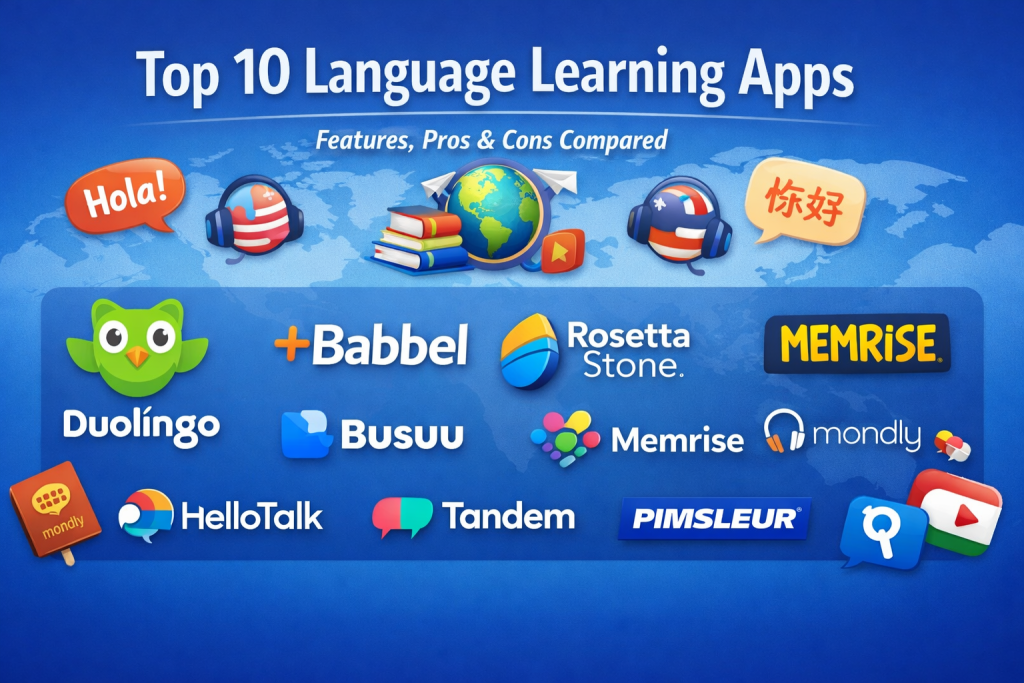
Introduction
Language Learning Apps are digital platforms designed to help individuals learn new languages through structured lessons, interactive exercises, audio-visual content, and real-world practice scenarios. Over the past decade, these apps have transformed language education by making it accessible, flexible, and personalized, removing the traditional barriers of location, time, and cost.
In today’s globalized world, learning a new language is no longer a “nice-to-have” skill. It is essential for career growth, international business, education, travel, and cultural exchange. From professionals preparing for overseas roles to students aiming for global universities, language skills open doors across industries and borders.
Modern language learning apps go far beyond vocabulary lists. They combine AI-driven personalization, speech recognition, gamification, spaced repetition, and immersive content to deliver measurable learning outcomes. However, not all tools are created equal. When choosing a language learning app, users should evaluate factors such as learning methodology, language coverage, speaking practice, offline access, progress tracking, security, pricing, and long-term scalability.
Best for
Language Learning Apps are ideal for students, working professionals, travelers, freelancers, educators, and globally distributed teams. They are widely used in education, corporate training, hospitality, aviation, healthcare, and customer support industries where multilingual communication is critical.
Not ideal for
These tools may not be suitable for users seeking formal academic degrees, advanced linguistic research, or fully instructor-led classroom experiences. In such cases, traditional institutions or hybrid learning models may be more effective.
Top 10 Language Learning Apps Tools
1 — Duolingo
Short description:
A gamified language learning app designed for beginners and casual learners who want to build daily habits with short, engaging lessons.
Key features
- Gamified lessons with streaks and rewards
- AI-based adaptive learning paths
- Speech recognition for pronunciation practice
- Multiple language courses across difficulty levels
- Bite-sized lessons ideal for daily practice
- Offline lesson availability (limited)
Pros
- Extremely easy to use and engaging
- Free tier suitable for beginners
- Strong habit-forming design
Cons
- Limited depth for advanced learners
- Grammar explanations can be shallow
Security & compliance: Varies / N/A
Support & community: Large global community, basic documentation, limited direct support
2 — Babbel
Short description:
A structured language learning platform focused on real-life conversations and practical grammar for adult learners.
Key features
- Professionally designed language courses
- Real-world dialogues and scenarios
- Grammar-focused explanations
- Speech recognition exercises
- Offline access on mobile devices
- Multiple proficiency levels
Pros
- Strong grammar foundation
- Practical, conversational focus
- Clean and distraction-free interface
Cons
- Smaller language selection than competitors
- Subscription-only access
Security & compliance: GDPR compliant
Support & community: Quality documentation, responsive support, limited community forums
3 — Rosetta Stone
Short description:
A premium immersive language learning platform known for its natural learning approach without translations.
Key features
- Immersion-based learning methodology
- TruAccent speech recognition technology
- Structured progression from beginner to advanced
- Offline learning capabilities
- Multi-device access
- Enterprise and education solutions
Pros
- Excellent pronunciation training
- Strong brand credibility
- Effective for long-term learners
Cons
- Higher pricing
- Less engaging for casual users
Security & compliance: GDPR, enterprise-grade standards
Support & community: Professional support, enterprise onboarding, limited peer community
4 — Busuu
Short description:
A community-driven language learning app combining structured lessons with native-speaker feedback.
Key features
- CEFR-aligned courses
- Native speaker corrections
- Grammar and vocabulary lessons
- AI-powered study plans
- Offline mode
- Progress tracking
Pros
- Real human feedback
- Structured academic approach
- Suitable for serious learners
Cons
- Limited free content
- Smaller language catalog
Security & compliance: GDPR compliant
Support & community: Active learner community, good documentation
5 — Memrise
Short description:
A vocabulary-focused language app that emphasizes memory techniques and real-life video content.
Key features
- Spaced repetition system
- Native speaker video clips
- Vocabulary-heavy lessons
- Custom learning paths
- Offline mode
- Community-created courses
Pros
- Excellent vocabulary retention
- Authentic spoken language exposure
- Fun, informal learning style
Cons
- Weak grammar depth
- Less structured progression
Security & compliance: Varies / N/A
Support & community: Strong user community, basic support
6 — Mondly
Short description:
An AI-powered language learning app with a strong focus on conversational practice and emerging technologies.
Key features
- Chatbot-based conversations
- Speech recognition
- Daily micro-lessons
- AR and VR language experiences
- Multi-language support
- Progress analytics
Pros
- Innovative conversational approach
- Beginner-friendly design
- Supports many languages
Cons
- Less depth for advanced learners
- AR/VR features not essential for all users
Security & compliance: Varies / N/A
Support & community: Moderate documentation, standard support
7 — HelloTalk
Short description:
A language exchange platform connecting learners with native speakers for real-time communication.
Key features
- One-on-one chat with native speakers
- Text, voice, and video messaging
- Built-in translation tools
- Language correction features
- Social learning environment
- Global user base
Pros
- Real-world language practice
- Cultural exchange benefits
- Flexible and informal learning
Cons
- No structured curriculum
- Learning quality depends on partners
Security & compliance: Varies / N/A
Support & community: Large community, limited formal support
8 — Tandem
Short description:
A peer-to-peer language exchange app focused on conversational fluency with verified native speakers.
Key features
- Text, audio, and video conversations
- Interest-based partner matching
- Community moderation
- Language correction tools
- Cultural exchange focus
- Flexible learning format
Pros
- Authentic conversations
- Strong community moderation
- Free core features
Cons
- No structured lessons
- Requires self-discipline
Security & compliance: Varies / N/A
Support & community: Active community, standard support
9 — Pimsleur
Short description:
An audio-based language learning system designed for learners who prefer listening and speaking over reading.
Key features
- Audio-driven lessons
- Focus on pronunciation and recall
- Offline listening
- Short daily sessions
- Structured progression
- Limited visual content
Pros
- Excellent for speaking skills
- Ideal for commuting learners
- Scientifically designed method
Cons
- Limited vocabulary range
- Minimal reading and writing practice
Security & compliance: Varies / N/A
Support & community: Professional support, minimal community interaction
10 — LingQ
Short description:
A content-driven language learning platform using real-world articles, podcasts, and books.
Key features
- Importable real-world content
- Vocabulary tracking system
- Spaced repetition learning
- Multi-language support
- Offline access
- Personalized learning analytics
Pros
- Ideal for advanced learners
- Authentic content exposure
- Flexible learning style
Cons
- Steeper learning curve
- Interface may feel complex
Security & compliance: Varies / N/A
Support & community: Active forums, good documentation
Comparison Table
| Tool Name | Best For | Platform(s) Supported | Standout Feature | Rating |
|---|---|---|---|---|
| Duolingo | Beginners, casual learners | iOS, Android, Web | Gamification | N/A |
| Babbel | Professionals, travelers | iOS, Android, Web | Grammar-focused learning | N/A |
| Rosetta Stone | Serious long-term learners | iOS, Android, Desktop | Immersion method | N/A |
| Busuu | Academic-style learners | iOS, Android, Web | Native feedback | N/A |
| Memrise | Vocabulary building | iOS, Android, Web | Memory techniques | N/A |
| Mondly | Conversational practice | iOS, Android, Web | AI chatbots | N/A |
| HelloTalk | Speaking practice | iOS, Android | Language exchange | N/A |
| Tandem | Fluency building | iOS, Android | Native conversations | N/A |
| Pimsleur | Audio learners | iOS, Android | Audio-first method | N/A |
| LingQ | Advanced learners | iOS, Android, Web | Real-world content | N/A |
Evaluation & Scoring of Language Learning Apps
| Evaluation Criteria | Weight | Avg Score |
|---|---|---|
| Core features | 25% | High |
| Ease of use | 15% | High |
| Integrations & ecosystem | 15% | Medium |
| Security & compliance | 10% | Medium |
| Performance & reliability | 10% | High |
| Support & community | 10% | Medium |
| Price / value | 15% | High |
Which Language Learning Apps Tool Is Right for You?
- Solo learners: Duolingo, Memrise, Mondly
- SMBs and professionals: Babbel, Busuu
- Advanced learners: LingQ, Rosetta Stone
- Conversation-focused users: HelloTalk, Tandem
- Budget-conscious: Duolingo, Tandem
- Premium experience: Rosetta Stone, Babbel
Choose based on learning goals, time availability, depth of content, and preferred learning style rather than popularity alone.
Frequently Asked Questions (FAQs)
1. Are language learning apps effective?
Yes, when used consistently, they significantly improve vocabulary, comprehension, and speaking skills.
2. Can apps replace traditional classes?
They can supplement or replace classes for many learners but may not suit academic certification needs.
3. Which app is best for speaking practice?
HelloTalk, Tandem, and Pimsleur excel in speaking-focused learning.
4. Are free versions sufficient?
For beginners, yes. Advanced learners usually benefit from paid features.
5. Do these apps work offline?
Most offer limited offline access on mobile devices.
6. Are they suitable for children?
Some apps are child-friendly, but supervision is recommended.
7. How long does it take to see results?
Basic conversational skills can develop within a few months of daily practice.
8. Are enterprise plans available?
Yes, platforms like Rosetta Stone and Babbel offer enterprise solutions.
9. Do apps support multiple languages at once?
Most allow learning multiple languages, but focus is advised.
10. What is the biggest mistake learners make?
Inconsistent usage and relying on one method alone.
Conclusion
Language Learning Apps have revolutionized how people acquire new languages by offering flexibility, personalization, and affordability. From gamified beginner platforms to advanced content-driven systems, today’s tools cater to diverse learning needs.
The most important factors when choosing a language learning app are learning goals, depth of instruction, speaking practice, usability, and long-term value. There is no single “best” tool for everyone. The right choice depends on whether you prioritize casual learning, professional fluency, immersion, or real-world conversation.
By aligning the tool with your specific objectives, you can turn language learning into a sustainable and rewarding journey rather than a short-lived experiment.

Find Trusted Cardiac Hospitals
Compare heart hospitals by city and services — all in one place.
Explore Hospitals