
Introduction
Maritime Vessel Management Software plays a critical role in modern shipping and marine operations. It is designed to help ship owners, operators, and managers oversee vessels efficiently by centralizing technical, operational, financial, and compliance-related activities into a single digital platform. From fleet maintenance and crew management to regulatory compliance and voyage planning, these tools act as the backbone of day-to-day maritime operations.
In an industry where safety, efficiency, and compliance are non-negotiable, manual processes and disconnected systems often lead to higher costs, operational risks, and regulatory exposure. Vessel management software helps organizations improve visibility across fleets, reduce downtime, optimize fuel usage, and maintain strict adherence to international maritime regulations.
Common real-world use cases include:
- Managing preventive and corrective vessel maintenance
- Tracking compliance with maritime safety and environmental regulations
- Monitoring vessel performance and fuel efficiency
- Managing crew schedules, certifications, and payroll
- Centralizing reporting, audits, and inspections
When choosing Maritime Vessel Management Software, buyers should evaluate:
- Depth of core vessel management features
- Ease of use for onboard and shore-based teams
- Integration with navigation, ERP, and finance systems
- Security, compliance, and audit readiness
- Scalability for growing fleets
Best for:
Maritime Vessel Management Software is best suited for ship owners, fleet managers, technical managers, maritime enterprises, offshore operators, and shipping companies managing anything from a single vessel to large global fleets.
Not ideal for:
These tools may be excessive for very small operators with occasional charters, recreational boating users, or organizations that only need basic tracking rather than full operational and compliance management.
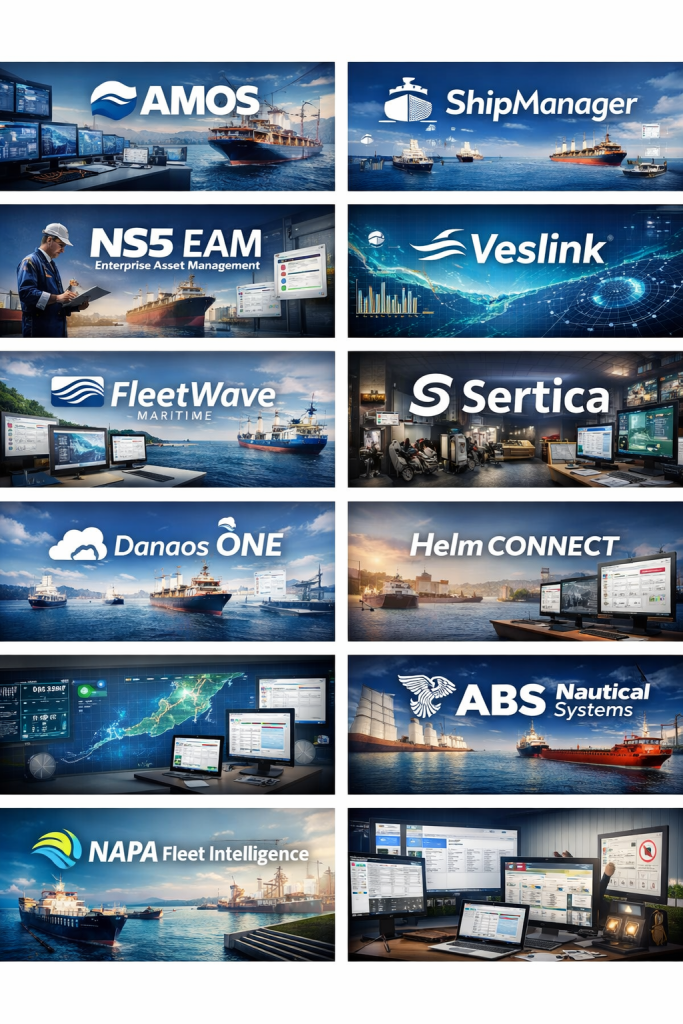
Top 10 Maritime Vessel Management Software Tools
1 — AMOS
Short description:
AMOS is a widely adopted maritime asset and maintenance management system designed for ship owners and operators seeking full lifecycle vessel management.
Key features
- Planned maintenance system (PMS)
- Spare parts and inventory management
- Compliance and certificate tracking
- Asset lifecycle and history tracking
- Integration with onboard and shore systems
- Reporting and analytics
Pros
- Deep maritime-specific functionality
- Highly trusted in global shipping operations
- Strong maintenance and compliance coverage
Cons
- Steep learning curve for new users
- Interface may feel dated to some users
Security & compliance
- Role-based access control, audit logs, GDPR alignment
Support & community
- Strong enterprise support, extensive documentation, global user base
2 — ShipManager
Short description:
ShipManager offers an integrated suite covering technical, crewing, and financial vessel management, suitable for medium to large fleets.
Key features
- Planned maintenance and defect management
- Crew management and payroll
- Safety and quality management
- Procurement and inventory control
- Fleet performance monitoring
Pros
- All-in-one modular design
- Strong compliance and safety modules
- Scales well for growing fleets
Cons
- Higher cost for full suite
- Requires structured onboarding
Security & compliance
- ISO-aligned processes, audit trails, GDPR-ready
Support & community
- Professional onboarding, enterprise-grade support
3 — NS5 Enterprise Asset Management (Maritime Edition)
Short description:
NS5 EAM is designed for asset-intensive maritime organizations focused on maintenance reliability and regulatory compliance.
Key features
- Asset and maintenance management
- Work order automation
- Compliance and inspection tracking
- Mobile access for onboard teams
- Analytics and performance dashboards
Pros
- Strong reliability-centered maintenance
- Highly configurable workflows
- Good mobile experience
Cons
- Configuration complexity
- Less crew-focused functionality
Security & compliance
- SOC-aligned controls, role-based access
Support & community
- Structured enterprise support, training resources
4 — Veslink Fleet Management
Short description:
Veslink focuses on operational efficiency, data integration, and fleet performance insights for shipping companies.
Key features
- Voyage and operational data integration
- Fleet performance analytics
- Fuel efficiency monitoring
- Maintenance and compliance modules
- Real-time dashboards
Pros
- Strong analytics and reporting
- Excellent data visibility
- Supports operational decision-making
Cons
- Less comprehensive crewing features
- Advanced analytics require setup
Security & compliance
- Data encryption, GDPR-compliant architecture
Support & community
- Responsive support, solid documentation
5 — FleetWave Maritime
Short description:
FleetWave Maritime is designed for operators managing mixed fleets, offering strong maintenance and compliance capabilities.
Key features
- Maintenance scheduling and work orders
- Inspection and compliance tracking
- Inventory and procurement
- Fleet-wide reporting
- Mobile accessibility
Pros
- Intuitive interface
- Flexible configuration
- Suitable for diverse vessel types
Cons
- Limited advanced analytics
- Custom reporting may need assistance
Security & compliance
- Secure access controls, audit logging
Support & community
- Good onboarding support, active customer assistance
6 — Sertica
Short description:
Sertica is a maritime-focused maintenance and operational management system optimized for reliability and regulatory compliance.
Key features
- Planned and condition-based maintenance
- Asset and equipment tracking
- Safety and quality management
- Inventory and procurement
- Reporting and KPIs
Pros
- Strong maintenance optimization
- Well-suited for compliance-heavy fleets
- Reliable performance
Cons
- User interface feels utilitarian
- Limited financial management
Security & compliance
- ISO and maritime regulatory alignment
Support & community
- Strong vendor support, structured training
7 — Danaos ONE
Short description:
Danaos ONE is a cloud-based vessel management platform focusing on digital transformation and data-driven fleet management.
Key features
- Integrated technical and operational modules
- Real-time vessel data
- Performance analytics
- Compliance management
- Cloud-based accessibility
Pros
- Modern cloud-native architecture
- Strong analytics and visibility
- Reduces IT overhead
Cons
- Cloud dependency
- Advanced features may increase cost
Security & compliance
- Enterprise-grade encryption, GDPR compliance
Support & community
- Dedicated customer success teams
8 — Helm CONNECT
Short description:
Helm CONNECT offers a modular and user-friendly vessel management solution for small to mid-sized operators.
Key features
- Maintenance and defect tracking
- Compliance and inspection management
- Inventory control
- Financial and accounting modules
- Web-based access
Pros
- Easy to use
- Cost-effective for SMBs
- Quick deployment
Cons
- Less suitable for very large fleets
- Limited advanced analytics
Security & compliance
- Standard encryption, role-based permissions
Support & community
- Strong customer support and onboarding
9 — NAPA Fleet Intelligence
Short description:
NAPA Fleet Intelligence focuses on performance optimization, fuel efficiency, and voyage analysis.
Key features
- Fuel consumption monitoring
- Voyage optimization
- Performance benchmarking
- Data-driven decision tools
- Environmental impact analysis
Pros
- Excellent fuel and performance insights
- Supports sustainability goals
- Advanced analytics
Cons
- Limited maintenance functionality
- Best used alongside other systems
Security & compliance
- Secure data handling, GDPR-aligned
Support & community
- Strong technical support, expert consulting
10 — ABS Nautical Systems
Short description:
ABS Nautical Systems delivers compliance, maintenance, and safety management solutions backed by maritime classification expertise.
Key features
- Maintenance and asset management
- Regulatory compliance tracking
- Safety management systems
- Inspection and audit readiness
- Reporting and dashboards
Pros
- Strong regulatory credibility
- Trusted by compliance-focused operators
- Robust audit capabilities
Cons
- Conservative UI design
- Customization can be limited
Security & compliance
- ISO-aligned, audit-ready systems
Support & community
- Enterprise-grade support, maritime expertise
Comparison Table
| Tool Name | Best For | Platform(s) Supported | Standout Feature | Rating |
|---|---|---|---|---|
| AMOS | Large fleets | Web, Onboard systems | Deep maintenance management | N/A |
| ShipManager | Mid–large enterprises | Web, Desktop | All-in-one modules | N/A |
| NS5 EAM | Asset-heavy operators | Web, Mobile | Reliability-centered maintenance | N/A |
| Veslink | Performance-driven fleets | Web | Advanced analytics | N/A |
| FleetWave Maritime | Mixed fleets | Web, Mobile | Flexible configuration | N/A |
| Sertica | Compliance-focused fleets | Web, Onboard | Maintenance optimization | N/A |
| Danaos ONE | Digital-first operators | Cloud | Real-time insights | N/A |
| Helm CONNECT | SMB operators | Web | Ease of use | N/A |
| NAPA Fleet Intelligence | Fuel optimization | Web | Voyage analytics | N/A |
| ABS Nautical Systems | Regulatory compliance | Web | Audit readiness | N/A |
Evaluation & Scoring of Maritime Vessel Management Software
| Evaluation Criteria | Weight | AMOS | ShipManager | Danaos ONE |
|---|---|---|---|---|
| Core features | 25% | High | High | High |
| Ease of use | 15% | Medium | Medium | High |
| Integrations & ecosystem | 15% | High | High | Medium |
| Security & compliance | 10% | High | High | High |
| Performance & reliability | 10% | High | High | High |
| Support & community | 10% | High | High | Medium |
| Price / value | 15% | Medium | Medium | Medium |
Which Maritime Vessel Management Software Tool Is Right for You?
- Solo operators & small fleets: Look for simple, cost-effective tools with quick setup and essential maintenance features.
- SMBs: Balance affordability with compliance and reporting capabilities.
- Mid-market companies: Focus on modular platforms with strong integrations.
- Enterprise fleets: Prioritize scalability, compliance depth, analytics, and enterprise support.
Budget-conscious buyers should favor ease of use and essential modules, while premium buyers can invest in analytics, automation, and advanced compliance management.
Frequently Asked Questions (FAQs)
- What is Maritime Vessel Management Software?
It is a digital system used to manage vessel operations, maintenance, compliance, and performance. - Is it suitable for small fleets?
Yes, many tools offer scalable plans suitable for small and mid-sized operators. - Does it support regulatory compliance?
Most tools include certificate tracking, audits, and safety management features. - Can it reduce operating costs?
Yes, through preventive maintenance, fuel optimization, and reduced downtime. - Is crew management included?
Some platforms include crewing modules, while others focus mainly on technical operations. - How long does implementation take?
It can range from a few weeks to several months depending on fleet size. - Are these tools cloud-based?
Many modern platforms are cloud-based, while others support hybrid models. - Is training required?
Yes, especially for enterprise-grade systems with advanced features. - Can it integrate with ERP systems?
Most enterprise tools support ERP and accounting integrations. - What are common mistakes when choosing software?
Underestimating user adoption, ignoring scalability, and overlooking compliance needs.
Conclusion
Maritime Vessel Management Software has become essential for modern shipping operations. It improves efficiency, safety, compliance, and decision-making across fleets of all sizes. While no single tool is perfect for every organization, understanding your operational needs, fleet size, budget, and compliance requirements will guide you to the right choice.
The best solution is not the most expensive or feature-heavy one—it is the tool that aligns most closely with your operational goals and long-term maritime strategy.

Find Trusted Cardiac Hospitals
Compare heart hospitals by city and services — all in one place.
Explore Hospitals