
Introduction
Shopping Cart Software is the core engine that enables online businesses to sell products or services through a digital storefront. It allows customers to browse products, add them to a cart, calculate prices and taxes, apply discounts, process payments, and complete orders securely. In simple terms, it turns a website or app into a functional online store.
In today’s digital-first economy, shopping cart software is no longer optional. From small local businesses selling a handful of products to large enterprises managing thousands of SKUs across multiple countries, these tools power eCommerce operations at every scale. They play a critical role in customer experience, revenue growth, inventory management, and operational efficiency.
Real-world use cases include:
- Online retail stores selling physical goods
- Digital product platforms (courses, software, subscriptions)
- D2C brands managing direct sales
- B2B businesses handling bulk or recurring orders
- Marketplaces and multi-vendor platforms
When choosing shopping cart software, buyers should evaluate factors such as ease of use, scalability, integrations, customization, security, performance, support, and total cost of ownership. The right tool can accelerate growth, while the wrong one can limit flexibility and increase operational friction.
Best for:
Shopping Cart Software is ideal for entrepreneurs, startups, SMBs, growing D2C brands, B2B sellers, and enterprises that need a structured, secure, and scalable way to sell online.
Not ideal for:
Businesses that do not sell products or services online, content-only websites, or teams that only need simple payment links or invoicing (where lightweight payment tools may be sufficient).
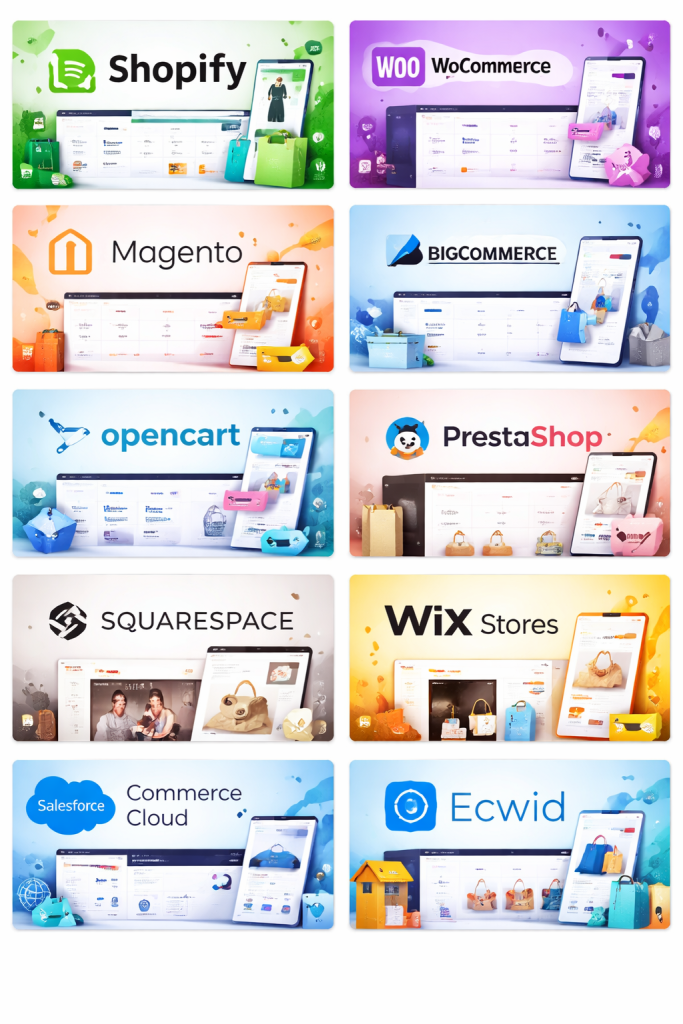
Top 10 Shopping Cart Software Tools
1 — Shopify
Short description:
Shopify is a leading all-in-one eCommerce platform designed for entrepreneurs, SMBs, and fast-growing brands that want to launch and manage online stores with minimal technical effort.
Key features:
- Hosted shopping cart and storefront builder
- Integrated payment processing
- Inventory and order management
- App marketplace with thousands of extensions
- Multi-channel selling (web, social, POS)
- Built-in analytics and reporting
Pros:
- Extremely easy to set up and use
- Large ecosystem of apps and themes
- Reliable performance and uptime
Cons:
- Transaction fees on some plans
- Advanced customization requires higher tiers or apps
- Long-term costs can increase with add-ons
Security & compliance:
PCI DSS compliant, SSL encryption, GDPR support, SOC-aligned controls.
Support & community:
24/7 customer support, extensive documentation, large global user community, enterprise support available.
2 — WooCommerce
Short description:
WooCommerce is a flexible, open-source shopping cart plugin built for WordPress users who want full control over their online store.
Key features:
- WordPress-native integration
- Highly customizable product and checkout flows
- Large extension marketplace
- Supports physical and digital products
- Flexible tax and shipping rules
- Self-hosted data control
Pros:
- Full ownership and customization
- No mandatory platform fees
- Strong SEO capabilities
Cons:
- Requires hosting and maintenance
- Performance depends on setup quality
- Can become complex at scale
Security & compliance:
Varies by hosting provider; supports SSL, GDPR tools, and security plugins.
Support & community:
Large developer and user community, extensive documentation, paid support via partners.
3 — Magento (Adobe Commerce)
Short description:
Magento is a powerful, enterprise-grade eCommerce platform built for complex, high-volume, and highly customized online stores.
Key features:
- Advanced product and catalog management
- Multi-store and multi-language support
- Highly customizable checkout and workflows
- B2B and B2C capabilities
- Strong API and integration support
- Advanced promotions and pricing rules
Pros:
- Extremely scalable and flexible
- Ideal for complex enterprise needs
- Strong global commerce features
Cons:
- High development and maintenance cost
- Steep learning curve
- Requires experienced technical team
Security & compliance:
PCI DSS support, GDPR tools, enterprise-grade security controls.
Support & community:
Enterprise support available, strong developer ecosystem, extensive documentation.
4 — BigCommerce
Short description:
BigCommerce is a SaaS-based eCommerce platform focused on scalability, performance, and built-in features for growing brands.
Key features:
- Hosted storefront and checkout
- Built-in SEO and marketing tools
- Multi-channel selling support
- Strong API-first architecture
- No transaction fees on standard plans
- Headless commerce support
Pros:
- Strong out-of-the-box features
- Good performance at scale
- Flexible for headless setups
Cons:
- Theme customization can be limiting
- Pricing tiers based on revenue
- Smaller app ecosystem than Shopify
Security & compliance:
PCI DSS compliant, SSL, GDPR support.
Support & community:
24/7 support, solid documentation, growing partner ecosystem.
5 — OpenCart
Short description:
OpenCart is a lightweight, open-source shopping cart solution suitable for small to mid-sized businesses looking for simplicity and control.
Key features:
- Open-source architecture
- Multi-store management
- Extension marketplace
- Simple admin dashboard
- Multiple payment and shipping options
Pros:
- Low cost to start
- Easy to understand backend
- Flexible customization
Cons:
- Limited advanced features
- Smaller ecosystem
- Requires self-hosting management
Security & compliance:
Varies by hosting; supports SSL and basic security extensions.
Support & community:
Active community forums, documentation, paid support options.
6 — PrestaShop
Short description:
PrestaShop is an open-source eCommerce platform popular in Europe, offering flexibility and strong international commerce features.
Key features:
- Open-source and self-hosted
- Multi-language and multi-currency support
- Modular add-on system
- Customizable checkout
- Built-in analytics
Pros:
- Strong global commerce support
- Good balance of features and control
- Active European ecosystem
Cons:
- Paid modules can add up
- Requires technical management
- Smaller global community than Shopify
Security & compliance:
GDPR tools, SSL support, hosting-dependent security.
Support & community:
Documentation, community forums, optional paid support.
7 — Squarespace Commerce
Short description:
Squarespace Commerce combines website design and shopping cart functionality for creatives and small businesses.
Key features:
- Integrated website and store builder
- Beautiful design templates
- Inventory and order management
- Digital and physical product support
- Built-in marketing tools
Pros:
- Excellent design quality
- Simple all-in-one platform
- Minimal setup effort
Cons:
- Limited advanced eCommerce features
- Fewer integrations
- Less suitable for large catalogs
Security & compliance:
SSL, PCI compliance, GDPR support.
Support & community:
Email support, documentation, small but active community.
8 — Wix Stores
Short description:
Wix Stores is a beginner-friendly shopping cart solution integrated into the Wix website builder.
Key features:
- Drag-and-drop store builder
- Product and inventory management
- Multiple payment gateways
- Marketing and SEO tools
- App integrations
Pros:
- Very easy to use
- Affordable entry-level pricing
- Fast store setup
Cons:
- Limited scalability
- Less flexible checkout customization
- Performance constraints for large stores
Security & compliance:
SSL, PCI compliance, GDPR-ready tools.
Support & community:
Knowledge base, customer support, Wix user community.
9 — Salesforce Commerce Cloud
Short description:
Salesforce Commerce Cloud is an enterprise-level digital commerce platform built for global, high-volume businesses.
Key features:
- AI-driven personalization
- Omnichannel commerce support
- Advanced analytics and reporting
- Deep CRM integration
- Global scalability
Pros:
- Powerful enterprise capabilities
- Strong personalization and analytics
- Seamless Salesforce ecosystem
Cons:
- Very high cost
- Complex implementation
- Overkill for small businesses
Security & compliance:
SOC 2, GDPR, enterprise-grade security controls.
Support & community:
Enterprise support, certified partners, strong documentation.
10 — Ecwid
Short description:
Ecwid is a lightweight shopping cart solution designed to add eCommerce functionality to existing websites and social platforms.
Key features:
- Easy integration into existing sites
- Multi-channel selling
- Mobile-friendly checkout
- Inventory and order management
- Lightweight setup
Pros:
- Quick to deploy
- Affordable pricing
- Works with existing websites
Cons:
- Limited advanced customization
- Less suitable for complex stores
- Smaller ecosystem
Security & compliance:
PCI DSS compliance, SSL encryption.
Support & community:
Email and chat support, documentation, small community.
Comparison Table
| Tool Name | Best For | Platform(s) Supported | Standout Feature | Rating |
|---|---|---|---|---|
| Shopify | SMBs, D2C brands | Web, Mobile | App ecosystem | N/A |
| WooCommerce | WordPress users | Web | Full customization | N/A |
| Magento | Enterprises | Web | Extreme scalability | N/A |
| BigCommerce | Growing brands | Web, Headless | Built-in features | N/A |
| OpenCart | Small businesses | Web | Lightweight setup | N/A |
| PrestaShop | Global sellers | Web | International support | N/A |
| Squarespace | Creatives | Web | Design quality | N/A |
| Wix Stores | Beginners | Web | Ease of use | N/A |
| Salesforce Commerce Cloud | Enterprises | Web | AI personalization | N/A |
| Ecwid | Existing websites | Web | Easy integration | N/A |
Evaluation & Scoring of Shopping Cart Software
| Criteria | Weight | Evaluation Summary |
|---|---|---|
| Core features | 25% | Breadth of commerce functionality |
| Ease of use | 15% | Learning curve and usability |
| Integrations & ecosystem | 15% | Apps, APIs, extensions |
| Security & compliance | 10% | Data protection and standards |
| Performance & reliability | 10% | Speed and uptime |
| Support & community | 10% | Help, docs, ecosystem |
| Price / value | 15% | Cost vs benefits |
Which Shopping Cart Software Tool Is Right for You?
- Solo users & startups: Wix, Squarespace, Ecwid
- SMBs & D2C brands: Shopify, BigCommerce, WooCommerce
- Mid-market businesses: BigCommerce, PrestaShop
- Enterprises: Magento, Salesforce Commerce Cloud
Budget-conscious users should prioritize open-source or entry-level SaaS tools, while premium buyers can invest in enterprise platforms for scalability and customization.
Choose ease of use if speed-to-market matters, or feature depth if customization and control are critical. Always consider integration needs, future growth, and compliance requirements.
Frequently Asked Questions (FAQs)
1. What is shopping cart software?
It is software that enables online stores to manage products, carts, checkout, and payments.
2. Do I need technical skills to use it?
Not always. SaaS platforms require minimal skills, while open-source tools need technical expertise.
3. Is open-source better than SaaS?
Open-source offers control; SaaS offers convenience. The best choice depends on your needs.
4. Can shopping cart software scale with my business?
Yes, most modern platforms support scaling with proper planning.
5. How important is security in shopping cart software?
Critical. It protects customer data, payments, and trust.
6. Can I sell digital products?
Most tools support both physical and digital products.
7. What are common mistakes buyers make?
Ignoring scalability, underestimating costs, and overlooking integrations.
8. Is mobile optimization included?
Most modern tools provide mobile-friendly checkout by default.
9. How long does setup take?
From a few hours to several weeks, depending on complexity.
10. Can I migrate later to another platform?
Yes, but migration requires planning and data handling.
Conclusion
Shopping Cart Software is the backbone of any successful eCommerce operation. While the market offers many strong options, there is no single “best” solution for everyone. The right choice depends on business size, budget, technical capability, growth plans, and customer experience goals.
By focusing on core features, usability, integrations, security, and long-term value, businesses can select a platform that supports both current needs and future expansion. Choose thoughtfully, and your shopping cart software will become a powerful growth engine rather than a limitation.

Find Trusted Cardiac Hospitals
Compare heart hospitals by city and services — all in one place.
Explore Hospitals
This article offers a clear and practical comparison of the leading shopping cart software solutions, breaking down their core features, benefits, and limitations. It’s especially useful for e‑commerce businesses trying to understand how different platforms handle checkout experiences, payment integrations, customization options, and order management. By outlining both strengths and weaknesses side by side, the post makes it easier to evaluate which solution fits specific business needs and goals. Overall, this is a helpful guide for anyone looking to streamline their online store setup and improve customer purchasing experiences.