
Introduction
Threat Hunting Platforms are specialized cybersecurity solutions designed to help organizations proactively search for hidden, advanced, or unknown threats within their IT environments. Unlike traditional security tools that rely heavily on alerts and known signatures, threat hunting platforms empower security teams to investigate suspicious behaviors, anomalies, and attacker techniques that may bypass automated defenses.
In today’s threat landscape—dominated by ransomware, supply chain attacks, insider threats, and advanced persistent threats (APTs)—reactive security is no longer enough. Threat hunting platforms enable continuous visibility across endpoints, networks, identities, and cloud workloads, helping teams detect attackers early in the kill chain.
Why Threat Hunting Platforms Matter
- Reduce dwell time of attackers
- Detect zero-day and fileless attacks
- Improve SOC efficiency and analyst confidence
- Strengthen incident response and forensics
- Support compliance and audit readiness
Common Real-World Use Cases
- Investigating suspicious lateral movement
- Hunting for credential abuse and privilege escalation
- Detecting ransomware precursors
- Validating SIEM or EDR alerts
- Proactive compliance and breach prevention
What to Look for When Choosing a Threat Hunting Platform
When evaluating tools in this category, buyers should focus on:
- Depth of telemetry (endpoint, network, cloud, identity)
- Advanced query and analytics capabilities
- Ease of investigation and visualization
- Integration with SIEM, SOAR, and EDR
- Performance at scale
- Security, privacy, and compliance posture
- Pricing transparency and ROI
Best for:
Security analysts, SOC teams, incident responders, MSSPs, and enterprises with mature security operations seeking proactive threat detection.
Not ideal for:
Very small teams with minimal security expertise, organizations looking only for basic antivirus, or environments without sufficient telemetry sources.
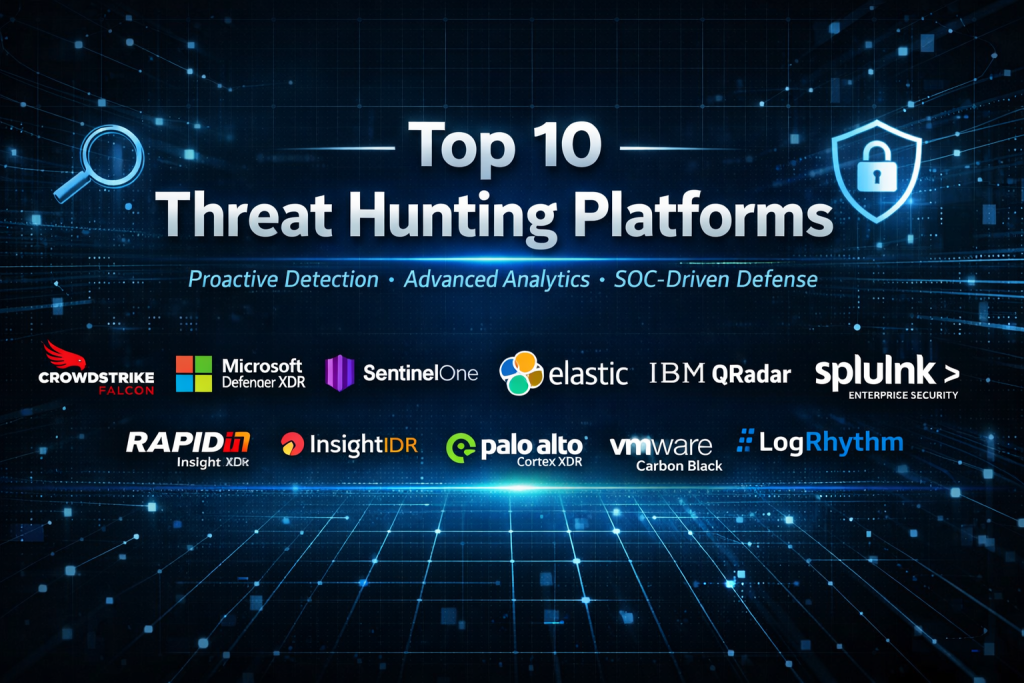
Top 10 Threat Hunting Platforms Tools
1 — CrowdStrike Falcon
Short description:
A cloud-native threat hunting and endpoint detection platform designed for enterprise-grade proactive defense and real-time investigations.
Key features
- Managed and self-service threat hunting
- Real-time endpoint telemetry
- Advanced behavioral analytics
- Custom hunting queries
- Integrated EDR and XDR
- Threat intelligence correlation
Pros
- Excellent detection accuracy
- Minimal endpoint performance impact
- Strong enterprise trust
Cons
- Premium pricing
- Requires skilled analysts for advanced hunts
Security & compliance
- SOC 2, ISO 27001, GDPR, encryption, SSO, audit logs
Support & community
- Enterprise-grade support, strong documentation, global analyst community
2 — Microsoft Defender XDR
Short description:
A unified threat hunting and detection platform spanning endpoints, identities, email, and cloud workloads.
Key features
- Advanced Hunting (KQL-based)
- Cross-domain XDR visibility
- Built-in threat intelligence
- Automated investigation
- Native Microsoft ecosystem integration
- Scalable cloud analytics
Pros
- Excellent value for Microsoft environments
- Strong correlation across data sources
- Familiar tooling for SOC teams
Cons
- Best results require full Microsoft stack
- Query language learning curve
Security & compliance
- ISO, SOC, GDPR, HIPAA, encryption, role-based access
Support & community
- Extensive documentation, strong community, enterprise support
3 — SentinelOne Singularity
Short description:
An autonomous threat hunting platform combining AI-driven detection with deep endpoint visibility.
Key features
- Storyline attack visualization
- Behavioral AI analytics
- Real-time threat hunting
- Endpoint rollback capabilities
- Automated remediation
- Cloud-native architecture
Pros
- Strong forensic timelines
- Rapid investigation workflows
- Minimal manual effort
Cons
- Higher cost for advanced tiers
- UI complexity for new users
Security & compliance
- SOC 2, ISO, GDPR, encryption, audit trails
Support & community
- Responsive enterprise support, growing analyst community
4 — Elastic Security
Short description:
A flexible, search-driven threat hunting platform built on large-scale data analytics.
Key features
- Advanced search-based hunting
- Endpoint and SIEM integration
- Machine learning detection rules
- Custom dashboards
- Open schema support
- High scalability
Pros
- Highly customizable
- Strong performance at scale
- Open and extensible
Cons
- Requires tuning and expertise
- Initial setup can be complex
Security & compliance
- Encryption, SSO, audit logs, GDPR (varies by deployment)
Support & community
- Large open-source community, paid enterprise support available
5 — IBM QRadar
Short description:
A mature security analytics and threat hunting platform widely used in regulated enterprises.
Key features
- Advanced correlation rules
- Integrated threat intelligence
- Log and network visibility
- Custom hunting queries
- Forensic investigation tools
- SOAR integration
Pros
- Proven enterprise reliability
- Strong compliance support
- Broad ecosystem
Cons
- Heavy infrastructure footprint
- Higher operational complexity
Security & compliance
- SOC, ISO, HIPAA, GDPR, audit logging
Support & community
- Enterprise-level support, extensive documentation
6 — Splunk Enterprise Security
Short description:
A data-driven threat hunting and analytics platform built for large-scale SOC operations.
Key features
- Advanced search language
- Threat hunting dashboards
- UEBA integration
- Massive data ingestion
- Custom analytics
- Extensive integrations
Pros
- Extremely powerful analytics
- Large user community
- Flexible use cases
Cons
- Licensing can be expensive
- Requires skilled administrators
Security & compliance
- SOC 2, ISO, GDPR, encryption, role-based access
Support & community
- One of the largest security communities globally
7 — Rapid7 InsightIDR
Short description:
A user-friendly threat hunting and detection platform focused on visibility and fast investigations.
Key features
- Behavioral analytics
- Endpoint and network telemetry
- Centralized investigations
- Built-in threat intelligence
- Cloud-native deployment
- SOAR integration
Pros
- Easy to deploy
- Strong value for SMBs
- Clear investigation workflows
Cons
- Less depth than premium enterprise tools
- Limited customization at scale
Security & compliance
- SOC 2, GDPR, encryption, SSO
Support & community
- Good onboarding, responsive support
8 — Palo Alto Cortex XDR
Short description:
A comprehensive threat hunting and XDR platform combining endpoint, network, and cloud data.
Key features
- Behavioral analytics
- Rich investigation timelines
- Automated response actions
- Threat intelligence integration
- Scalable data ingestion
- Advanced correlation engine
Pros
- Strong prevention and detection
- Unified security operations
- High enterprise trust
Cons
- Premium pricing
- Best value with Palo Alto ecosystem
Security & compliance
- SOC, ISO, GDPR, encryption, audit logging
Support & community
- Enterprise support, professional services available
9 — VMware Carbon Black
Short description:
An endpoint-focused threat hunting platform emphasizing real-time visibility and response.
Key features
- Continuous endpoint telemetry
- Live response and forensics
- Threat hunting queries
- Behavioral detection
- Policy-based controls
- Cloud and on-prem support
Pros
- Deep endpoint visibility
- Strong forensic capabilities
- Mature platform
Cons
- UI can feel dated
- Requires tuning
Security & compliance
- SOC, ISO, GDPR, encryption
Support & community
- Enterprise support, established customer base
10 — LogRhythm
Short description:
A security analytics and threat hunting platform focused on centralized investigations and compliance.
Key features
- Advanced log analytics
- Threat intelligence enrichment
- Custom hunting workflows
- UEBA features
- Compliance reporting
- SOAR integration
Pros
- Strong compliance reporting
- Good SOC workflow support
- Reliable analytics
Cons
- Less cloud-native than competitors
- Slower innovation pace
Security & compliance
- SOC, ISO, HIPAA, GDPR
Support & community
- Enterprise support, moderate community presence
Comparison Table
| Tool Name | Best For | Platform(s) Supported | Standout Feature | Rating |
|---|---|---|---|---|
| CrowdStrike Falcon | Large enterprises | Endpoint, Cloud | Managed threat hunting | N/A |
| Microsoft Defender XDR | Microsoft-centric orgs | Endpoint, Cloud, Identity | Cross-domain hunting | N/A |
| SentinelOne Singularity | Security-focused teams | Endpoint, Cloud | Storyline attack view | N/A |
| Elastic Security | Custom analytics | Cloud, On-prem | Search-driven hunting | N/A |
| IBM QRadar | Regulated enterprises | On-prem, Hybrid | Deep correlation | N/A |
| Splunk Enterprise Security | Data-heavy SOCs | Cloud, On-prem | Powerful analytics | N/A |
| Rapid7 InsightIDR | SMB to mid-market | Cloud | Ease of use | N/A |
| Palo Alto Cortex XDR | XDR-driven orgs | Endpoint, Network | Unified detection | N/A |
| VMware Carbon Black | Endpoint visibility | Endpoint | Live response | N/A |
| LogRhythm | Compliance-driven SOCs | Hybrid | Compliance analytics | N/A |
Evaluation & Scoring of Threat Hunting Platforms
| Criteria | Weight | Notes |
|---|---|---|
| Core features | 25% | Telemetry depth, hunting tools |
| Ease of use | 15% | UI, workflows, learning curve |
| Integrations & ecosystem | 15% | SIEM, SOAR, cloud, APIs |
| Security & compliance | 10% | Certifications, controls |
| Performance & reliability | 10% | Scalability, stability |
| Support & community | 10% | Documentation, vendor support |
| Price / value | 15% | ROI, licensing flexibility |
Which Threat Hunting Platforms Tool Is Right for You?
- Solo users: Lightweight, guided platforms with automation
- SMBs: Tools with fast deployment and intuitive workflows
- Mid-market: Balanced platforms offering depth without heavy overhead
- Enterprise: Scalable XDR-driven platforms with advanced analytics
Budget-conscious: Open or bundled solutions
Premium: Managed and AI-driven hunting platforms
Feature depth vs ease of use: Choose based on analyst skill level
Integrations: Ensure compatibility with existing SIEM/EDR
Compliance: Prioritize certifications relevant to your industry
Frequently Asked Questions (FAQs)
- What is threat hunting?
Proactive investigation of security data to uncover hidden threats. - How is it different from SIEM?
SIEM is alert-driven; threat hunting is analyst-driven and proactive. - Do I need skilled analysts?
Advanced platforms benefit greatly from experienced security teams. - Can SMBs use threat hunting tools?
Yes, especially simplified or managed platforms. - Are these tools cloud-based?
Most modern platforms are cloud-native or hybrid. - Do they replace EDR?
No, they usually complement or extend EDR capabilities. - How long does implementation take?
From days to weeks, depending on complexity. - Are they compliant with regulations?
Most enterprise tools support major compliance frameworks. - Is automation important?
Yes, it reduces analyst workload and speeds response. - What is the biggest mistake buyers make?
Choosing overly complex tools without skilled staff.
Conclusion
Threat Hunting Platforms play a critical role in modern cybersecurity by shifting organizations from reactive defense to proactive threat discovery. The right platform enhances visibility, reduces attacker dwell time, and strengthens overall security posture.
There is no single “best” threat hunting platform for everyone. The ideal choice depends on your organization’s size, security maturity, budget, and integration needs. By focusing on core capabilities, usability, and long-term value, security teams can select a solution that truly strengthens their defense strategy.

Find Trusted Cardiac Hospitals
Compare heart hospitals by city and services — all in one place.
Explore Hospitals
Really insightful article! I like how you broke down the pros and cons of each threat hunting platform — it makes comparing them much easier. In security work, having the right tools can make a big difference in spotting threats early and reducing investigation time. Curious to hear which platforms others prefer for real‑time threat detection and correlation in large environments. This guide is super useful for anyone evaluating threat hunting solutions! 😊