
Introduction
Warehouse Labor Management Tools (often referred to as LMS – Labor Management Systems) are specialized software solutions designed to plan, track, measure, and optimize workforce productivity inside warehouses and distribution centers. These tools help organizations understand how labor hours are spent, compare performance against engineered labor standards, and continuously improve operational efficiency.
In today’s environment of labor shortages, rising fulfillment costs, and tighter customer delivery expectations, managing warehouse labor manually or with spreadsheets is no longer sustainable. Even small inefficiencies—poor task allocation, inaccurate time tracking, or lack of performance visibility—can quickly erode margins.
Real-world use cases include:
- Tracking individual and team productivity by task and shift
- Optimizing labor schedules to match order volumes
- Reducing overtime and labor cost leakage
- Supporting incentive pay and performance-based rewards
- Improving compliance with labor regulations and audits
When choosing a Warehouse Labor Management Tool, buyers should evaluate:
- Accuracy of labor standards and productivity tracking
- Ease of use for supervisors and frontline workers
- Integration with WMS, ERP, and time & attendance systems
- Scalability across sites and regions
- Reporting depth and real-time visibility
- Security, compliance, and audit readiness
Best for:
Warehouse Labor Management Tools are ideal for warehouse managers, operations leaders, supply chain directors, industrial engineers, and HR teams in retail, e-commerce, 3PL, manufacturing, cold storage, and logistics-heavy industries. They deliver the most value in labor-intensive environments with measurable, repeatable tasks.
Not ideal for:
These tools may be unnecessary for very small warehouses, facilities with highly automated operations and minimal human labor, or businesses where labor activities are irregular and not easily standardized.
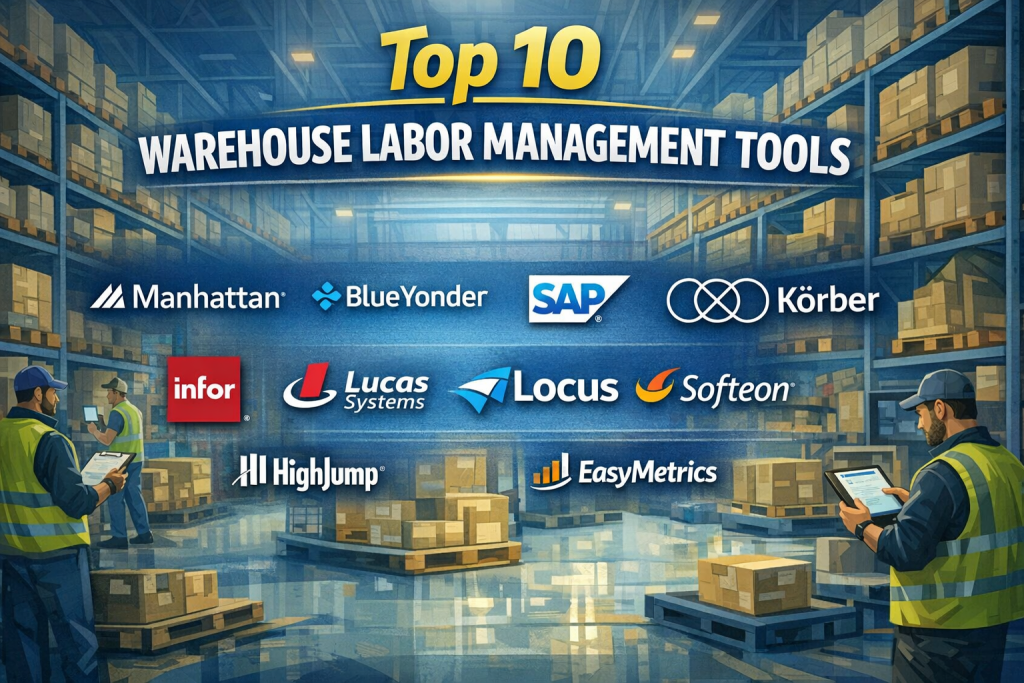
Top 10 Warehouse Labor Management Tools
1 — Manhattan Active Labor Management
Short description:
A robust enterprise-grade labor management solution built for complex, high-volume distribution operations requiring engineered standards and deep performance analytics.
Key features:
- Engineered labor standards and productivity measurement
- Real-time performance dashboards
- Incentive pay and gamification support
- Advanced forecasting and labor planning
- Tight integration with WMS and transportation systems
- Exception and variance analysis
- Multi-site enterprise reporting
Pros:
- Extremely accurate and proven labor standards
- Ideal for large, complex distribution networks
- Strong analytics and reporting depth
Cons:
- High implementation and licensing cost
- Requires trained labor engineers
- Overkill for small warehouses
Security & compliance:
SSO, role-based access, audit logs, enterprise-grade encryption, GDPR support
Support & community:
Strong enterprise support, structured onboarding, extensive documentation
2 — Blue Yonder Warehouse Labor Management
Short description:
An AI-driven labor management solution focused on predictive analytics and workforce optimization for large supply chain operations.
Key features:
- AI-powered labor forecasting
- Engineered labor standards
- Real-time productivity tracking
- Workforce optimization and scheduling
- Performance benchmarking
- Integration with Blue Yonder WMS
- Scenario planning tools
Pros:
- Advanced AI and forecasting capabilities
- Excellent for volatile demand environments
- Strong supply chain ecosystem integration
Cons:
- Complex configuration
- Long deployment timelines
- Premium pricing
Security & compliance:
Enterprise security controls, SOC-aligned practices, GDPR support
Support & community:
Enterprise support model, professional services-led onboarding
3— SAP Extended Warehouse Management (Labor Management)
Short description:
A labor management module embedded within SAP EWM, designed for SAP-centric enterprises managing global warehouse operations.
Key features:
- Integrated labor planning within SAP EWM
- Task-based productivity measurement
- Shift and workload balancing
- Performance KPIs and reporting
- Integration with SAP HR and ERP
- Global compliance support
Pros:
- Seamless for SAP-based organizations
- Strong data consistency across systems
- Global scalability
Cons:
- Requires SAP expertise
- Less flexible outside SAP ecosystem
- Higher total cost of ownership
Security & compliance:
Enterprise-grade SAP security, role-based access, GDPR, ISO-aligned
Support & community:
Extensive SAP documentation, global partner ecosystem
4 — Körber Warehouse Labor Management
Short description:
A flexible labor management solution designed to optimize workforce efficiency across omnichannel and high-throughput warehouses.
Key features:
- Engineered standards and productivity tracking
- Workforce planning and forecasting
- Performance dashboards
- Incentive management
- Integration with Körber WMS
- Exception handling tools
Pros:
- Balanced feature set for mid-to-large operations
- Strong warehouse execution focus
- Flexible deployment options
Cons:
- Less brand recognition than larger vendors
- UI may feel dated for some users
Security & compliance:
Role-based access, data encryption, GDPR support
Support & community:
Good enterprise support, structured onboarding programs
5 — Infor Labor Management (WMS)
Short description:
A labor management solution embedded within Infor WMS, focused on improving productivity and workforce alignment.
Key features:
- Task-based labor tracking
- Engineered labor standards
- Labor planning and scheduling
- Performance reporting
- Integration with Infor ecosystem
- Incentive pay tracking
Pros:
- Strong WMS-native experience
- Good balance of depth and usability
- Scales well for growing operations
Cons:
- Best value only within Infor stack
- Customization can require consultants
Security & compliance:
Enterprise security, SSO support, GDPR-ready
Support & community:
Solid documentation, enterprise support, partner-led services
6— Lucas Systems Labor Productivity (Work Execution)
Short description:
A labor productivity platform that combines task execution, voice technology, and real-time workforce visibility.
Key features:
- Real-time labor tracking
- Voice-enabled workflows
- Dynamic task prioritization
- Performance analytics
- Integration with WMS and LMS
- Worker coaching insights
Pros:
- Strong frontline worker engagement
- Real-time visibility and adaptability
- Reduces training time
Cons:
- Less traditional engineered standards
- Best paired with Lucas execution tools
Security & compliance:
Enterprise security controls, role-based access
Support & community:
Strong implementation support, responsive customer service
7 — Locus Labor Management
Short description:
A modern, cloud-native labor management platform aimed at mid-market warehouses seeking faster deployment and usability.
Key features:
- Cloud-based labor tracking
- Productivity dashboards
- Configurable performance metrics
- Workforce scheduling
- API-based integrations
- Mobile-friendly interface
Pros:
- Faster implementation
- User-friendly UI
- Lower cost than enterprise LMS
Cons:
- Less advanced engineered standards
- Limited global enterprise footprint
Security & compliance:
Cloud security best practices, data encryption, GDPR support
Support & community:
Good onboarding, growing customer community
8 — Softeon Labor Management
Short description:
A configurable labor management solution designed for adaptable warehouse environments and evolving workflows.
Key features:
- Configurable labor standards
- Real-time productivity monitoring
- Workforce planning
- Performance reporting
- Integration with Softeon WMS
- Exception management
Pros:
- Highly configurable
- Suitable for custom workflows
- Good balance of cost and capability
Cons:
- Requires thoughtful setup
- Smaller ecosystem compared to major vendors
Security & compliance:
Role-based access, audit trails, GDPR-aligned
Support & community:
Hands-on support, strong professional services
9 — HighJump (Körber) Labor Management
Short description:
A flexible labor management module tailored for adaptable warehouse operations and 3PL environments.
Key features:
- Labor performance tracking
- Configurable standards
- Workforce analytics
- Integration with HighJump WMS
- Incentive pay support
- Multi-client visibility
Pros:
- Excellent for 3PL operations
- Flexible and configurable
- Strong WMS integration
Cons:
- UI less modern
- Reporting depth varies by configuration
Security & compliance:
Standard enterprise security, GDPR-ready
Support & community:
Reliable support, strong implementation partners
10 — EasyMetrics Labor Management
Short description:
A specialized labor management platform focused on engineered labor standards and incentive-based performance improvement.
Key features:
- Engineered labor standards
- Productivity tracking by task
- Incentive pay calculation
- Performance dashboards
- Integration with major WMS platforms
- Labor engineering tools
Pros:
- Deep labor engineering expertise
- Strong incentive programs
- Works alongside multiple WMS systems
Cons:
- Narrower scope beyond labor management
- Requires labor engineering discipline
Security & compliance:
SSO support, audit logs, GDPR-ready
Support & community:
Strong consulting support, domain-focused expertise
Comparison Table
| Tool Name | Best For | Platform(s) Supported | Standout Feature | Rating |
|---|---|---|---|---|
| Manhattan Active LMS | Large enterprises | Cloud / Enterprise | Engineered labor accuracy | N/A |
| Blue Yonder LMS | Complex supply chains | Cloud / Hybrid | AI-driven forecasting | N/A |
| SAP EWM Labor | SAP enterprises | On-prem / Cloud | SAP-native integration | N/A |
| Körber LMS | Mid-to-large DCs | Cloud / On-prem | Balanced flexibility | N/A |
| Infor LMS | Infor WMS users | Cloud / On-prem | WMS-native design | N/A |
| Lucas Systems | Execution-focused ops | Cloud | Real-time task orchestration | N/A |
| Locus LMS | Mid-market warehouses | Cloud | Fast deployment | N/A |
| Softeon LMS | Custom workflows | Cloud / On-prem | High configurability | N/A |
| HighJump LMS | 3PL operations | Cloud / On-prem | Multi-client visibility | N/A |
| EasyMetrics | Engineered standards | Cloud | Incentive optimization | N/A |
Evaluation & Scoring of Warehouse Labor Management Tools
| Evaluation Criteria | Weight | Description |
|---|---|---|
| Core features | 25% | Accuracy of labor standards, productivity tracking |
| Ease of use | 15% | Usability for supervisors and workers |
| Integrations & ecosystem | 15% | WMS, ERP, HR, and API support |
| Security & compliance | 10% | Data protection, audits, access control |
| Performance & reliability | 10% | System stability and real-time accuracy |
| Support & community | 10% | Documentation, onboarding, vendor support |
| Price / value | 15% | ROI relative to cost |
Which Warehouse Labor Management Tool Is Right for You?
- Solo users or small warehouses: Lightweight, cloud-native tools with quick setup
- SMBs: Balance of usability, affordability, and core productivity insights
- Mid-market: Strong integrations, configurable standards, scalable reporting
- Enterprise: Engineered standards, advanced analytics, multi-site visibility
Budget-conscious teams should focus on usability and fast ROI, while premium buyers benefit from predictive analytics and deep optimization.
Choose feature depth if labor is your largest cost driver; choose simplicity if adoption speed matters most.
Security and compliance become critical for multi-country or regulated environments.
Frequently Asked Questions (FAQs)
1. What is a Warehouse Labor Management Tool?
It is software that measures, plans, and optimizes warehouse workforce productivity using data-driven standards.
2. Is a labor management system the same as a WMS?
No. LMS focuses on people productivity, while WMS focuses on inventory and workflows.
3. Do small warehouses need labor management tools?
Only if labor costs are significant or performance visibility is lacking.
4. How long does implementation take?
Anywhere from weeks (cloud tools) to several months (enterprise solutions).
5. Are engineered labor standards mandatory?
Not always, but they provide the most accurate productivity measurement.
6. Can these tools reduce labor costs?
Yes, through better scheduling, reduced overtime, and productivity gains.
7. Do they support incentive pay programs?
Many enterprise tools include built-in incentive and gamification features.
8. How do these tools integrate with WMS?
Typically via native connectors, APIs, or middleware.
9. Are cloud-based LMS secure?
Most modern platforms follow enterprise-grade security standards.
10. What is the biggest mistake buyers make?
Choosing overly complex systems without readiness or process maturity.
Conclusion
Warehouse Labor Management Tools play a critical role in controlling costs, improving productivity, and enabling data-driven workforce decisions. From lightweight cloud platforms to enterprise-grade engineered systems, the market offers solutions for every operational scale.
What matters most is alignment with your operational complexity, workforce maturity, and integration landscape. There is no single “best” tool—only the best fit for your specific needs. By focusing on usability, accuracy, scalability, and ROI, organizations can turn labor management from a cost center into a strategic advantage.

Find Trusted Cardiac Hospitals
Compare heart hospitals by city and services — all in one place.
Explore Hospitals