MYHOSPITALNOW.COM

Find Trusted Doctors & Hospitals

Discover healthcare providers, compare hospitals, and explore treatment options worldwide.

Free Treatment Quotes • Doctor Search • Hospital Comparison

Find Healthcare Options

www.myhospitalnow.com

How to install WordPress on Windows using XAMPP? Part-1

How to install WordPress on localhost XAMPP?

What is the WordPress?

WordPress is a free and open-source (Content Management System) which is based on PHP and MySql. It’s the simplest software and most popular way to create your own website or blog.

Here, we’ll see how to install WordPress on local server.


Server Requirement
You can use software like:
XAMPP is for X-OS, Apache, Mysql, PHP, Perl.
WAMP is for Windows.
LAMP is for Linux.
MAMP is for Mac OS.


These are completely free software that provides you a server generally Apache, Database MySql on PhpMyAdmin which is required for the installation. Here, you only have to create a WordPress database using PhpMyAdmin and edit the wp-config file.
If you are already running any one of among these servers, so you can start to install WordPress.
If not, then you have to install the XAMPP server which could be run in any OS.
Therefore, download it.

  1. Go to https://www.apachefriends.org/index.html or https://sourceforge.net/projects/xampp/ in your computer’s web browser.
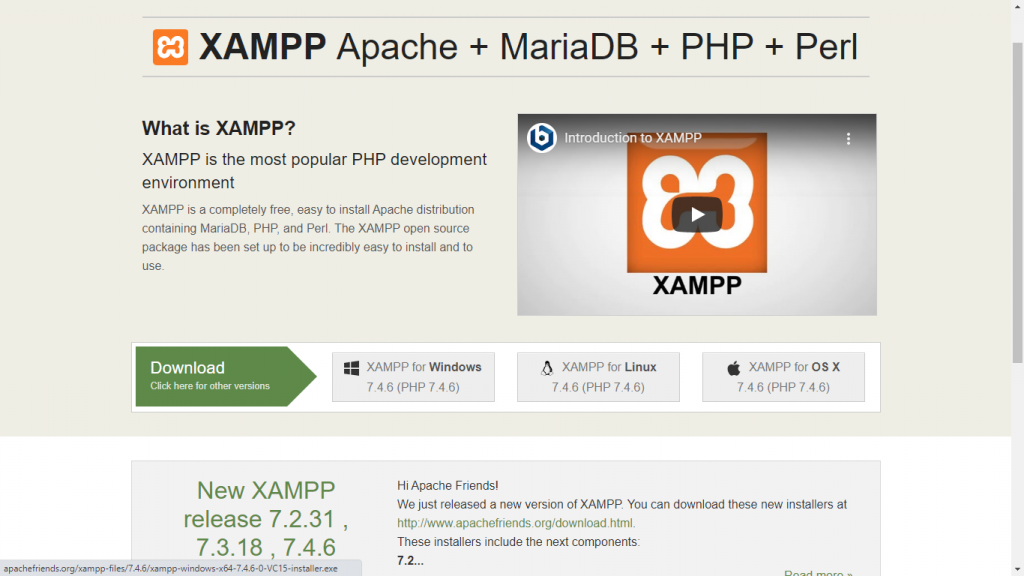
Apache Friends XAMPP download page with XAMPP for Windows, Linux and OS X buttons

2. Click XAMPP for Windows

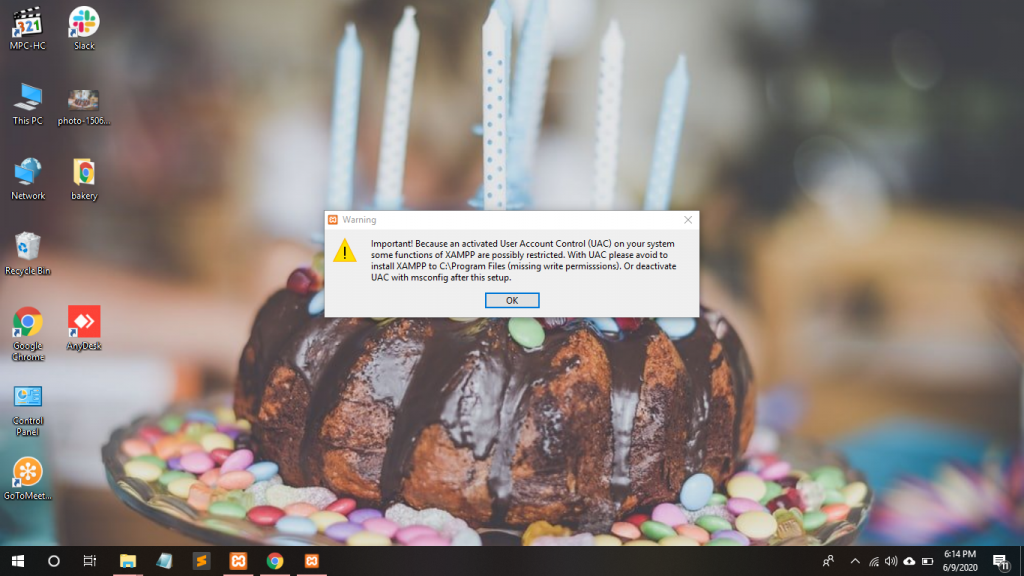
XAMPP installer warning about User Account Control restricting functions, with OK button

3. You may have to click OK on a warning if you have User Account Control (UAC) activated on your computer.
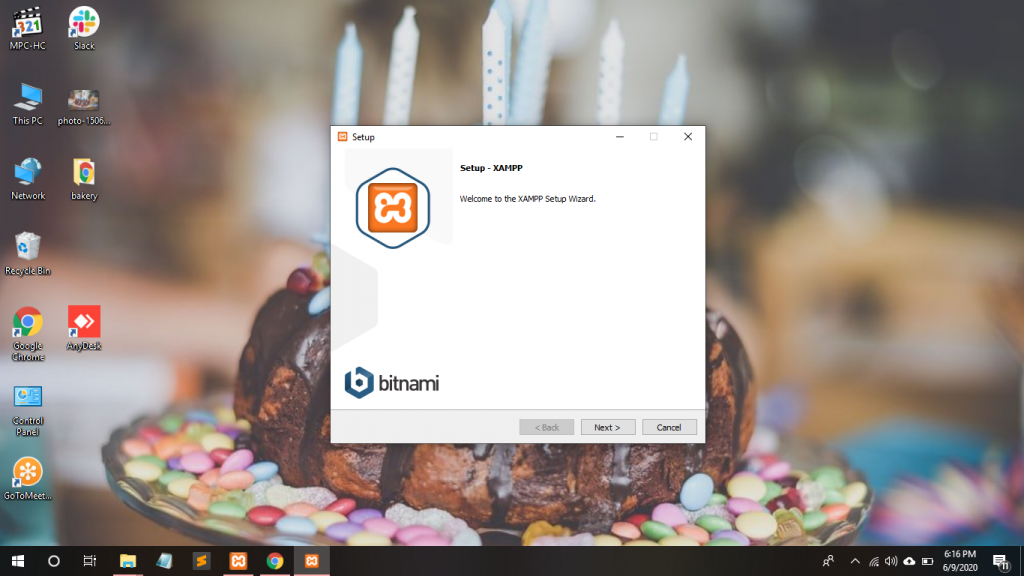
XAMPP Setup Wizard welcome screen with the Next button

4. Click Next . It’s at the bottom of the setup window.
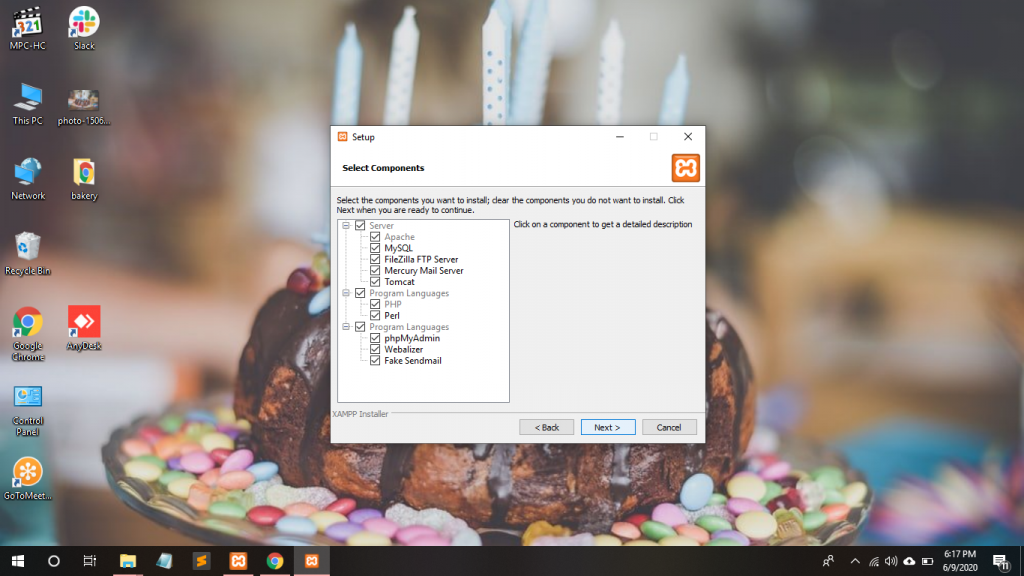
XAMPP Select Components screen with Apache, MySQL, PHP, phpMyAdmin and other components checked

5. Click Next button. By default, all attributes are included in your XAMPP installation.
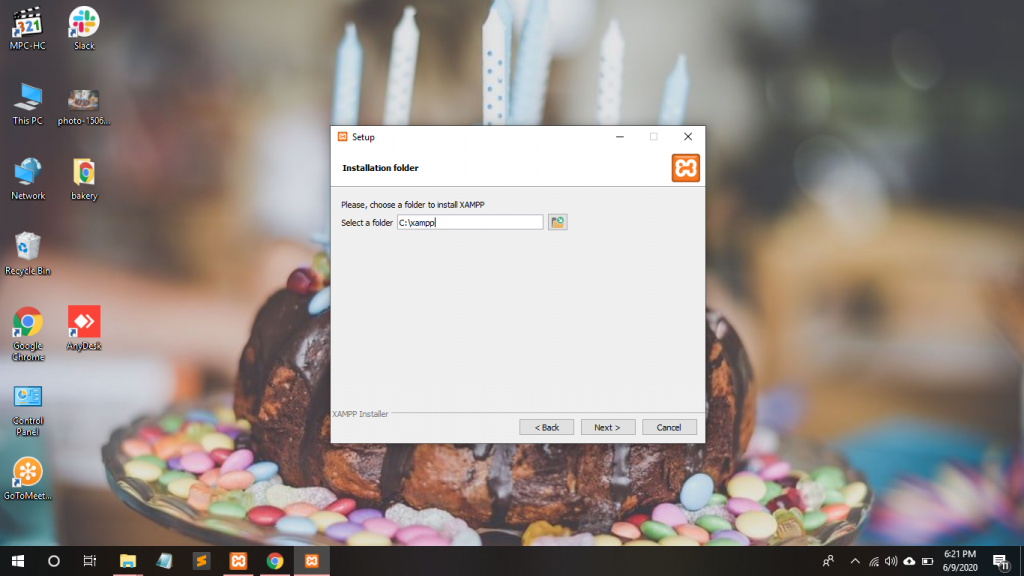
XAMPP installer Installation folder step with C:\xampp selected

6. Select an installation location by clicking Next button
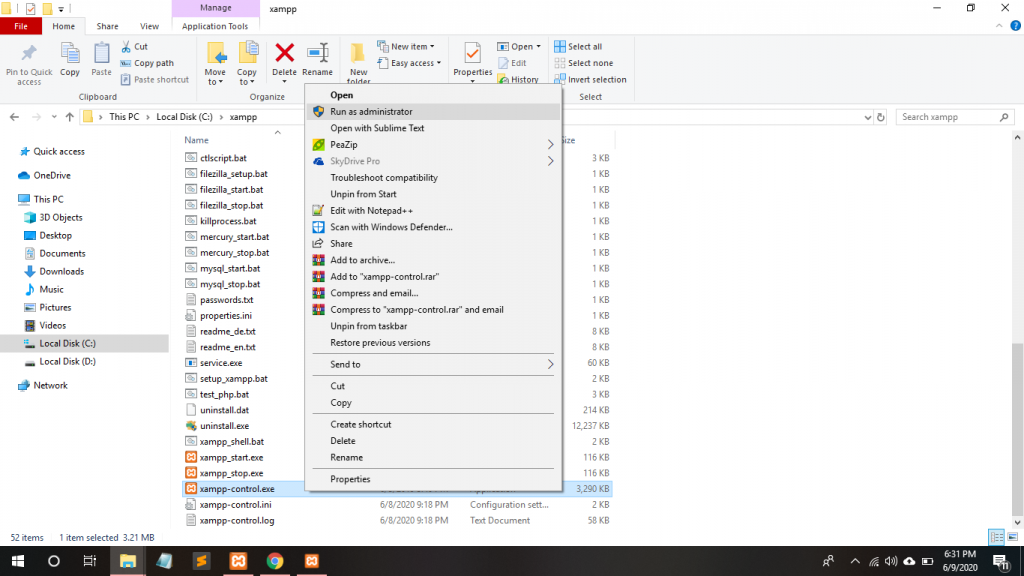
File Explorer xampp folder with xampp-control.exe right-click menu showing Run as administrator

7. Start XAMPP from its installation point. If you need to open the XAMPP Control Panel in the future, you can do so by opening the folder in which you installed XAMPP, right-clicking the orange-and-white xampp-control icon, clicking Run as administrator, and clicking Yes when prompted.
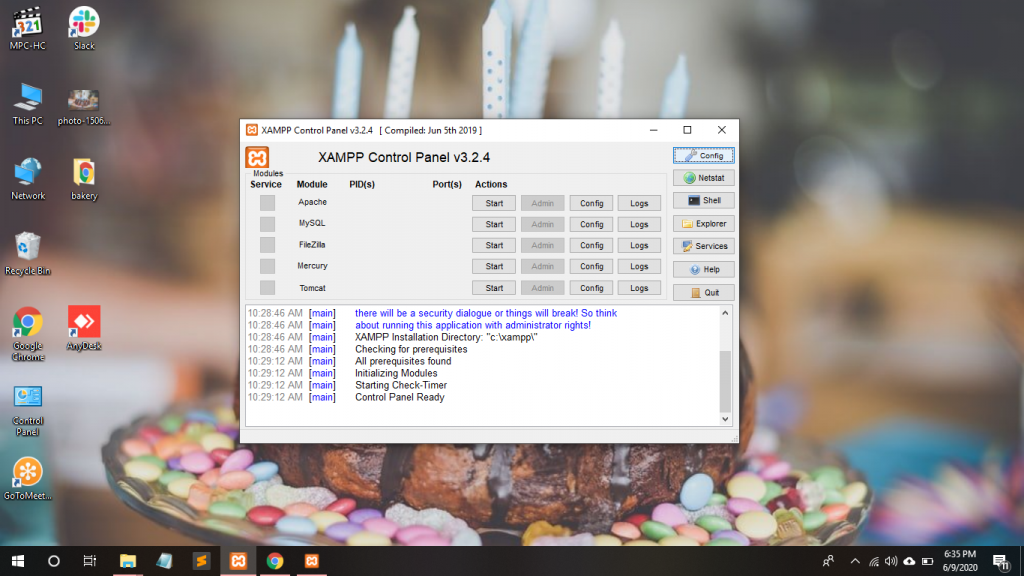
XAMPP Control Panel v3.2.4 opened as administrator with all modules stopped

8. Right click on config button .

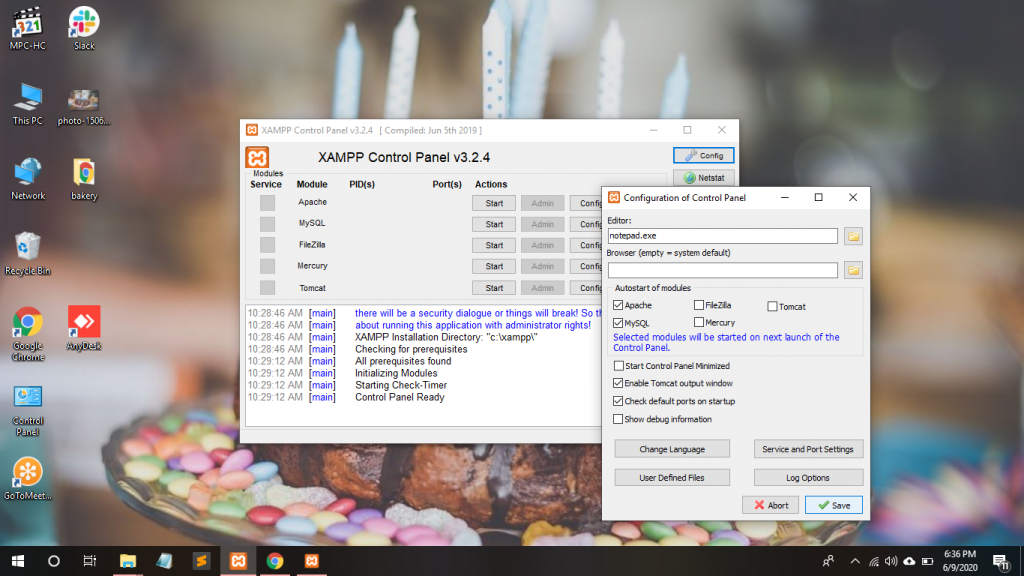
XAMPP Configuration of Control Panel dialog with Apache and MySQL autostart boxes checked

9. Here, you can see the Configuration of Control Panel. Check the Apache and MySql boxes and click the save button.
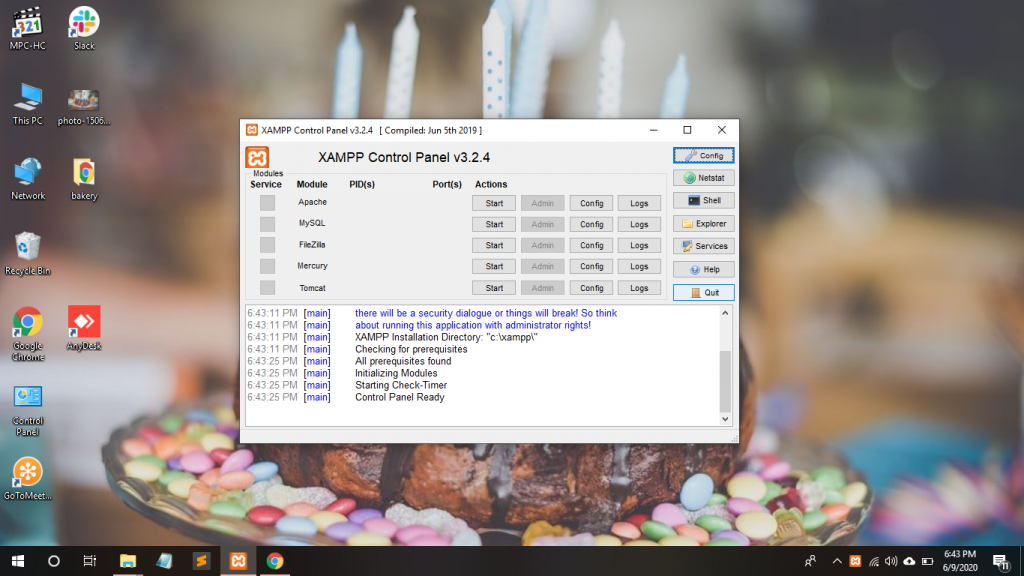
XAMPP Control Panel reopened after restart, log showing Control Panel Ready

10. Restart XAMPP by clicking Quit and then re-opening it in administrator mode from its folder.
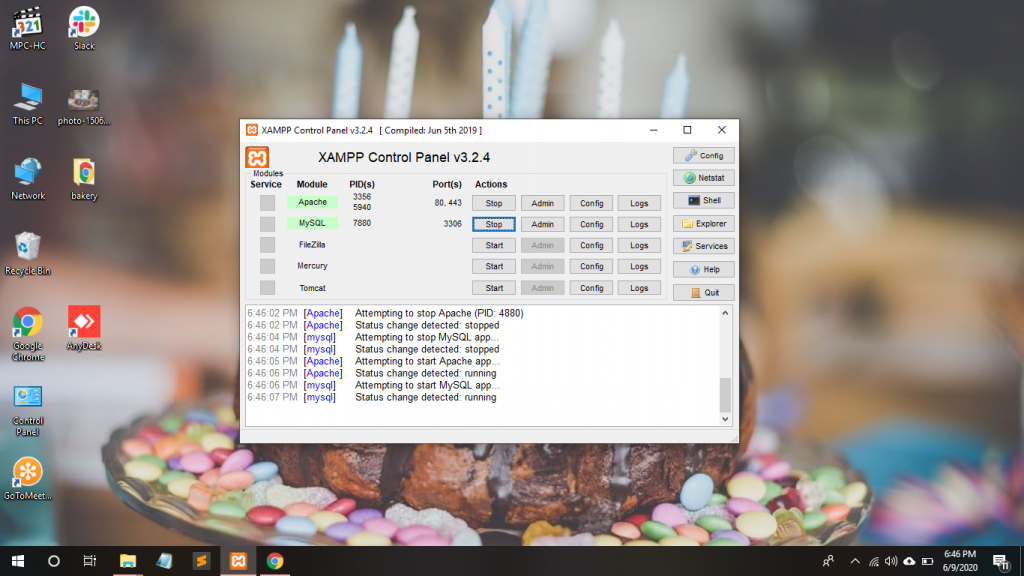
XAMPP Control Panel with Apache on ports 80, 443 and MySQL on 3306 running

11. After that, just click start Apache and MySql. It would be started like this. Then open your chrome browser. Type localhost/phpmyadmin in URL bar.
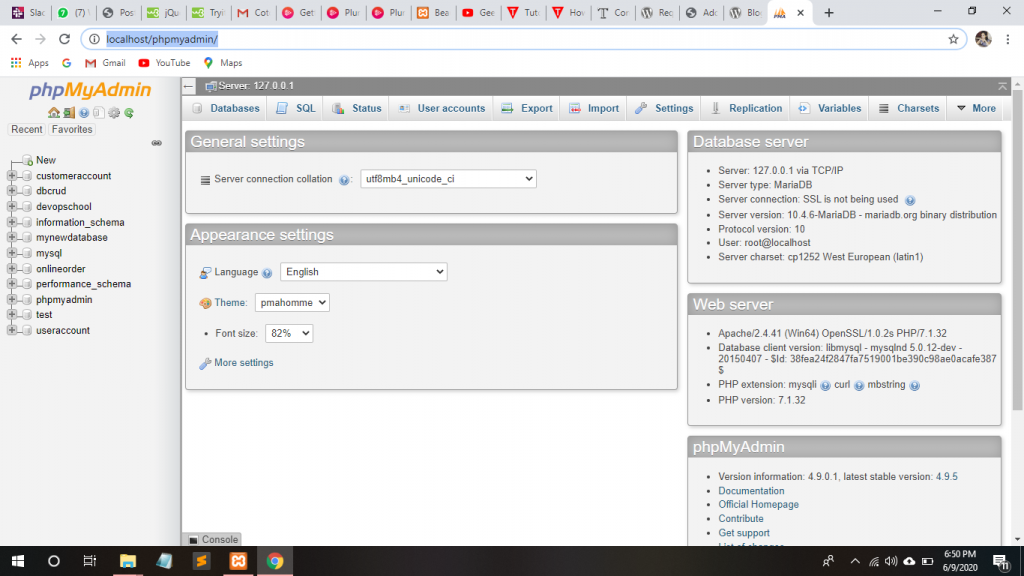
PhpMyAdmin home page at localhost/phpmyadmin in Chrome showing server settings
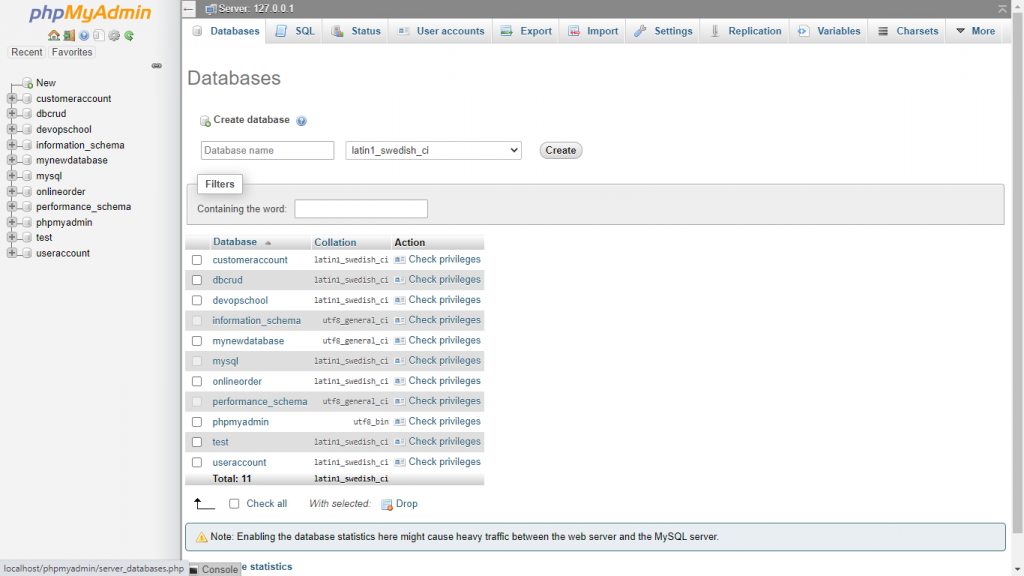
PhpMyAdmin Databases tab with the Create database form and existing database list

12. Click on Database to create a database for WordPress. Write the database name as yours need ex:- mywordpressdatabase and click Create button.
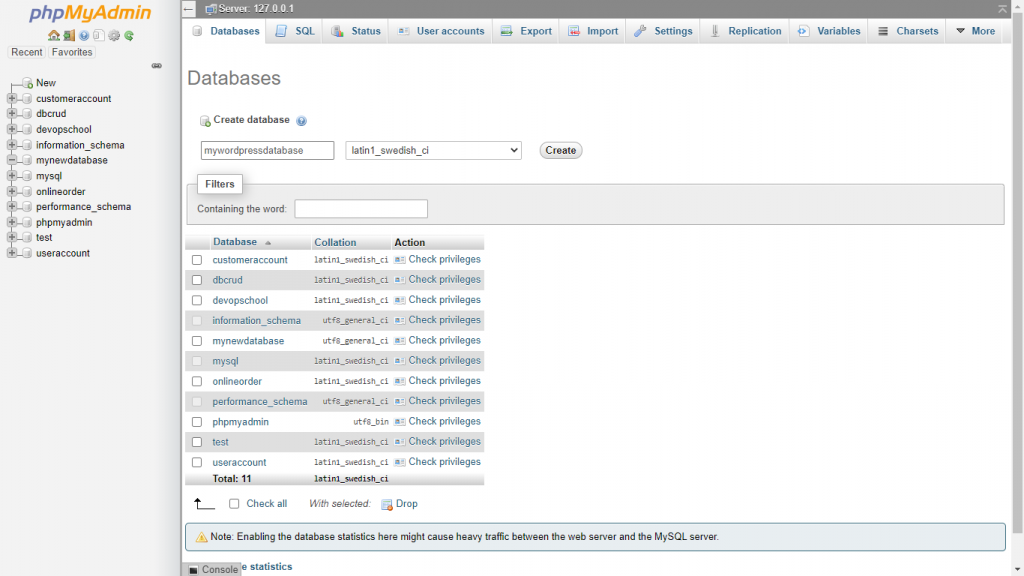
PhpMyAdmin Create database field filled with mywordpressdatabase before clicking Create

13. Go to https://wordpress.org/download/ and download WordPress. Cut the zip file and paste within xampp/htdocs folder and unzip there. Open Chrome browser and type localhost/wordpress/. It’ll appear as this, choose the English language and press the continue button.
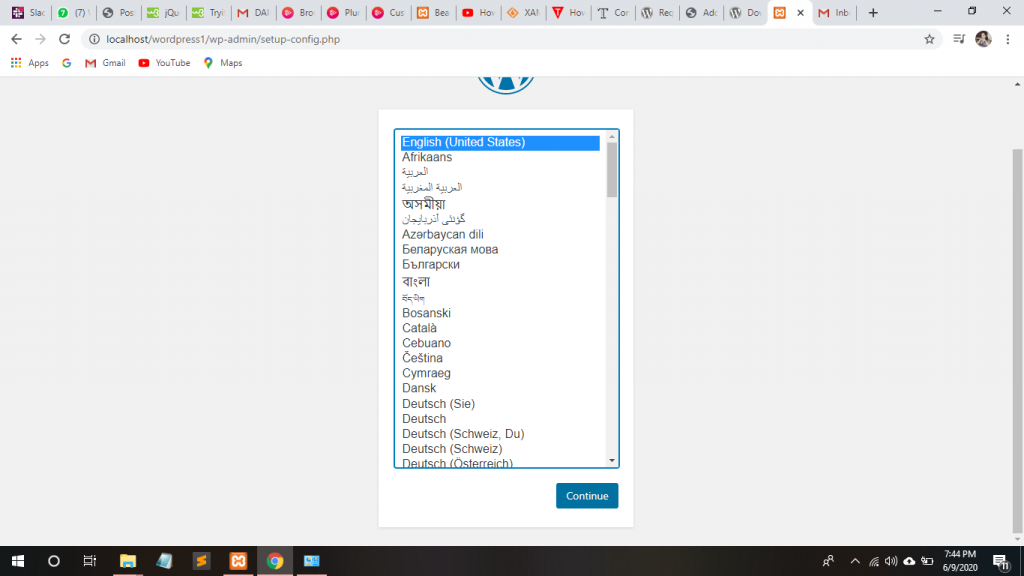
WordPress setup language selection with English (United States) highlighted and Continue button
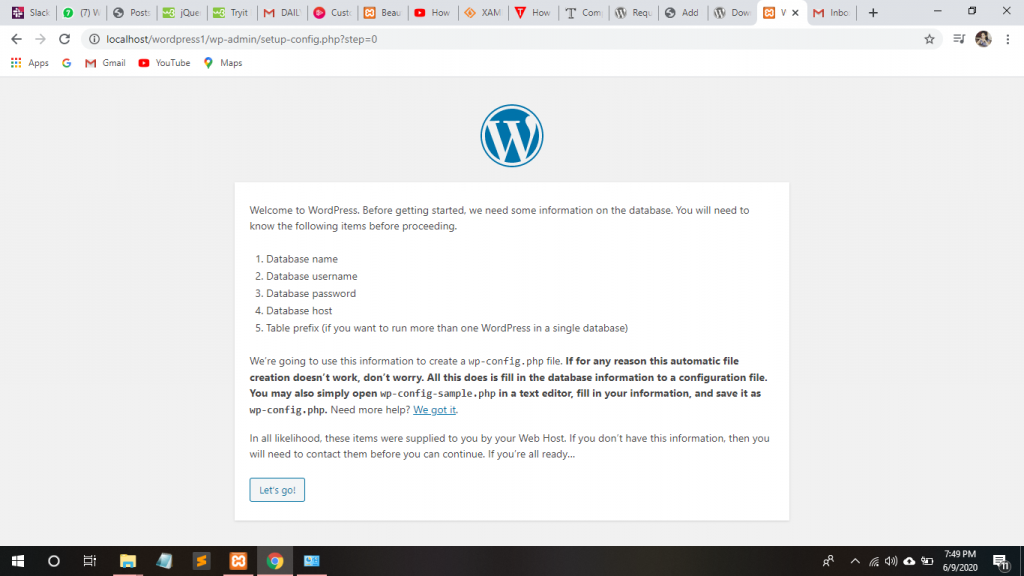
WordPress setup welcome screen listing required database details with Let's go button

14. Just click on let’s go! button.

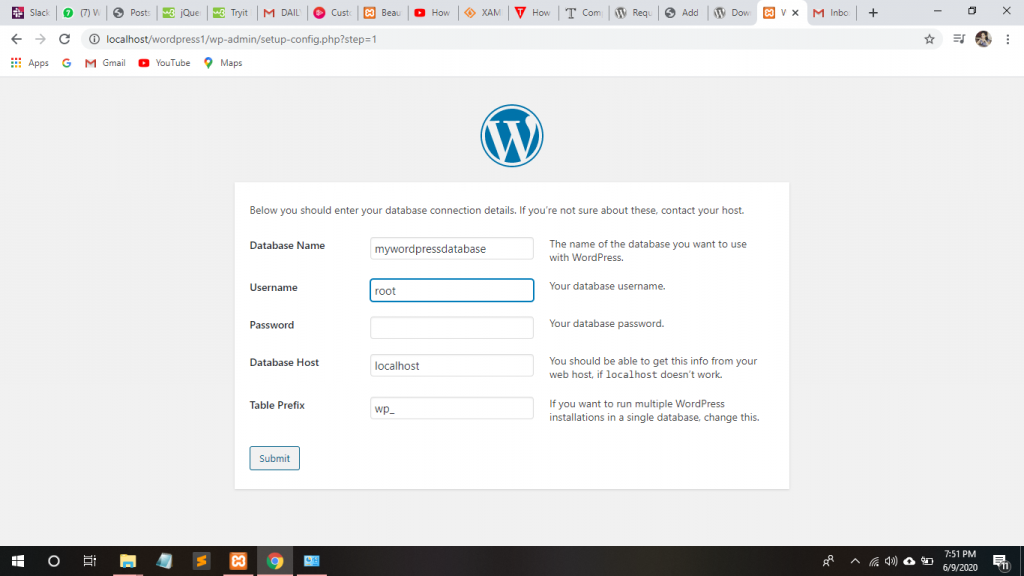
WordPress database connection form with mywordpressdatabase, user root, empty password, localhost

15. Fill the database name as you had created before and by default, the username is root and the password is null. Click the submit button.
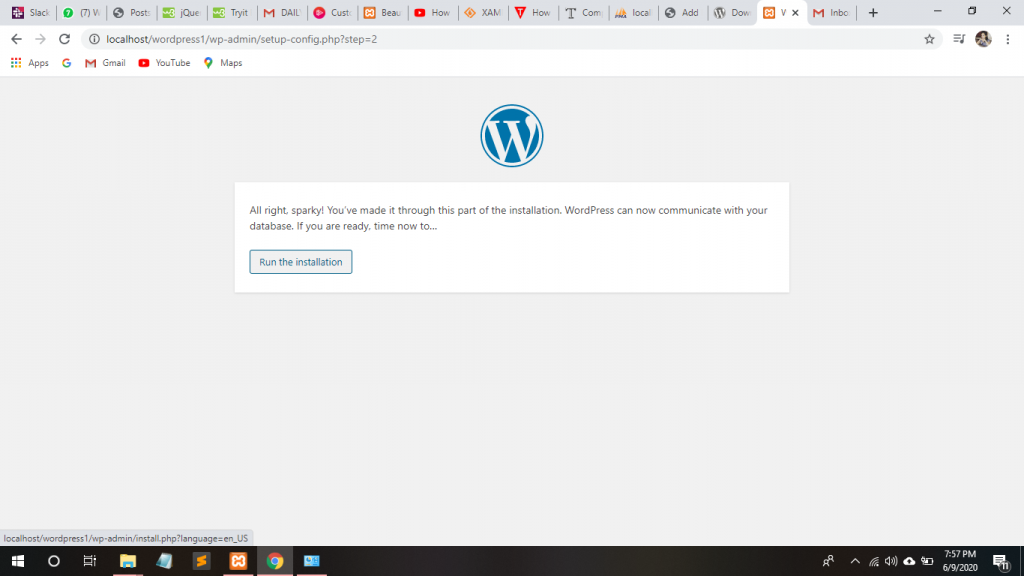
WordPress setup confirming database connection with Run the installation button

16. Click run the installation button.
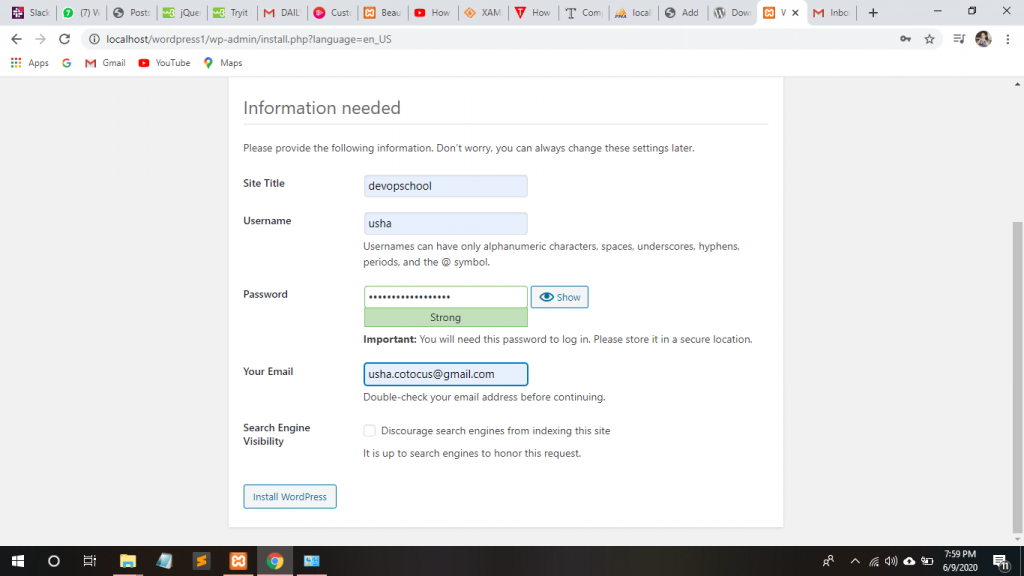
WordPress Information needed form with site title, username, password and email filled in

17. Fill the site title which you want to develop, give your username, password, and your email id. Click install WordPress.
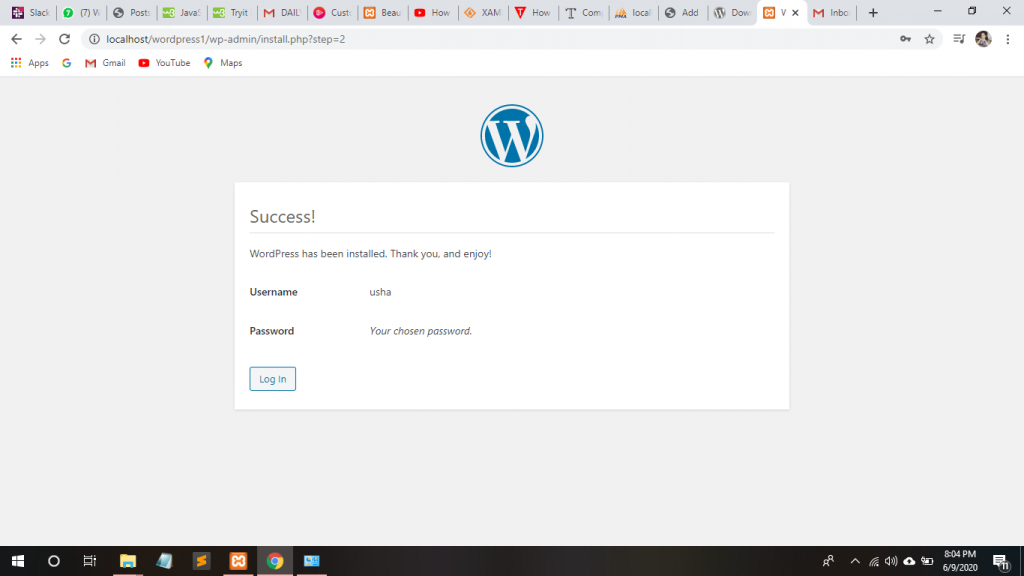
WordPress Success screen confirming installation with Log In button
Successfully installed, now you can login .

Thanks.

Find Trusted Cardiac Hospitals

Compare heart hospitals by city and services — all in one place.

Explore Hospitals
With MotoShare.in, you can book a bike instantly, enjoy doorstep delivery, and ride without worries. Perfect for travelers, professionals, and adventure enthusiasts looking for a seamless mobility solution.

Related Posts

How to Move a Live WordPress Site to Local Server

Why we are discussing on this topic because we are here to tell you when any developer of WordPress wants to test new themes, plugins, or another…

Read More

Xampp Troubleshooting Guide

Log Levels of Apache, MySql, PHPMyAdmin, PHP, Composer Apache MySQL PHPMyAdmin PHPMyAdmin’s log level is primarily controlled by the PHP configuration, as it’s a PHP application. PHP…

Read More

How to Install & configure Xampp and WordPress in Linux?

How to setup WAMP server in Linux? Referece: https://www.apachefriends.org/index.html How to create mysql user, database and grant a permission to a database in mysql? Reference https://www.digitalocean.com/community/tutorials/how-to-create-a-new-user-and-grant-permissions-in-mysql How…

Read More

How to Install WordPress in Windows using XAMPP?

In this article, I’m going to describe how to Install WordPress on your Local PC.  Follow this some easy step, and learn how to install WordPress on…

Read More

How to fix an error of PhpMyAdmin access denied in xamp mySql.

Error resolving of PhpMyAdmin access denied. For most first time install, accessing http://localhost/PhpMyAdmin will directly take us to the PhpMyAdmin web interface without asking for password or…

Read More

What is WordPress and How to Install it?

What is WordPress? WordPress is one of the simplest, most popular way to create your own website or blog. It is a free and open-source content management…

Read More